Prompt Response: Why Empathy is Important
with help from Gemini Nano Banana and Photo Studio Pro
What’s the most underrated life skill?
Thinking of Others
Thinking of others, caring for others, loving others, and understanding others are all very important life skills. But, sadly, each of them can be performed without having the genuine skill of empathy as a guide.
A person might feed someone because it makes them feel good to share, or they might feed them because they have personal experience with hunger and don’t want someone else to go through it. Or they might march for a cause because they belong to a group that supports it but not because they have real-world experience with the issue.
Learning to Understand
When I sit in a regular height chair, my feet will not reach the floor except maybe my toes. Two things happen then: a hard seat will push into the backs of my legs and cause pain, or the sciatic nerve that runs from my hip down to my knee will pull and create days of pain. So I’m always saying to my husband, “You normal height people have no clue what it’s like to live in a world that’s not built for short people.” Before knowing me, he might never have even thought about why some people carry cushions with them everywhere they go. Now, because of experience, his empathy developed.
Natural Empathy
There are some people who have more of a natural empathy skill, just like people who are naturally gifted artists. Those people can think of what someone else is going through without their issues having ever been part of their life experience. If their empathy makes them feel things like they are experiencing it with the person their heart is moved for, they’ve gone past being empathetic and into being empathic. But for most people, empathy comes along and asks them to get on board, and they either accept it or reject it. If they accept it, it’s a skill they can learn and even improve on with time.
Genuine Empathy is an Extremely Important Skill
So why would I say it’s one of the most underrated skills? Simply because it is a driver of many other skills. It drives people to stop what they are doing for themselves and pay attention to someone else’s needs. It drives people to dig into their savings to collect for someone’s provisions. It stirs up a what if that were me or my family or friends kind of vibe that drives a person to step up and do their part to remedy a problem. Without real empathy to drive helpful behaviors, good deeds can cause distress and lead to those scenarios where a person says, “I was only trying to help.”
Don’t Stop Helping
Even if you do not have natural empathy, and even if your efforts to help have sometimes created a problem, don’t stop being helpful. That’s its own wonderful skill. And those who get offended by someone’s effort to help that isn’t exactly what they would’ve wanted need their own empathetic skills, so they don’t hurt a person with a tender and helpful heart. But, it’s a good idea to examine both your motivations and your understanding to see if you can learn ways to improve your helpfulness.
The Best Example of Empathy Ever Given
YahShua (Jesus) once dwelt in heavenly places far above humanity. The Scriptures tell us that He left His throne on high to dwell as one of us and become able to share the human experience.
“Who, existing in the form of God, did not consider equality with God something to be grasped, but emptied Himself, taking the form of a servant, being made in human likeness. And being found in appearance as a man, He humbled Himself and became obedient to death — even death on a cross.”
He became our High Priest both to counsel and to sacrifice.
“Now since the children have flesh and blood, He too shared in their humanity, so that by His death He might destroy him who holds the power of death, that is, the devil.
For this reason He had to be made like His brothers in every way, so that He might become a merciful and faithful high priest in service to God, in order to make atonement for the sins of the people.”
And He told the disciples that the greatest love anyone could ever have was to lay down their own life for a friend.
“Greater love has no one than this, that he lay down his life for his friends.”
The Life Skill of Genuine Empathy is Rooted in Real Love
It’s not always easy to think of others. The voices all around us remind us how much we risk if we think of others. “You might catch something.” “They may not be grateful.” “You better ask first.” The division and lack of unity created by living our lives on screens and in fear don’t help us to love others or even think of them without counting our own costs first. A scenario where some government organization fines groups giving out sandwiches to hurricane victims because they didn’t get a health license first makes people hold back on empathy and love for fear of getting in trouble.
But if we see these things, we can change these things. And we need to change them for future generations to prevent the divide from growing any wider. Many children are naturally empathetic, and that needs to be nurtured in them as much as possible. It’s okay to tell them they are talented or special, but not at the expense of them believing they are more special than everyone else. They MUST be taught to see through the eyes of others outside themselves.
It hurts me deeply when I see videos of a group of teens attacking an elderly person. I mean, any innocent victim being attacked and beaten is not okay, but knowing how brittle and sensitive someone gets with age makes those attacks seem that much more brutal. 🥺 If we teach the youth about the frailties of age, AND we teach them to love their neighbor, they shouldn’t be able to carry out those attacks without any thoughts of how the victims feel.
WWJD
Do you remember when those 4 letters were all the rage and becoming emblazoned on everything? That was a real effort to create real empathy by thinking what it would be like from inside the heart of Jesus and how He thought of the hearts of people with whom He interacted. I think it’s time to boost this life skill back up to the top again.
And this seems like a perfect place to share my scrolling poem called “Beyond the Mirror” again.
Share this post on:

Cliché Month: Toe The Line 👣
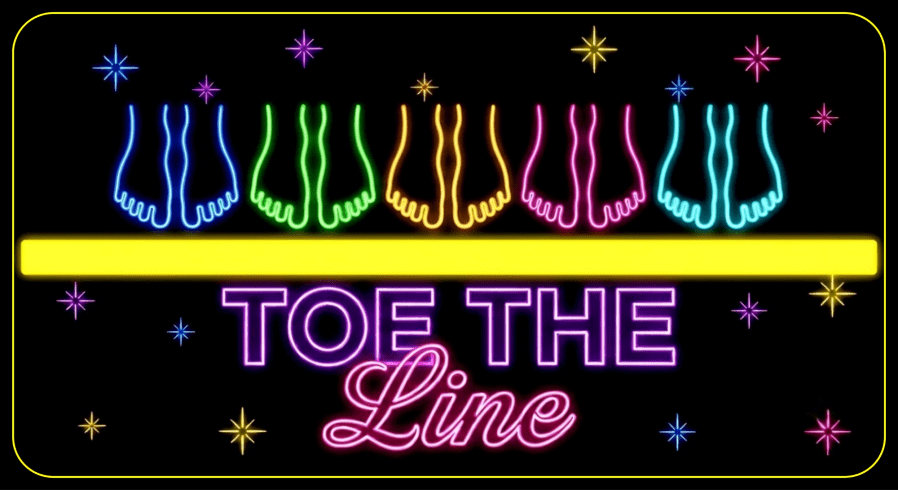
Boundaries With Purpose…
Aren’t you glad the toes in this image stay lined up exactly on the line rather than crossing into the text and creating unreadable chaos? That neon yellow boundary keeps order and allows the text message to remain crisp, visible, and perfectly legible. When things cross the line, structure (even digital structure) can collapse into a messy blur.
P.S. A quick spelling alert: Because we often talk about “towing” a heavy load, many people mistakenly write this idiom as “Tow the line.” But as you can see from our neon friends above, it is strictly Toe the line—as in physically placing your feet against a boundary!
And that physical boundary is exactly where tonight’s cliché story begins…
From Deck Seams to Track Meets
While we use “toe the line” today to describe following group rules or conforming to expectations, its literal roots come from strict physical discipline.
The most widely accepted origin comes from 18th-century wooden warships. The wooden decks of Royal Navy vessels were built with long planks sealed together using black pitch and tar. When the crew was called for morning inspection or disciplinary roll call, barefoot sailors were ordered to stand in a row with their toes touching the dark seam line running along the deck.
Standing still with your toes precisely on that mark meant you were paying attention and doing exactly as told. And since obedience to command in the military is necessary for victories and to save lives, most sailors did, in fact, toe the line. Here’s an image I found at archive.org depicting an inspection of hands and feet by The Royal Navy.
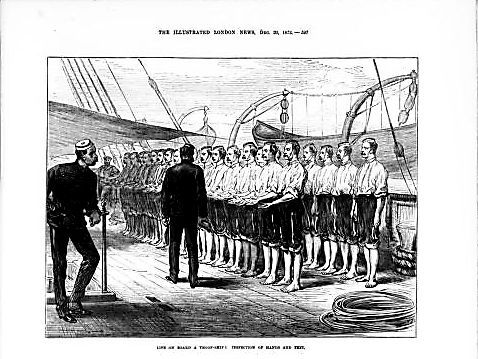
by Major W. O. Carlile, published in the Illustrated London News (1873).
Public Domain.
Interestingly, Captain Basil Hall was one of the first Royal Navy officers to write down the phrase “toeing the line” in his 1831 memoirs, describing how boys on the ship were made to stand at the deck seams as a routine discipline drill or punishment.
As time went on, the practice spread:
- In Schools: children were made to line up with their toes touching a floorboard or painted stripe before entering class or answering roll call.
- In Sports: Early runners placed their shoe tips right at the starting mark. Stepping over meant instant disqualification.
In every scenario, the lesson is identical: get as close to the line as required, but don’t step over it.
A Little Wiggle Room
Which brings us to the annual August 6th celebration of National Wiggle Your Toes Day. As one website reminds us, it’s one of the easiest holidays to celebrate because it doesn’t require any special equipment or dress code. Personally, I think wiggling barefoot is best, though. 🐻🦶😁
Really, there is a fun irony in celebrating toe freedom right next to an idiom about strict obedience. Toeing the line requires keeping your feet anchored and perfectly still. But once the inspection is over, the race is run, or the school day or work is done, there’s nothing quite like kicking off your shoes and giving your toes some room to wiggle.
Sometimes, learning how to toe the line is what earns us the freedom to relax when the day is done! Apparently, it’s even a treatment for anxiety, so don’t wait for just one day a year. Free up those “piggies” and get wiggling.
And don’t forget how much obedience is mixed with blessings in God’s order of things. Here’s a message from God through Joshua to the Children of Israel…
Joshua 1:7 BSB
[7] Above all, be strong and very courageous. Be careful to observe all the law that My servant Moses commanded you. Do not turn from it to the right or to the left, so that you may prosper wherever you go.

https://bible.com/bible/3034/jos.1.7.BSB
Plus…
Psalm 37:23 BSB
[23] The steps of a man are ordered by the Lord who takes delight in his journey.

https://bible.com/bible/3034/psa.37.23.BSB
This one took quite a bit of research between Google, Gemini, and Archive. Big thanks to both models of Google Gemini for their collaborative help.
Share this post on:

Cliché Month: Don’t Spill the Beans 🫘

Don’t Spill the Beans: From Secret Ballots to Grandma’s Kitchen
Most of us know what it’s like to keep a secret. And some secrets are harder to keep to ourselves than others. Maybe a juicy piece of news, a surprise party secret, or some other plan that’s supposed to be a surprise, but a slip of the tongue can ruin the reveal. So, especially when dealing with those who just aren’t good at keeping secrets, someone might tell them, “Whatever you do, don’t spill the beans.”
It’s an everyday expression, but how on earth did legumes become the official currency of confidential information?
The Secret Ballot of the Ancient World
The most popular story behind the phrase goes all the way back to Ancient Greece—known as the birthplace of democracy. Long before paper ballots or digital voting systems, ancient Greek societies needed a simple way to hold secret votes. They decided a simple opaque urn and two distinct colors of beans would be the best solution:
* White or light-colored beans represented a “Yes” vote.
* Black or dark-colored beans represented a “No” vote.
During the voting process, voters would step up to the urn and discreetly drop their chosen bean inside. The dark jar kept their choice hidden from the crowd. The vote was meant to remain strictly confidential until every ballot was cast and official counts began.
However, if someone clumsily knocked over the container—or tipped it accidentally on purpose—the beans would scatter across the floor. The vote tally was revealed prematurely, the secret process was ruined, and the entire election had to start over. All because someone had literally spilled the beans.
Spill it, Girlfriend!
While historians note that the exact English phrase really took off as 20th-century American slang (where “spill” meant to confess a secret or talk out of turn), the ancient image of a tipped jar spilling hidden votes remains the perfect visual metaphor.
A Tipping Point in Pop Culture
When I told my husband the subject of this cliché post, the phrase instantly brought to both of our minds the classic children’s game Don’t Spill the Beans. Do you remember it? It was originally introduced by Schaper Games in 1967 and later made famous by Milton Bradley. The game took the idiom literally. Players carefully balanced small plastic beans one by one on top of a teetering red plastic pot. The goal? Steady hands and precise placement—because one wrong move sent the pot tipping over, sending plastic beans clattering across the table. Now the game is made by Hasbro, and you can get it at Amazon where you’ll notice the “beans” are flat and colorful. But it still looks fun—and frustrating. (Link uses my affiliate shortcut.)
It looks like the ancient Greeks and 1960s game designers had the exact same lesson in mind: balance is everything, and once things tip over, it creates a mess.
When Spilling the Beans Would be a Real Disaster
Thankfully, it never happened, but I shudder to think of what we would’ve missed if it did. For all the history and game-night nostalgia, when I hear this cliché, my mind skips right past ancient Greece and board games and heads straight to my grandma’s kitchen.
Back then, making a pot of pinto beans was a labor of love. Long before they ever hit the stove, Grandma would sort through them by hand, carefully picking out the tiny pebbles hidden among the dry beans. A few times, I got to help her, but she preferred doing it mostly by herself to make sure nothing got missed. Then came overnight soaking followed by hours of slow cooking, seasoned generously with a good amount of bacon grease until the whole house smelled amazing. My mouth waters just to think about it.
So, in our family, “spilling the beans” would have been a crime. After all that work sorting, seasoning, and simmering, nobody dared spill those beans—because everybody wanted to eat them! 😋 (And don’t forget the diced white onion on top.)

I’ll end this with a couple Scriptures for when God Himself will spill the beans. It’s best not to have anything to hide (unless it’s a good surprise,) but there will come a time when all things will be revealed.
Luke 12:2-3 BSB
[2] There is nothing concealed that will not be disclosed, and nothing hidden that will not be made known. [3] What you have spoken in the dark will be heard in the daylight, and what you have whispered in the inner rooms will be proclaimed from the housetops.

https://bible.com/bible/3034/luk.12.2-3.BSB

Ecclesiastes 12:14 BSB
[14] For God will bring every deed into judgment, along with every hidden thing, whether good or evil.

https://bible.com/bible/3034/ecc.12.14.BSB
Many thanks to Google’s Gemini AI for the collaboration and help in finding this history of this phrase, the history of the game, and the beautiful image at the top.
Share this post on:

🎵The Tongues of Angels

One more thing happened 43 years ago that still matters today; I prayed to be filled with God’s Holy Spirit. My experiences may not match every person who reads my posts, or any person who reads my posts, and that’s okay. I’m just going to share my own experiences.
Missionettes …
Way back when I was about 9 years old, I was part of a group within the Assemblies of God churches called Missionettes. It was like a lot of other clubs for girls where you earned badges for learning skills. The difference was in the skills—they were all biblically or spiritually based. It was an awesome experience with an amazing and sincere group of girls and a great leader for our particular group.
We had a sleepover in the church one night, and these girls decided that I could not go to sleep unless I was filled with The Holy Spirit which would become evident when I spoke in tongues. It was about 2 in the morning when I quit resisting just so I could go to sleep. 😁 But I did speak in an unknown language, and that was followed by some experiences where I truly felt I’d stepped into the Presence of my Holy Creator.
But then …
When life changed and we moved away from our stepdad and his family, my mom took us back to the Baptist church. They were quick to tell me that no one gets filled with The Holy Spirit with speaking in tongues in this day and age. I believed them and did not allow myself any non-English words in my prayers.
A Little Hope …
By 8th grade, I’d found a wonderful friendship with a girl who was in the Pentecostal church, and when we prayed together, I allowed myself to speak in tongues again. But the Baptist church I attended looked down on that as something not okay. Still, between me and God, that moment with my friend Lynette let me know God was still there for me. And that was the year of being on the honor roll, graduating 8th grade with special awards, and getting glowing compliments from my teachers—and even my principal—in my yearbook. I was like a different person from the ways I’d behaved in 7th grade. (Still smoking, though. I guess I was addicted by then.)
A Time of Giving Up …
If you’ve read many of my testimony posts, you know I went back and forth between my grandparents’ home and my mom’s home. While with my mom, we tried other religions, some New Age teachings, and finally tried to find a “God as we understood Him” within our 12 Step groups. In that last one is where I prayed my I Give Up prayer. I said something like, “But, God, I don’t understand You. If You really loved me, why did You force Your Son to die? Why didn’t You do it Yourself?”
After that prayer, I basically gave up trying to serve God because I was thoroughly confused by all the different ideas people had about Him and what it meant to serve Him. Plus, life was filled with chaos, so with foster care and court visits and moving all over the state, I wasn’t thinking much about God anyway.
A Time of Searching …
That all lasted until I was back in Arizona and ended up at another Baptist church just to get a sale on some rolling shutters. If you read that testimony, you know God used Scripture from John 10:30 to answer my give up prayer, but the preacher told me it didn’t mean what I thought. So off I went into my own thoughts and ideas again, not daring to share them with anyone who might correct me.
A Time of Finding …
And then came all those events with reluctantly attending the Pentecostal church where I repented on July 14th and got baptized on July 16th. That was followed by a prayer meeting on July 19th where the ladies wanted to help me be filled with The Holy Spirit. They did not know any of my past experiences at that time, and they had no idea of the battle raging in my mind while I prayed.
See, I wanted that experience from Missionettes back. I wanted the time of victory that I had during my friendship with Lynette. And I wanted these promises this new group of people were making about speaking in tongues “as The Spirit gave the utterance.”
At one point, I felt like I heard this different language in my mind, and just as I did, the pastor’s wife spoke through my mental chaos and fear and said, “That’s the Holy Ghost, Crystal. Just yield to It.” I thought to myself, well, if it’s wrong, I guess they’ll tell me. So I gave up fighting and began to speak in an unknown—yet familiar—language. And as I spoke, I felt like I was on an elevator platform rising upward to hear angelic voices singing with the ladies in the prayer meeting. It was a moment of perfect peace and perfect joy.
My Thoughts …
There are as many ideas out there about the Holy Spirit as there are stars in the heavens, I think. I once heard of a missionary who was serving in an area where no one spoke any English. Someone got baptized and came out of the water speaking praises to God in English! Another time, I watched a deaf and mute girl suddenly begin to speak a language as she was prayed for, and she signed to her interpreter to ask what she was saying. You know she couldn’t have been faking anything or copying anyone.
Even the highly respected Got Questions website has an article stating that we do not need tongues anymore. It suggests that tongues are only human languages used to spread the Gospel.
But what of my own experiences and those I’ve seen on my own? And what about the Apostle Paul talking about speaking in an unknown tongue. He doesn’t say not to speak at all but rather to speak directly to God.
1 Corinthians 14:2, 14 BSB
[2] For he who speaks in a tongue does not speak to men, but to God. Indeed, no one understands him; he utters mysteries in the Spirit.
[14] For if I pray in a tongue, my spirit prays, but my mind is unfruitful.

https://bible.com/bible/3034/1co.14.2-14.BSB
Paul also makes a distinction between the tongues of men (that would be languages) and the tongues of angels (heavenly language?) in 1st Corinthians 13, so it would appear that he could speak in these non-human tongues for him to bring it up.
1 Corinthians 13:1 BSB
[1] If I speak in the tongues of men and of angels, but have not love, I am only a ringing gong or a clanging cymbal.

https://bible.com/bible/3034/1co.13.1.BSB
In a recent move among some Bible teachers, a few are swearing off speaking in tongues at all, believing they only spoke what they did within the emotional hype of the moments in which they spoke. If that is true for those teachers, they should definitely stop speaking until they know that it’s truly The Holy Spirit speaking through them.
I have had times where I didn’t know how to pray or what to pray. In those times, I have sought God in a language I did not know, and answers came to me as a result. I believe it’s because The Holy Spirit spoke in ways that bypassed my human understanding and let me momentarily become a conduit of communication between my needs and what The Spirit in me knew would bring answers. I didn’t need to understand in my mind if God knew what would fix things, and I could just trust Him.
Wrapping up…
These testimony posts have been me being very real with my readers. It’s not easy to share these deep and honest parts of myself. I’m not trying to convince anyone that I, Crystal, am perfect or walk a perfect way that everyone else should walk in.
But I do serve a perfect God who has proven Himself to me more often than I could fit into these posts. (Many are tagged with the word testimony if you do a search to see them all together in one place.) And I am grateful for those moments in my childhood where God’s Heavenly Presence invaded my earthly flesh. It’s possible those moments are why I made it through some of my more difficult experiences with often miraculous victories. And I’m even more grateful that 43 years ago, He showed up for me as an adult with understanding and gave me a strong foundation to build a solid walk upon. May I continue to walk with Him, and if you don’t know Him as your trustworthy Confidant, I pray my honesty plants a seed that will grow into your walking with Him one day as well.
Share this post on:

Prompt Response: The Word of God

Which book have you read more than any other?
There are a few books I’ve read more than once, though mostly short ones and children’s books because I have so many I want to read that I don’t want to miss the new ones while I’m rereading older ones. But there is one exception to that personal rule: The Holy Bible.
When YahShua asked His closest disciples if they wanted to run away with others who left due to a misunderstanding of His words, Peter answered this way…
John 6:68 BSB
[68] Simon Peter replied, “Lord, to whom would we go? You have the words of eternal life.

https://bible.com/bible/3034/jhn.6.68.BSB
Who else has the words of life? What other book has the amount of good fruit that comes from the Bible? Many testimonies have been given that detail amazing and wonderful life changes as a result of God’s precious words. They include things like…
- Relationship repairs,
- New Hopes and Dreams,
- Miracles and Answers,
- Education and Wisdom,
- Healings and Life,
- Provisions and Jobs,
- Promises and Protection,
- Comfort and Peace,
- Love and Joy,
- And so much more.
When you’ve come to the very end of yourself and have nowhere else to go, you can turn to God’s Word. When you’ve searched for answers in everything else and found none, you’ll be amazed at the good advice His Word can provide. When you feel completely alone, you can look into His Word and find His presence.
It’s no small thing that The Creator of the universe has preserved these holy words through many centuries to speak directly to those who are looking for Him. He says that when you seek and search for Him with all your heart, you will find Him. And most likely, you’ll find Him in His own Word. As the old acronym says: BIBLE… Basic Instructions Before Leaving Earth!
I encourage you to try His Word for yourself. Whether you’ve been taught it all your life by someone else and never really looked for it to speak to you personally, or you’ve never opened it up at all, start with just being willing. When you open it, ask Yahveh Almighty to speak from the written words directly to your heart. He wants you to get to know Him, so He will reach out to you. And when you see Him for yourself, you’ll be so glad to meet Him, you’ll want to love and serve Him forever.
Note: The cute little heart in the corner of today’s image is from one of the images I made for my post on February 24th of this year called “I Love the B-I-B-L-E.” That post has three great music videos about the Bible, and a larger size of that cute sticker. Which, by the way, I was thrilled to figure out how to make into a custom sticker. Using my Samsung tablet or phone, I could press and hold the image and be offered the chance to turn the highlighted portion of the image into a sticker. It took a little editing in the Photo Studio Pro app to get the transparent background, but I’m really happy with the result. Have you ever tried making your own stickers? If so, I’d love to know how you did it and see one if you’ve saved it online.
Share this post on:

Prompt Response: Life is a Classroom

Are you a lifelong learner?
Did the class move into the guy’s dorm room, or did the guy bring his bed and microwaves into the classroom? You decide. But either way, the “Welcome to Life and its Lessons” message on the wall answers the prompt question. Yes, I am a lifelong learner. And so are you. (And maybe that partly goes with being short based on the midget teachers standing on the classroom window sills. Lol 😂)
As in almost all classrooms, we have star students who excel at everything they try, we have hard working students who try lots of things even if they don’t fully succeed at every attempt, and we have those who choose to sit in the corner with a dunce cap on because they’d rather be doing anything else other than learning.
I really don’t understand the dunce cap students because I love learning. I joined Duolingo for Spanish but have since added Esperanto, Hebrew, Chess, and Music. I study the Bible daily and follow up with lessons from The Bible Project and Got Questions and Bible Hub because I want to know the meanings behind the messages. Each of these sites also has an app.
I’ve never been satisfied to just take the words of someone who says they know something no matter their position or authority. It’s why I don’t just automatically believe everything said by the media or on social media. And it’s why I try to provide links to expanded texts and websites to show the sources of facts or opinions I share.
Being a lifelong learner is not the same as gnosticism where the pursuit of knowledge is often used as a substitute for God because it’s not always easy to trust what you cannot see. But if I consigned all my beliefs to only what I can see, hear, taste, touch, or feel, my life could have no true love in it since love exceeds all our senses.
Note: While love and wisdom exceed the boundaries of our senses, God also uses our senses to teach us. Think about King David saying, “Taste and see that The Lord is good.” And a member of our local writer’s group put together a wonderful devotional book called Our God of Common Senses by Victoria Hicks. (Affiliate link for views used.)
Faith is also something that requires lifelong learning. Learning to accept love from God and from others; learning to trust the process until things finally work out; and learning to let go of some things while leaning in to deeper understandings as you mature in faith. That applies to faith in general AND faith in The Lord.
Scripture tells us that we need The Holy Spirit’s guidance to understand biblical wisdom.
1 Corinthians 2:7, 9-10, 12 BSB
[7] No, we speak of the mysterious and hidden wisdom of God, which He destined for our glory before time began.
[9] Rather, as it is written: “No eye has seen, no ear has heard, no heart has imagined, what God has prepared for those who love Him.” [10] But God has revealed it to us by the Spirit. The Spirit searches all things, even the deep things of God.
[12] We have not received the spirit of the world, but the Spirit who is from God, that we may understand what God has freely given us.

https://bible.com/bible/3034/1co.2.7-12.BSB
And wisdom brings us blessings and long life according to the writer of Ecclesiastes.
Ecclesiastes 7:12, 19 BSB
[12] For wisdom, like money, is a shelter, and the advantage of knowledge is that wisdom preserves the life of its owner.
[19] Wisdom makes the wise man stronger than ten rulers in a city.

https://bible.com/bible/3034/ecc.7.12-19.BSB
And it takes time and experience to gain wisdom, so being a lifelong learner is not only a way to absorb benefits from life but also to make it last. And if you share that wisdom with others, it becomes a legacy that will outlive you when your time on Earth is done.
Proverbs 16:31 BSB
[31] Gray hair is a crown of glory; it is attained along the path of righteousness.

https://bible.com/bible/3034/pro.16.31.BSB

Job 12:12 BSB
[12] Wisdom is found with the elderly, and understanding comes with long life.

https://bible.com/bible/3034/job.12.12.BSB
Share this post on:

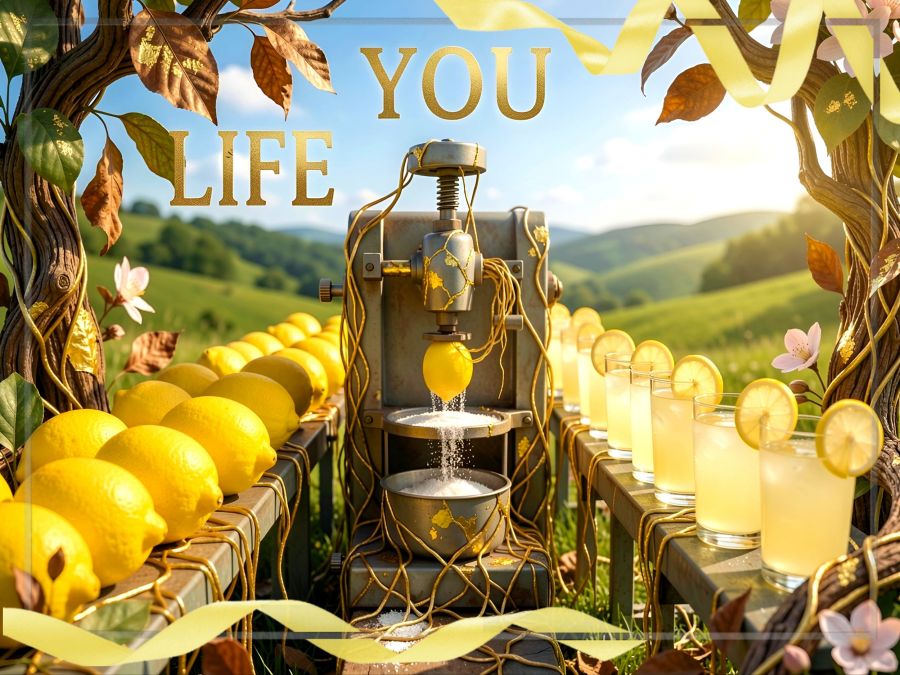

When AI Gets Goosebumps


(CC BY-NC-SA 4.0)
Because the last three days were so intense, I’ve decided to share a couple images that came up in my photo memories because of my recent topics on mountains. These were made in the Abstract Fluid and Kintsugi filters; I really love the colors, and especially the gilded edges, on these pictures.
As for the goosebumps, I just had to share the laugh that when I presented my last blog post for editing (part 3 of the Upside-down Mountain posts), Gemini didn’t find any corrections and said the post gave it “literal goosebumps.” A play on words because it’s literary, or a test to see if I’d catch the word literal and say, ” No you didn’t”? I don’t know, but at least it gave me a good smile and laugh. And I’m very happy that Gemini saw the value and hard work I’d put into that post—and all the posts on that subject.
Of course, I was really tired having been up for hours trying to fix a ghost notification on hubby’s phone that was going off every 2 minutes and then showing nothing in the pull-down notification screen. I need to tell you how to fix it in case it ever happens to you. This is an Android issue, and maybe even Samsung-specific.
So, I tried deleting files. I tried updating the Samsung password since my account fuels every Samsung device in the house and it was warning me that it had been 6 months since the last update. I tried every setting I could find that had to do with that notification, and nothing worked. That’s when Gemini came to my rescue.
First, it had me check to see if I was using message/notification reminders where they periodically pop back up if unanswered. Nope; that was clear. Then came a few more tweaks in notifications, privacy, and accessibility, but still: sounds with no words, every 2 minutes exactly. I knew that phone was not an airplane but would likely be tested that way if it kept it up when hubby got up the next day. So, like a bulldog with a bone, I kept digging.
Really, it’s not as hopeless as it would seem. And part of that is due to a very smart app Gemini told me to download from the Galaxy Store. It’s called “Nice Catch” and it can record all the little changes to your phone with about 7 hours of history. And the developer made it free!
Once I got the download open, I switched on the main toggle (and then every toggle) just to try and find the phantom annoyance. Within 2 minutes, the first one came up. And then 2 more, exactly at 2-minute intervals. They were repeats of the flash flood warning that had hit our area the previous morning when 8 inches of rain dropped in 1 hour. Once we had that info, Gemini was able to direct me to the exact setting that was creating the notifications.
If you have a Samsung smartphone, and especially if you’ve ever gotten random notifications with no visuals, this app works. With or without that app, though, here are the steps for making sure your phone’s emergency notifications are set exactly as you want them. I’m guessing these will be close to the same for every Samsung Android device. Go to…
- Settings (the gear ⚙️ icon)
- Safety and Emergency
- Wireless Emergency Alerts
- Alert Reminder (It will likely say 2 minutes by default, and you can change it to once, 15 minutes, or never.)
Other settings on this page include setting your emergency alerts to full volume even when the phone is on Do Not Disturb, and having the alerts spoken to you.
I will research more for my own phone as I’ve found articles saying the Nice Catch developer, “Good Lock” has lots of great customizations in their app suite. Comment below if there’s something you think I should know about or would be interested in. Thanks!
Share this post on:

🎵Upside-down Mountain of Blessings; Part 1
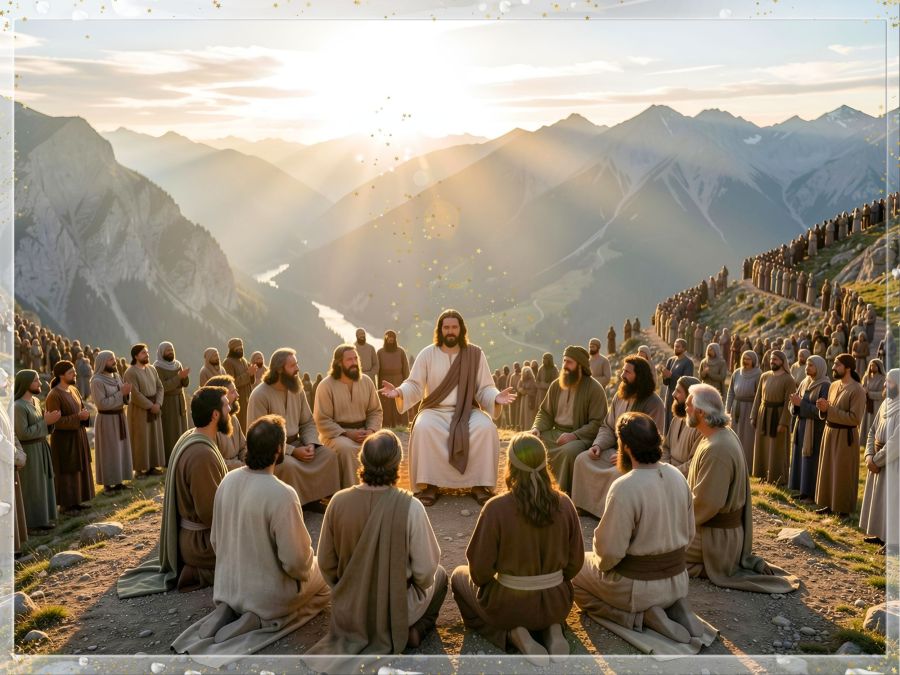
Imagine standing in the desert heat in the Shechem Valley of ancient Israel. You’re listening to the voices of the nation’s tribal leaders shout across two steep cliffs. From one lush green peak, Mount Gerizim, you hear shouts of blessing after blessing poured over the crowds. The shouts promise things like wealth, rain, and victory. And then, from the barren ridge of Mount Ebal, terrifying declarations of curse after curse ring out, warning of catastrophic dangers like poverty, hunger, and exile. This was the environment of the “valley of decision”—the place where God asked for a commitment of loyalty from His people. In Deuteronomy 30:19-20 it says,
Deuteronomy 30:19-20 BSB
[19] I call heaven and earth as witnesses against you today that I have set before you life and death, blessing and cursing. Therefore choose life, so that you and your descendants may live, [20] and that you may love the Lord your God, obey Him, and hold fast to Him. For He is your life, and He will prolong your life in the land that the Lord swore to give to your fathers, to Abraham, Isaac, and Jacob.”

https://bible.com/bible/3034/deu.30.19-20.BSB
For centuries, this was the landscape of ancient Judaism—a clear-cut line where your physical state (blessing or curse on wealth, health, and safety) was your spiritual “report card.” Originally, it had a beautiful purpose in driving loyalty to The Creator and away from the many false gods of the surrounding nations.
But even good things can become co-opted by human misunderstanding until they no longer resemble their original purpose. Over time, religion began to use those “report cards” as excuses to elevate or destroy people based on how they determined God must be judging them. (Think of Job’s “friends.”) If you were successful, you were deemed blessed, and if not, you were deemed cursed.
Suddenly, instead of “one people” gratefully serving the One Lord who delivered them from the bondage and slavery of Egypt, religion devolved into a caste society of judgmental haves lording themselves over the have-nots. It didn’t help people’s hearts grow closer to Yahveh at all. In fact, His heart broke for every person driven away from Him by those whose service to Him was shallow and purely on the surface.
But fast-forward to a different hill in Galilee. Here, a radical new Teacher sits down with the crowd. He looks far beyond the external “report cards” and instead looks deep into the eyes of the poor, the grieving, and the socially rejected. Even if they only came for a free meal or healing, he doesn’t shout at them from a mountain of curses.
Instead, He catches everyone completely by surprise. He looks right at the broken and says, “Blessed are you.”
Welcome to the Upside-Down Mountain of Blessings, where YahShua (Jesus) rewrites everything we thought we knew about the favor of God.
When we talk about this event, we call it The Sermon on the Mount in the book of Matthew, and The Sermon on the Plain in the book of Luke. On the mountain, YahShua mirrors Moses going up the mountain to receive the laws of God, bringing tried-and-true instructions for Kingdom living to His disciples. On the plain, He acts more like Joshua delivering those historic blessings and curses—except He turns them totally upside-down.
We call them “The Beatitudes” (from the Latin word beatus meaning “blessed” or “happy”) and “The Woes.” Notice how the traditional “report card” gets completely flipped. Here’s the account from Luke 6…
Luke 6:20-26 BSB
[20] Looking up at His disciples, Jesus said:

“Blessed are you who are poor, for yours is the kingdom of God.
[21] Blessed are you who hunger now, for you will be filled.
Blessed are you who weep now, for you will laugh.
[22] Blessed are you when people hate you, and when they exclude you and insult you and reject your name as evil because of the Son of Man. [23] Rejoice in that day and leap for joy, because great is your reward in heaven. For their fathers treated the prophets in the same way.

~~~~~~~~~~~~~

[24] But woe to you who are rich, for you have already received your comfort.
[25] Woe to you who are well fed now, for you will hunger.
Woe to you who laugh now, for you will mourn and weep.
[26] Woe to you when all men speak well of you, for their fathers treated the false prophets in the same way.

https://bible.com/bible/3034/luk.6.20-26.BSB

(You can also read Matthew's account of The Beatitudes, which focuses on the blessings without the woes, here: https://bible.com/bible/3034/mat.5.3-11.BSB)
In all of this, you can see how far humanity swung the pendulum of religion away from God’s original intent of “encouraging” people to choose His ways. From the Old Testament mountains to the hills and plains of the New Testament, religious systems had stripped away God’s mercy—leaving a distorted picture that still causes people today to accuse God of being a bully in the Old Testament. But YahShua demonstrated the true heart of The Father by fully ministering to the actual needs of those who followed Him.
And now, as you see your hardships are not a sign of God’s judgment or abandonment, you can release that crushing burden of being required to perform flawlessly for Him to earn your mountain of blessings.
But this leads to a slightly uncomfortable question: If the Kingdom is a place where the empty are filled and the broken are blessed, how do we actually receive it? What does it look like for Our King to roll up His sleeves, kneel down on the ground in front of us, and offer to do the one thing our spiritual pride hates the most—minister to us in our messy and broken conditions?
In Part 2, we will look at exactly that scenario as YahShua declares Himself a servant and washes the feet of His disciples. Read Part 2 here.
In the meantime, check out this fantastic ApologetiX parody of “Venus” by Bananarama and titled “Jesus (Sermon on the Mount). While this specific video isn’t sung directly by them, it’s an excellent parody with great visuals and full lyrics included!
Note: Parts of this study (and a few of the words) were assisted by Google Gemini, alongside website studies at Bible Hub and Got Questions, but I’ve edited and personalized all of it before publishing.
Share this post on:

The Worst Best Gifts

I looked through my draft folder and found one of my oldest unpublished posts. And guess what? It’s probably worth 3-4 posts with all the subjects I tried to include. Granted, when looking through all the gifts in life that come with a healthy dose of responsibility, the list can get pretty long. So, I grabbed the first few paragraphs to share a little part of myself and the way my mind and heart functions.
So, ignorance is bliss according to some. Of course, I can admit it would certainly be more blissful to die instantly in your sleep than to run in terror because you hear a missile screaming toward your bedroom. I guess that’s why so many choose to dwell in an almost-constant state of ignorance—because they desire an almost-constant state of bliss.
Then there are people like me. With gifts of empathy, perspective, and discernment, I’ve noticed many details of my surroundings (and been concerned about the world around me) since as young as I can remember. My aunt used to take me to the lunchroom at the old JC Penny’s where she worked. Though only about 5 years old, on one lunch visit, I offered to share my meal with an employee sitting across from us who wasn’t eating. I was too young to consider why he wasn’t eating, but I couldn’t help being concerned that he might be hungry, so sharing seemed the natural response to that.
For the most part, I have never been able to look at a perceived need in someone’s life without it affecting me emotionally. It’s why I’m desperate to try and fix things even when they’re not my responsibility. It’s a way to deal with the pain of the brokenness I see and feel around me—and within me because of my deep empathetic emotions. That is quite the opposite of ignorance, and it is often the opposite of bliss. It is so opposite that I once asked God to make me less sensitive, so I wouldn’t feel so much hurt, but God made me aware of the total cost for that request. It would require me to be less sensitive to good emotions as well. I chose to endure the pain of sensitivity in order to keep the blessings.
I’ve learned that sensitivity is one of God’s gifts to me, and I cherish it even when it makes me feel worse than I would like. I found a description of how I felt in an article originally published at Squidoo, now owned by Hub Pages. It’s still there and titled The Empath Within — Are You a Highly Sensitive Person? Though it hasn’t been updated since 2013 and has a lot more ads now, it’s a great read even though not written from a Christian perspective. And it cleared up so much of what concerned me that generated the prayer I’d offered. The best part is the list of traits shared by highly sensitive people. Here are a few of them:
The empathic person:
Is emotionally sensitive to the thoughts and feelings of others.
Is rarely concerned with their own achievements, a quiet leader.Has little trouble discussing emotional issues.
Is uncomfortable around disharmonious or emotionally intense people.
It’s a long list, and if you think you may fall into this category, it’s worth reading all the characteristics. The author concludes with a warning to protect your emotions by being careful who you spend time with since some people can exhaust you from a constant stream of negativity. And that’s where the beautiful gift of empathy can begin to feel like it’s not a gift at all. Like Monk (“the defective detective”) used to say, “It’s a gift — and a curse.” I don’t say it’s a curse, but there are people who can drag me down to a point where I think it’s what I’m feeling until I manage to get away from the source and realize it was all coming from them. Thankfully though, there are also people who can lift me up and energize me just from a few minutes with them. God knows how to give us balance.
I’ll close with a note about one of the first books I made an effort to write from a short story I’d written. It was called “The Blind Man’s Desire” and it was about a girl who rode a city bus with a blind man every day. She told him she wished she was blind like him, so she wouldn’t have to see all the awful things in the world. By the time he explained all the good things he missed and wished he could see, she changed her desires and found a lot of good to describe for him to see through her eyes. I guess God was teaching me that lesson long before that prayer.
1 Peter 3:8 BSB
[8] Finally, all of you, be like-minded and sympathetic, love as brothers, be tenderhearted and humble.

https://bible.com/bible/3034/1pe.3.8.BSB

Romans 12:15 BSB
[15] Rejoice with those who rejoice; weep with those who weep.

https://bible.com/bible/3034/rom.12.15.BSB

Share this post on:

Prompt Response: More Input
How do you stay motivated when learning something new?
Being motivated to learn has never really been my issue. I’m very much like Johnny 5 (the later Short Circuit movies) in always wanting more input. I am far more interested in learning a variety of information than in perfecting any one avenue, so that’s where my motivation might fall off somewhat.
I started learning Spanish as a means of brain growth, but lack of having anyone to practice speaking to, and wrestling with technical changes they keep making at Duolingo, made it hard to want to keep trying. But, I keep going back to keep my streak (1425+ days now), so they know what works there. But they can’t seem to give me conversations with Lily (the AI that does “phone calls” with students) where the topics are simple enough and the speech is slow enough. And they want me to gain my quest points with those calls, so I switched to learning Esperanto. And, actually, that’s a fun language to study if for no other reason than the word for doing is fartas. Lol 😂 (”How are you doing’?” is “Kiel vi fartas?” in Esperanto.)
Of course, they also have music 🎶 and math ➗ and other languages I won’t likely need (like Klingon). But I did add Hebrew because I thought it might help with Bible study. The motivation is tough on that one for a few reasons, including not being biblical Hebrew (with some light slang even) and not spelling things out phonetically until I can retain them. For me, it is harder to stay motivated when the learning has too many hurdles. That made me download some other programs/apps like Memrise, Drops, and FluentU. I’ll probably switch mostly to that last one instead of renewing Duo because of the integration into YouTube. While anyone can switch their closed-captions to Spanish to help with language, FluentU allows me to click on words as they are displayed and add them to my library of words to study.
At the same time, I’m always trying to learn new tech stuff. And learning to work with AI through Gemini and Copilot helps me learn more things and then save them to notebooks to review later. With Gemini, I learned how to program a smart thermostat and got recipes for homemade mayo (using an immersion blender) and homemade gazpacho (using a regular blender). But I’ve yet to try the recipes. Still, I’m truly motivated to learn more than I actually have time in a day to do. I’m thankful for all I have been able to learn about kidney diets and dialysis for my hubby, though, so sometimes the drive for more input isn’t such a bad thing.
Truly, I could stay on this subject for days and tell you all what I learned when I was an actress for a few months, a model as a teenager, and a plug-board telephone operator (answering service) for years. But I’d likely wear most readers out with my small bits of knowledge on a vast amount of subjects. This may never have proved to be great for a career path, but in retirement, it’s good for being a writer, and it’s great for finding common ground with many people, so I can meaningfully share the gospel in ways they can understand.
Before I wrote all this, I would have said I needed to let go of some of the less important learning paths and get motivated to push to the end of a few major subjects. But now, I’m thinking this variety in my brain might be exactly what I need. Now if I could just pull the thread that would let me get writer’s meeting plans and announcements done in a more timely manner, I’d feel even better about all I learn to share with others. Until then, I will seek to apply more of the input God has graciously allowed me to retain, and I will work on being like The Apostle Paul in these verses…
1 Corinthians 9:19-23 BSB
[19] Though I am free of obligation to anyone, I make myself a slave to everyone, to win as many as possible. [20] To the Jews I became like a Jew, to win the Jews. To those under the law I became like one under the law (though I myself am not under the law), to win those under the law. [21] To those without the law I became like one without the law (though I am not outside the law of God but am under the law of Christ), to win those without the law. [22] To the weak I became weak, to win the weak. I have become all things to all people so that by all possible means I might save some. [23] I do all this for the sake of the gospel, so that I may share in its blessings.

https://bible.com/bible/3034/1co.9.19-23.BSB
Share this post on:

My Latest Flickr Photos


Others’ Posts I’ve Liked


