Prompt Response: Newness of Life 🆕🧬
with help from Gemini Nano Banana and Photo Studio Pro
What’s a moment in your life that made you feel truly alive?
Life has a number of definitions. From simple existence to abundant living to thriving, life can be lived with or without much pomp and circumstance. Some are happy just to breathe in and out while others require a steady stream of stimuli to feel as if they are truly alive.
For me, I’ve had some wonderful moments of feeling truly alive, like the day I married the love of my life 35+ years ago. And most of those moments followed a moment I felt truly alive; the moment my old life and sin was washed away in baptism, and I began to walk into a new life beside my Savior. Read that story on my July 17th post.
When Paul speaks to the Roman believers about baptism, he says…
“We were therefore buried with Him through baptism into death, in order that, just as Christ was raised from the dead through the glory of the Father, we too may walk in newness of life.”
A few different translations use the words walk in a new life but most seem to agree with the Berean translation to walk in the newness of life. In other words, before that moment, it was not life even if you were existing and breathing in and out. So life from a God’s Word perspective means walking with our Creator and Lord.
That definition also works with the definitions of eternity that assign us to either eternal death or eternal life. Eternal death is the place where not even a worm dies and yet it’s called death, so it seems it’s the lack of the presence of Yahveh Almighty that makes it death. But that doesn’t have to be our eternity. We know from His own words that YahShua (Jesus) is Life.
Jesus answered, “I am the way and the truth and the life.”
He also says that He is The Resurrection.
“Jesus said to her, ‘I am the resurrection and the life. Whoever believes in Me will live, even though he dies. And everyone who lives and believes in Me will never die. Do you believe this?’”
In His Gethsemane prayer in John 17, YahShua says…
“Now this is eternal life, that they may know You, the only true God, and Jesus Christ, whom You have sent.”
And this is echoed by John the Revelator in 1 John 11-12…
“And this is that testimony: God has given us eternal life, and this life is in His Son. Whoever has the Son has life; whoever does not have the Son of God does not have life.”
Finally, in the spirit of the beautiful fall season now gracing the Northern Hemisphere, remember that real life is filled with color. The verdant leaves of spring and summer are basically putting their dinner plates out for the world to see what they’re eating: a diet of chlorophyll. But before they take their winter naps, the green gets fully digested to reveal the true colors that mark the life of each leaf.
🍁🍁🍂🍁🍂🍁🍁
And isn’t that just a beautiful glimpse of Heaven? There, our true colors will shine for eternity and glisten in the Light of His eternal grace! THAT must be the very definition of feeling truly alive.
Share this post on:

Cliché Month: Beauty is Only Skin Deep; plus Beauty is in the Eye of the Beholder

I’m bringing you two related clichés today because they are parts along the same line of looking at real beauty vs false beauty. I write from the point of view of someone who’s never really liked what she saw in the mirror, though I haven’t hated what I see either. It just always seemed like most others were prettier than me. There have been moments where I fixed myself up into something I was more pleased with, but even those never made me feel gorgeous or beautiful.
On the other hand, my acceptance of being more plain than those “real” beauties in my life has driven me to develop inner beauty. Caring how others feel, trying to be helpful to almost everyone, and freely talking about my various failures in life to make sure no one feels like I think I’m better than them has always been among my goals. Even with winning behaviors or skills, if they made someone else feel loss, it took the wind right out of my sails. (Hmm, that’s another cliché, huh?)
Sometime during my travels with the photo studio, a TV was on with a show called Monsters. The episode I watched back then (around 1990) has stuck with me for years even though I didn’t actually know the show or what the episode was called until a few weeks of deep searching gave me the result: Season 2, episode 23, called “The Bargain.” I’ve linked to it on YouTube, but the summary goes like this:
A woman owns a bookstore and has feelings for a customer who doesn’t seem to feel the same. She decides it’s because she’s plain, so when she sees an ad for a new face, she calls the number. Her new face is beautiful but comes with a few prices. In the end, the woman with her old face gets the guy who’d been in love with her inner beauty all along, so she lost everything by focusing on the outer shell. I guess this actually goes a little with yesterday’s cliché to not judge a book by its cover as well.
Now, the second cliché makes a similar point, and the illustration of it is shown perfectly in the old Twilight Zone episode called Eye of the Beholder from season 1, episode 39. But I was unable to find that in a full original episode without commentary. I have linked to the unveiling moment in the remake from 2002 since the point is still shown, and the videography still pulls off some of the tricks of the original.
If you haven’t seen it, I don’t want to spoil this one, so I’ll just tell you that it’s an episode about a woman who has plastic surgery to “fix” her face to give her the beauty of those around her. The surgery fails and the lights come on to reveal that beauty—both hers and others—is not exactly what most expect it to be.
On a side note, if you watch (or rewatch) this full episode, pay attention to the amazing use of shadows and camera angles that hide the actual faces of the cast until the reveal at about 16 minutes in. The strength of the film is in the audio until the lights come on, and you never realize something is being purposely hidden from the audience. It’s done brilliantly.
So how do we look at the world when we’ve been so trained to judge on outward appearances and yet somehow know they are not the answer? The Bible speaks to this in three different ways.
Proverbs 31:30 BSB
[30] Charm is deceptive and beauty is fleeting, but a woman who fears the Lord is to be praised.

https://bible.com/bible/3034/pro.31.30.BSB

1 Samuel 16:7 BSB
[7] But the Lord said to Samuel, “Do not consider his appearance or height, for I have rejected him; the Lord does not see as man does. For man sees the outward appearance, but the Lord sees the heart.”

https://bible.com/bible/3034/1sa.16.7.BSB

1 Peter 3:3-4 BSB
[3] Your beauty should not come from outward adornment, such as braided hair or gold jewelry or fine clothes, [4] but from the inner disposition of your heart, the unfading beauty of a gentle and quiet spirit, which is precious in God’s sight.

https://bible.com/bible/3034/1pe.3.3-4.BSB
Each of us should work on our inner beauty, and we should also strive to see the inner beauty of others. It is that true beauty that will allow us to make genuine connections to each other; connections so strong that they supercede any abundance or lack of external beauty.
This message is portrayed beautifully in the Pure Flix movie called “A Hot Cocoa Christmas” (formerly called “Much Ado About Christmas”) and one I highly recommend is worth renting. I wish I could find the karaoke scene that shows the connection between the couple, but here’s the trailer for the whole movie:
Just imagine a world where the insides truly mean more than the outsides to most people. No more harming others because they’re wearing the shoes someone else thinks they deserve; no more attacking people because of any outward display (age, race, gender, etc.) someone dislikes; no more graffiti and damage to the outsides of buildings or cars or wherever people feel their appearances need to be made; and people dedicated to bringing out the best in others, so their inner beauty can shine. All that would be Heavenly. Dream with me, and let your own inner beauty sparkle. ✨🤩

Shout out to both Google Gemini and Microsoft Copilot for helping me find the info for that old show and for pointing out the symmetry arc my mind naturally found by looking at these three sources to present my points.
Share this post on:

Cliché Month: Actions Speak Louder than Words

I almost added an ellipsis at the end of the word “speak” in the above illustration. I forgot to ask for it in the prompt, so when Nano Banana created it, I was pleasantly surprised to see this powerful message of “Action Speaks” jump right out at me. Even without the remaining words of the cliché, it’s a solid and true message.
I realized after writing all of this that it’s almost an argument against yesterday’s cliché that the pen is mightier than the sword. I mean, if you’re taking action by a sword, that would definitely be louder than threatening words. But today’s message is more about the actions that must follow the life-changing words of the pen.
Has anyone ever told you they loved you and then made you doubt their words by their behaviors? Or have you ever had someone promise you something from the bottom of their heart with a pinky promise and, no matter how strongly they swore its truthfulness at the time, never fulfilled that promise?
If you answered yes to either of those questions (and I’d think most people could,) you’ve had a demonstration of words being weaker than actions. If the bad behaviors or broken promises have broken something in you, then you’ve truly understood the louder language of actions.
Of course, this also works the opposite way. Like when I moved in with my grandparents at 12-years-old and fell in love with a neighborhood kitty cat that started hanging around our house. When she showed up pregnant, I asked my grandfather if we could bring her inside to have her kittens, and he vehemently said no to my pleas.
One afternoon, a few days later, I got home from school to find a box in my room. Not only was it perfect for Mama Cat, but Grandpa had added some cushiony towels and cut a little area in the front of the box shorter to make sure she could get her oversized belly in there. Those actions were not only a gift to the cat and her kittens, they were a precious gift from my grandfather to me that stayed with me forever.
Actions speak! AND they speak louder than any words—no matter how true and passionate those words may sound. It’s why real Christianity is far more than an emotional confession during fleeting moments of fear or conviction. What you do after you stand back up from your knees makes all the difference. It’s why baptism is one of the first things offered to new converts. More than a ritual, it’s an action that speaks of your plans to turn away from your sins by literally washing them away in the figurative blood of Christ. Your old self, along with the actions you engaged in while in bondage to sin, is buried with YahShua (Jesus) in baptism, so your new self can rise up like He did in resurrection and perform new actions that imitate Him.
What would Jesus do? is much more powerful than What would Jesus say? (Though, in His case, what He said was pretty important as well. 😊)
Even the Bible has strong words about the importance of actions over words. When shallow actions performed by habit spoke to The Messiah that people didn’t really care about Him as much as they did their rituals, He called them hypocrites.
Matthew 15:8 BSB
[8] ‘These people honor Me with their lips, but their hearts are far from Me.

https://bible.com/bible/3034/mat.15.8.BSB
Action that springs from the action of listening with our hearts brings blessings when we act on what we have learned:
James 1:25 BSB
[25] But the one who looks intently into the perfect law of freedom, and continues to do so — not being a forgetful hearer, but an effective doer — he will be blessed in what he does. (Emphasis added by me.)

https://bible.com/bible/3034/jas.1.25.BSB
YahShua says it’s our good deeds that shine a light and glorify God:
Matthew 5:16 BSB
[16] In the same way, let your light shine before men, that they may see your good deeds and glorify your Father in heaven.

https://bible.com/bible/3034/mat.5.16.BSB
In First John, we’re reminded of the power of action and truth:
1 John 3:18 BSB
[18] Little children, let us love not in word and speech, but in action and truth.

https://bible.com/bible/3034/1jn.3.18.BSB
And in Colossians, we’re reminded how important our focus is whether we are speaking words or doing actions:
Colossians 3:17 BSB
[17] And whatever you do, in word or deed, do it all in the name of the Lord Jesus, giving thanks to God the Father through Him.

https://bible.com/bible/3034/col.3.17.BSB
And I’ll close with a parable of YahShua that perfectly demonstrates today’s cliché. It’s called “The Parable of the Two Sons” and says:
Matthew 21:28-32 BSB
[28] But what do you think? There was a man who had two sons. He went to the first one and said, ‘Son, go and work today in the vineyard.’ [29] ‘I will not,’ he replied. But later he changed his mind and went. [30] Then the man went to the second son and told him the same thing. ‘I will, sir,’ he said. But he did not go. [31] Which of the two did the will of his father?” “The first,” they answered. Jesus said to them, “Truly I tell you, the tax collectors and prostitutes are entering the kingdom of God before you. [32] For John came to you in the way of righteousness, and you did not believe him, but the tax collectors and prostitutes did. And even after you saw this, you did not repent and believe him.

https://bible.com/bible/3034/mat.21.28-32.BSB
Share this post on:

Cliche Month: The Pen is Mightier Than the Sword

I know, I know… If you’re a writer, you’ve been told to “avoid clichés like the plague” (the ultimate cliché in itself!) So why am I planning a month of posts all about clichés?
Though the publisher’s advice to avoid using clichés is not empty advice, totally dismissing them ignores a crucial fact: clichés are clichés for a reason. They are successful linguistic vessels that earned their status by capturing universal truths and vivid imagery so perfectly, they had to be repeated—and repeated again.
While clichés can be efficient methods for driving home a point without launching into a wordy diatribe, overused phrases can make writing feel lazy and flat. Still, a bit of clichéd shorthand to convey a warning or some sage advice is powerful when used correctly.
Throughout August, we’re going to take a deep dive into the paradoxical world of clichés to learn the DNA of persuasive language. We will peel back their layers to expose the colorful, often surprising history and background behind phrases that still bring important punches of truth and deep thought to our prose. We will learn how to transform them from lazy shorthand back into powerful tools of expression.
For example, the exact phrase highlighted in neon text above was coined in 1839 by the writer Edward Bulwer-Lytton for his play Richelieu. Beyond the play, it became the ultimate rallying cry for persuasion over force and freedom of speech.
We see the power of the pen throughout Scripture as well. Way back in Deuteronomy, God told the children of Israel to write His commands where they would see and remember them:
Deuteronomy 11:20 BSB
[20] Write them on the doorposts of your houses and on your gates,

https://bible.com/bible/3034/deu.11.20.BSB
In the book of First John, the authors use the pen to share what they have seen with their own eyes and touched with their own hands to those who read their words. In verse 4, they share their purpose:
1 John 1:4 BSB
[4] We write these things so that our joy may be complete.

https://bible.com/bible/3034/1jn.1.4.BSB
God told Habakkuk to write clearly on stone tablets where a herald could pick them up and carry the penned words to others.
Habakkuk 2:2 BSB
[2] Then the Lord answered me: “Write down this vision and clearly inscribe it on tablets, so that a herald may run with it.

https://bible.com/bible/3034/hab.2.2.BSB
Paul told the Corinthians that he used the power of his pen to write things in ways he knew they would understand:
2 Corinthians 1:13 BSB
[13] For we do not write you anything that is beyond your ability to read and understand. And I hope that you will understand us completely.

https://bible.com/bible/3034/2co.1.13.BSB
And God Himself told Moses to chisel out 2 stone tablets (more than once), so He could use the power of the written word, though He didn’t need pen and ink since He was God and could use His own hand.
Deuteronomy 10:2, 4 BSB
[2] "And I will write on the tablets the words that were on the first tablets, which you broke; and you are to place them in the ark.”
[4] And the Lord wrote on the tablets what had been written previously, the Ten Commandments that He had spoken to you on the mountain out of the fire on the day of the assembly. The Lord gave them to me.

https://bible.com/bible/3034/deu.10.2-4.BSB
So whether it’s the finger of God, a chisel, a paintbrush, an antique pen or feather, a modern roller ball, or a printing press (physical or digital), the power of words conveyed by a writing instrument is significant. The Holy Bible is the most amazing collection of words ever penned, and it still has soul-changing power.
Let’s take this month to learn the power of words, even as used in the form of a cliché, and undo the negative definition of the word cliché. Let’s learn to master the principals that made these succinct moral lessons powerful before they became relegated to the weakness of cliché, ensuring our own words resonate with equal weight and authority.
Many thanks to Google’s Gemini AI for the cool neon word art, the history of today’s cliché, and some inspirational words and editing for putting this all together.
Share this post on:

🎵The Hospitality of Rest: Why the Sabbath Was Made for Us

Sometimes, a roadblock that changes our plans is exactly what it takes to slow us down for just long enough.
Today, my “Operation Cleanout” friend and I had big plans to build a new project. FedEx had dropped off my package a couple days ago, and it looked like it had been through a war zone. How is it that when your tracking shows your item is out for delivery, and then it gets delayed, it often shows up damaged? We didn’t know if the shelf would be as bad as the box, so we dug out all the heavy pieces. Sadly, even with lots of great packing materials to protect it, the mistreatment was more than it could survive. Our plans were instantly derailed.
(That kinda sounds like life, sometimes, doesn’t it? We think we’re all cushioned against the blows, and then reality hits.)
At first, I felt that familiar, heavy spike of aggravation. Broken momentum tends to undo all my other plans as well. Especially after calling Amazon and finding out that I had to deal directly with a seller in another country. But, as much as I dislike my plans being hijacked by circumstances beyond my control, I was actually more at peace because of having the presence of a good friend to share in the frustrations.
So, we started fellowshipping and talking about God and His Word and His precious promises to us. I noted her resilience to stand on The Word and not compromise what it directs her to do. In our conversation of why we do what we do, we talked about that tendency in modern Christianity to identify Friday-Saturday Sabbath as Jewish and Sunday as a “Christian Sabbath Day.” She doesn’t think that way herself, but I mentioned what I had learned in my Messianic Jewish studies about the fact that Sabbath existed before Moses or Abraham or Judaism. It was the 7th day of Creation!
Later in the day, that conversation came back to me. As the evening approached and the thoughts of this week’s Sabbath rolled in, a verse kept circling through my mind: “The Sabbath was made for man, and not man for the Sabbath.”
Mark 2:27-28 BSB
[27] Then Jesus declared, “The Sabbath was made for man, not man for the Sabbath. [28] Therefore, the Son of Man is Lord even of the Sabbath.”

https://bible.com/bible/3034/mrk.2.27-28.BSB
When we look at the creation story and read about that first Sabbath, we read that God rested on the seventh day. But I found myself asking tonight: If the Sabbath was made for man, why did God rest? He doesn’t get tired.
And then it hit me…
For the first six days of creation, God was working alone. He was building, shaping, separating light from dark, and speaking galaxies into existence. He was being the Supreme Creator and doing Supreme Creator things all by Himself—but not for Himself. At the end of the sixth day, He made us. The prophet Isaiah reminds us of these plans in God’s blueprints in Isaiah 45:18…
Isaiah 45:18 BSB
[18] For thus says the Lord, who created the heavens— He is God; He formed the earth and fashioned it; He established it; He did not create it to be empty, but formed it to be inhabited: “I am the Lord, and there is no other.

https://bible.com/bible/3034/isa.45.18.BSB
The seventh day wasn’t a pause because God ran out of energy or creative ideas. He took the time to pause because the home was completed and His family had finally arrived. He finished the work, turned the garden over to man, and then walked in the cool of the day with him.
Isaiah 40:28 BSB
[28] Do you not know? Have you not heard? The Lord is the everlasting God, the Creator of the ends of the earth. He will not grow tired or weary; His understanding is beyond searching out.

https://bible.com/bible/3034/isa.40.28.BSB
The Sabbath was made for man because God wanted a designated time and space to fellowship with us. It’s not about religious observance and law keeping. It’s about spending time with God and making the time and space for God to spend time with us. It’s preparing a seat at the table, having a fulfilling meal, and then taking a walk together. And though God knew we would need a designated space to fill our wells for the week ahead, He made the Sabbath out of His deep, passionate desire to simply fellowship with us. Picture it like this: The Creator of the universe setting down His tools, turning around with a smile on His face, and saying, “Okay, I’m done working. Now, let’s spend some time together.”
While I collaborated with Gemini on this post, this beautiful statement came out of it:
“The entire multi-day cosmic construction project wasn’t an empty display of power. It was the intentional staging of a home, built specifically so He could move in and share with us.”
So for this Sabbath weekend, the battered box is still in the hallway, and the momentum for that project is still broken. But as I step into this day of rest, I can see my derailed plans as a gift. They slowed me down to talk of this deep subject with a sister in The Lord, and that came back as such a wonderful realization that my future Sabbath days will have a much deeper meaning than before.
If something in your life took a beating this week, and if your own plans got derailed, take a breath and take a break. God has invited us to take a walk in the garden with the One who made it. Let’s meet Him where He’s waiting for us. And as we’re walking, we can sing this wonderful old hymn with a new sweetness in our hearts and voices:
Share this post on:

🎵Prompt Response: Happiness vs Joy
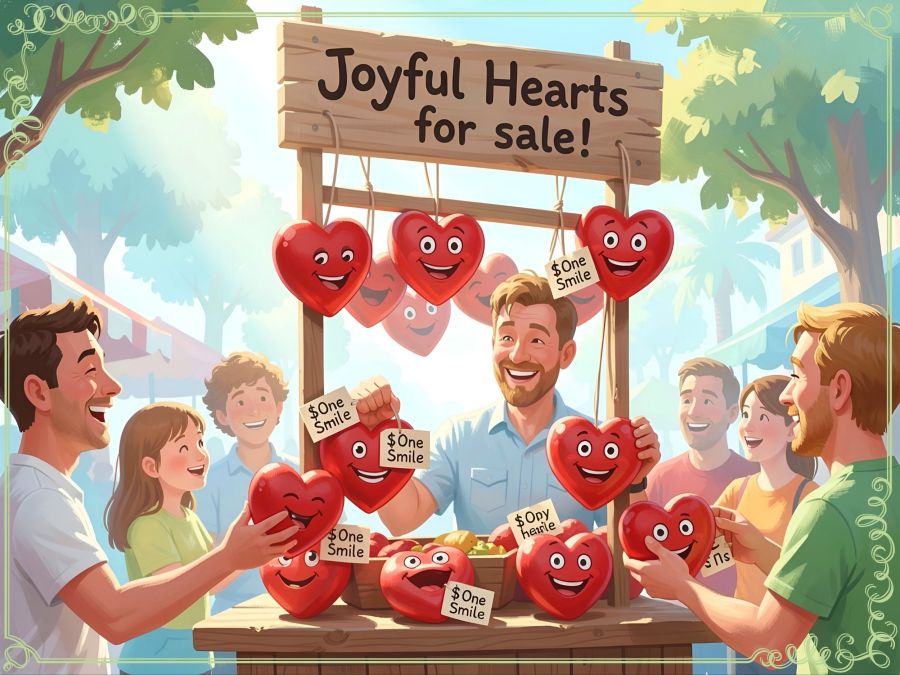
What’s a common misconception people have about happiness?
There are many common misconceptions about happiness, but I think the biggest one is that it means the same thing as joy.
Happiness is an emotion. It is something we can choose to receive or to reject. It fully belongs to us to do with as we wish. And because human emotions are not always steady, it means that happiness will ebb and flow like an ocean tide. It’s mostly based on our current experiences, but for those who are good at making lemonade from life’s lemons, it can show up despite sour events in life.
I’m not saying that happiness is not a gift, though; it is a wonderful gift that often fills us up with what we need to sustain us in unhappy times. But it’s not joy. That is something that comes from only one source—God Himself. Because joy is a fruit of The Holy Spirit, it means it belongs to Yahveh, and it’s in His control. And just like The Lord is the same yesterday, today, and forever; joy is always the same and not dependent on circumstances.
See, we really need both of these in this life. We don’t deserve happiness (that’s another message all together), but we need it for balance. It will give us strength and hope to keep us looking for that next happy day and help us to not be so willing to give up because we know what we’d miss.
Sometimes, though, it’s really not easy to feel happiness. Even those with 24/7 lemonade stands sometimes struggle to be happy in the face of hard events or times. If they are followers of YahShua, though, this is where they can lean into joy. Because His Spirit is inside them to sustain them at all times, they can tap into that deep joy (along with the other fruit like love, peace, mercy, etc.) and make it through the hard times with strength to carry them to the next moment of happiness. They can trade temporary smiles of happiness for permanent hearts filled with God’s joy.
Nehemiah 8:10 BSB
[10] Then Nehemiah told them, “Go and eat what is rich, drink what is sweet, and send out portions to those who have nothing prepared, since today is holy to our Lord. Do not grieve, for the joy of the Lord is your strength.”

https://bible.com/bible/3034/neh.8.10.BSB
Now, for a moment of happiness, look at these adorable pictures from Wombo using the knitting filter.

And when you get the joy, joy, joy down in your heart, you’ll find that the joy of The Lord is your strength.
And while I thought I was almost done with this post, I have to append this note: I was looking for the old Sunday School chorus about the joy of The Lord when I came across the song above. I liked it right away, but before sharing it here, I wanted to research the spiritual foundations of the band. It turns out, they wrote this song specifically for a time of grief in the band when they needed the joy of The Lord to comfort them in unhappy times. (Shout out to Gemini for this important historical note.) That makes me feel like finding this song after everything I wrote before I even looked for it is not just happenstance or coincidence.
And here’s the one I was originally going to share.
Share this post on:

🎵A Very Big Tree
I’m keeping this shorter tonight.
I was thinking about the conversation Eve had with the serpent in the garden. Here’s the beginning of it from Genesis 3:1:
Genesis 3:1 KJV
[1] Now the serpent was more subtil than any beast of the field which the LORD God had made. And he said unto the woman, Yea, hath God said, Ye shall not eat of every tree of the garden?

https://bible.com/bible/1/gen.3.1.KJV
Do you see the anxiety-inducing, manipulative question in that statement? “…Ye shall not eat of EVERY tree of the garden?” (My emphasis here.) In many translations, the word “every” is replaced by “any” which still shows the manipulation, but I think every reveals the hidden agenda a little better. Basically, the enemy made ONE tree bigger than ALL the trees of the garden. One tree that God forbade to protect their innocence became more desirable than who knows how many others with wonderful and sweet fruit available to them 24/7.
That manipulation still goes on today, and sometimes even using words from The Holy Bible. Someone will use the word “slave” as an excuse to avoid God and His words, even though far more of them are filled with mercy and grace. A Christian battling with performance or perfection issues will find a verse like “Be ye perfect” larger than “My grace is sufficient.”
So, I just want to remind you today that the garden was bigger than one tree. And God’s plans for salvation are bigger than any man-made set of do’s and don’ts that demand our adherence to earn God’s love. When you encounter anxiety from the written word, ask God to show you through His Holy Spirit how to understand it and correctly apply it to your own life. It will be His pleasure to let you know because it’s His desire for you to spend your eternity with Him.
2 Peter 3:9 BSB
[9] The Lord is not slow in keeping His promise as some understand slowness, but is patient with you, not wanting anyone to perish but everyone to come to repentance.

https://bible.com/bible/3034/2pe.3.9.BSB
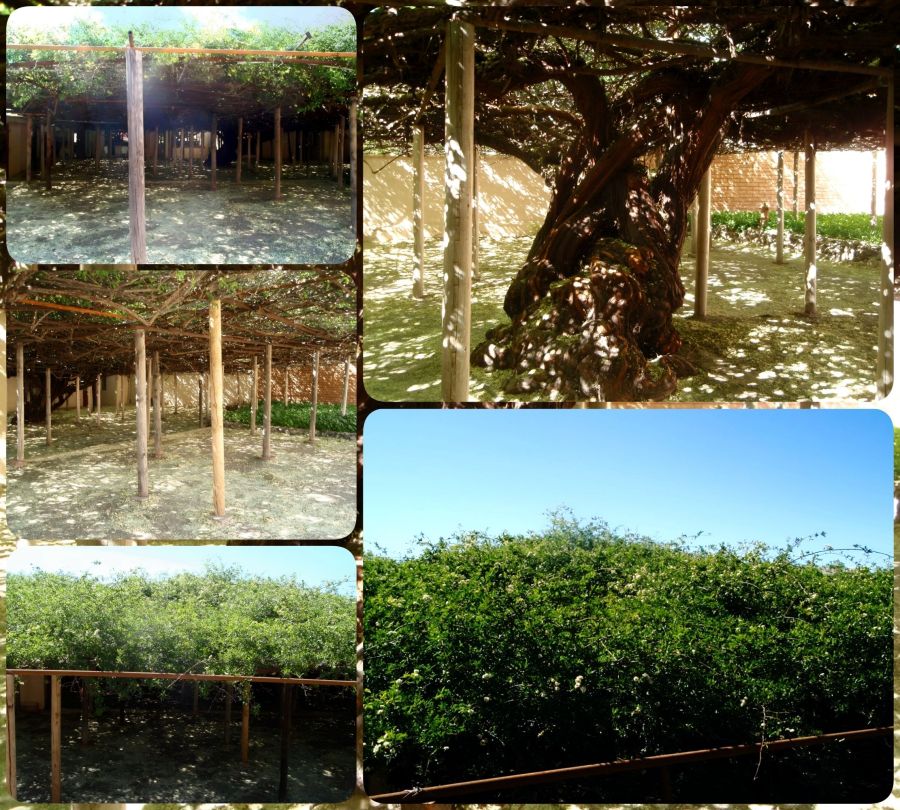
And if you travel while on this Earth and if those travels take you out Arizona way like they did me in May of 2010, stop and see the World’s Largest Rose Tree and museum in Tombstone, Arizona. I wish my pictures were better at showing how magnificent it is, but the images and video on the website should.
And now, since we’re talking about roses, sing along with this beautiful bluegrass version of “Where the Roses Never Fade.”
Share this post on:

🎵 The Upside-down Mountain of Blessings; Part 3
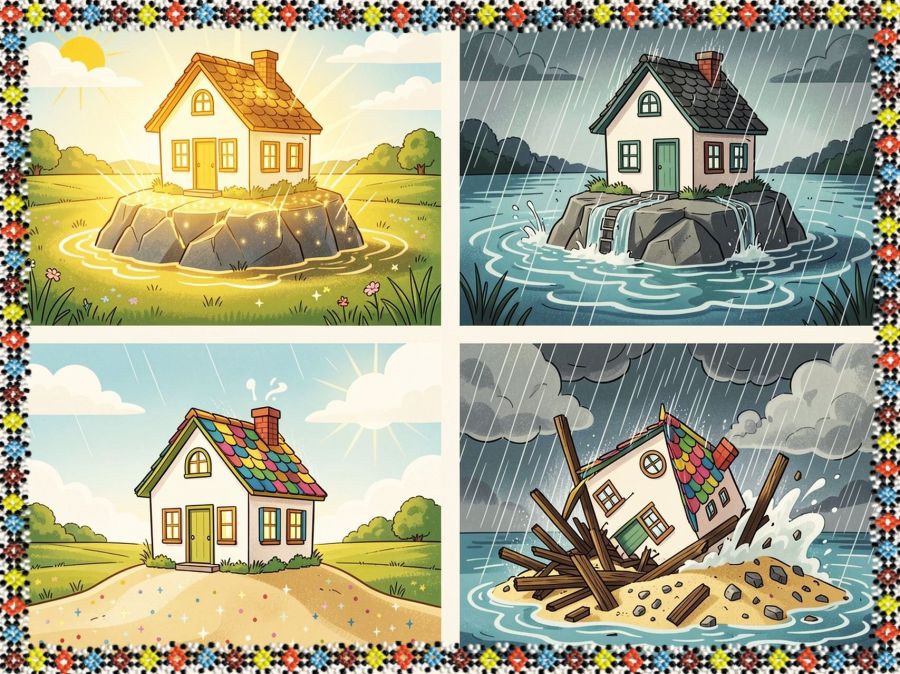
The dark clouds roll in with a thunderous crackle, and a howling wind blows blinding sheets of rain against the neighborhood. A flash flood violently surges over the riverbanks, ripping up trees and slamming directly into two houses. From a distance, the two structures look identical. But as the mud rushes over the foundations, their differences become obvious. One house stands completely unmoved against the torrent, while the other one collapses into a catastrophic heap of crushed bricks and broken wood. This is the closing cinematic scene of YahShua’s famous sermon.
After dismantling four millennia of religious chaos and bringing the focus back to its original purpose—grace—He ends with a sharp warning about an unavoidable storm. He forces us to look past the outward appearance of our lives and look directly at what is underneath them. Without explicitly asking Himself, He poses the question: What is your foundation?
Matthew 7:24-27 BSB
[24] Therefore everyone who hears these words of Mine and acts on them is like a wise man who built his house on the rock. [25] The rain fell, the torrents raged, and the winds blew and beat against that house; yet it did not fall, because its foundation was on the rock.
~~~~~~~~~~~~
[26] But everyone who hears these words of Mine and does not act on them is like a foolish man who built his house on sand. [27] The rain fell, the torrents raged, and the winds blew and beat against that house, and it fell— and great was its collapse!”

https://bible.com/bible/3034/mat.7.24-27.BSB
So I ask you, dear reader, what is your foundation? Are you trusting in The Lord and built on a rock-solid foundation that is backed up in Scripture? Have you tested the beliefs that frame your spiritual life against the words of The Carpenter?
And if you’ve ever wondered what a house (and rock) made of knitted yarn looks like, check out this cute image…

I loved working on this study with Gemini because it brought up some focal points I may have missed if I’d spent the hours required to search all the sources the AI has access to. One great point was this: The wise builder didn’t build a house to earn the rock; he built on the rock because he trusted its strength. At least it’s a great point to someone who has spent many days and hours trying to perform flawlessly enough to keep the Rock in my life rather than causing Him to give up on me.
I also liked the notes on comparing our walk with Christ to a phone that needs to be charged. A phone doesn’t earn its power by working, it sits passively on a charger to receive power. But it receives power *so that* it can go out and run its apps. Good behavior and holy living are not a currency we pay to get God to love us—they are the natural fruit of a life that has finally let God and His love be the source of power.
Stopping the Grace vs Works Pendulum
We don’t obey God to convince Him we are worthy of His love; we obey Him because we have finally allowed Him to fully love us. His way. Based on His worthiness—poured out in blood at Calvary. We obey because, like a glass submitting to a vessel that’s pouring water into it, we trust Him to fill us up. Good behavior and obedience, including letting God serve us in healings and other blessings, is the fruit of that trust.
The balance of both grace and good works—with grace setting us free from struggling for a paycheck attached to our workload—stops the pendulum. Once we’re free from being servants of sin, we become like children who want to please our holy Father because we love and trust Him. We’re no longer swinging from one extreme to the other trying to figure out which lessons to follow to become perfect or shunning works all together as if they are a type of bondage.
Now, we’re praising God from the top of the upside-down mountain of blessings, and from the valley below. We realize blessings are His gifts of love toward us rather than rewards for our perfection. He pours out gifts because He wants to. No more begging; just receiving, trusting, and loving in all kinds of weather.
As we wrap up this journey on the Upside-Down Mountain of Blessings, look at your own spiritual foundation today. Are you still trying to climb the old mountains of performance, or are you ready to build on the Rock of Christ’s finished work? I’d love to hear your thoughts in the comments below: Which part of this upside-down message speaks most deeply to where you are at in your faith journey right now?
Read Part 1 at: https://crystal-writes.com/2026/06/07/upside-down1/

Read Part 2 at: https://crystal-writes.com/2026/06/08/upside-down2/
And now, enjoy an old childhood favorite about the wise man and the foolish man…
And I’ll finish this in style with the beautiful song “God on the Mountain” by Lynda Randle…
Note: Parts of this study (and a few of the words) were assisted by Google Gemini, alongside website studies at Bible Hub and Got Questions, but I’ve edited and personalized all of it before publishing.
Share this post on:

The Upside-down Mountain of Blessings; Part 2
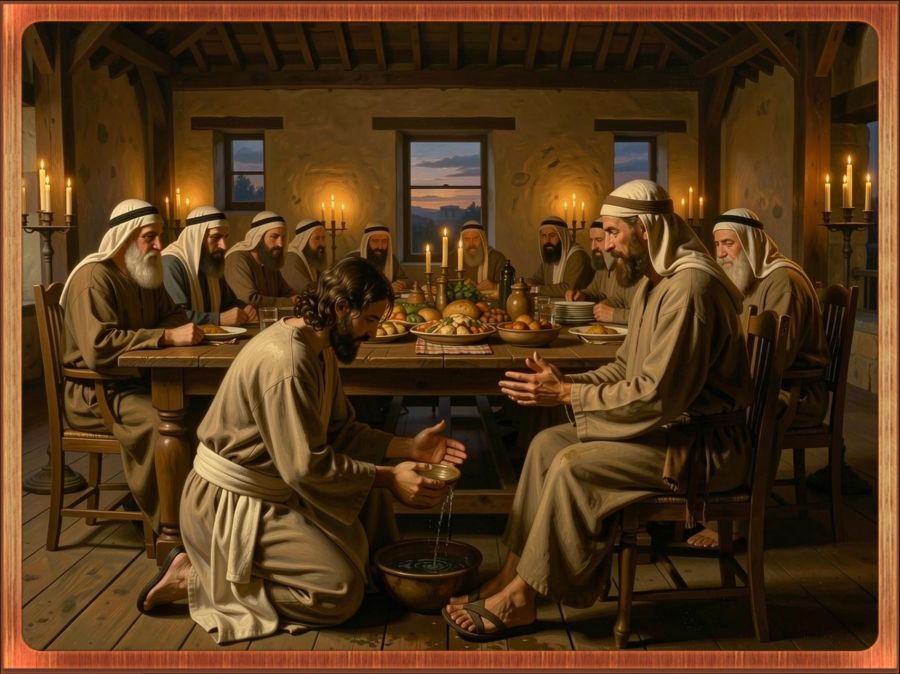
Picture a candle-lit upper room at dusk on the night before the crucifixion. The air is heavy with tension, and the disciples are doing what human beings always do when they are insecure: arguing about who among them is the greatest and therefore deserves the seat of honor nearest the Messiah.
Suddenly, the room falls dead silent. Everyone turns toward the front of the table where YahShua has pushed aside His plate of bread and the cups of covenant He had just taught about.
Silently, The Rabbi stands up and ties a towel around His waist. The others watch as He pours water into a basin and lowers it to the floor. He kneels before the first disciple to wash his dirty, dust-covered feet. And then He washes the feet of the next one, and the next. These are moments of profound beauty—and total theological panic. The stunned disciples submit to their Master, but it all feels upside-down to them.
When YahShua gets to Peter, the tough fisherman recoils in flat-out refusal. Even though YahShua had just stated He was there to serve them, Peter’s religious training told him that followers serve the Master, not the other way around.
“But it’s me who should be washing Your feet,” Peter exclaims!
YahShua looks up at Peter from the floor. In a loving moment of warning, He reminds him that without submitting to Him as a servant, Peter will have no part with Him.
Now Peter swings the pendulum the other way requesting for his Master to wash him head to toe. It’s a beautiful way for Peter to state that he is sold out to The Messiah and is fully committed to His ministry. We know that commitment will be tested within the next couple days, and Peter will fail, but it won’t be the end of his ministry.
YahShua has seen the future denials, but He has also seen the future. In Mark 16:7, He sends an angel to specifically include him: “go tell the disciples and Peter” to meet Him in Galilee.
Mark 16:7 BSB
[7] But go, tell His disciples and Peter, ‘He is going ahead of you into Galilee. There you will see Him, just as He told you.’”

https://bible.com/bible/3034/mrk.16.7.BSB
This story of deep messages and lessons across the dinner table is shared in all four gospels, though not all parts are in each rendition. Still, for quick reference to read these yourself, check out these links at Bible Hub where you can read a variety of Bible translations and even put them in parallel.
Matthew 26... https://biblehub.com/bsb/matthew/26.htm

Mark 14... https://biblehub.com/bsb/mark/14.htm

Luke 22... https://biblehub.com/bsb/luke/22.htm

John 13... https://biblehub.com/bsb/john/13.htm
My introduction to this upside-down view of YahShua came during a recent Bible study in the YouVersion app. It’s called “Daily Encouragement,” and it’s a year-long study of 366 devotions written by a lifelong missionary. On Day 207, the devotion covers the verse in Mark 10:45 (“For even the Son of Man did not come to be served, but to serve, and to give His life as a ransom for many.”) Then he gives a quote from Bible teacher P.T. Forsyth that really got to me:
“Christ came not to be ministered to but to minister, and our first duty therefore is to be ministered to by him.”
From Peter’s experience and this quote, I’m trying to look at how letting Christ serve me is an act of obedience.
In the devotion, the missionary mentions some of the words to describe God like Comforter, Shepherd, Helper, Keeper, High Priest, Husband, and Father. All of these words show actions in service to us. If we ask Him for comfort, and then we actually let Him comfort us, we are submitting to His service toward us. The same when we ask Him to save us, deliver us, or heal us.
Going back to yesterday’s thoughts in Part 1, it’s not about being the perfect performer to earn His blessings. The upside-down reality is that while He is the Master, submission and obedience to Him means receiving what He offers us.
If you are a follower of Christ, you took that first step of obedience by submitting to the mercy and grace found in His blood, allowing Him to wash your sins away just as He washed Peter’s feet. It didn’t elevate you above your Master or make you perfect any more than it did Peter, but it did prove that obedience given out of trust and love is the very definition of redemption.
That submission to salvation is the first step of many. But if you’re like me, your next steps took all the responsibility onto your own shoulders as you struggled to please The Lord (and maybe a few preachers) with flawless performance. You forgot—or maybe weren’t taught—you had stepped into a submission of receiving from The King of Kings Himself, the One who declared Himself your servant.
True Christian obedience doesn’t begin with a checklist of things we do for God; it begins with the vulnerability of opening our hands and letting YahShua (Jesus) minister to us through His salvation, healing, and comfort. Asking, seeking, and knocking (Matthew 7;7) isn’t an act of begging a distant deity—it is the posture of a child receiving from a good Father.
But here is where the pendulum usually swings to the opposite extreme. If the Christian life is entirely about passively receiving the grace and service of Christ, does that mean our actual behavior doesn’t matter? Can we just claim mercy and live however we want?
In Part 3, we are going to look at how to stop the pendulum from swinging between legalism and laziness, and discover what it truly means to build a life on the only Rock that stands firm when the storms hit.
Note: Parts of this study (and a few of the words) were assisted by Google Gemini, alongside website studies at Bible Hub and Got Questions, but I’ve edited and personalized all of it before publishing.
Share this post on:

🎵Upside-down Mountain of Blessings; Part 1
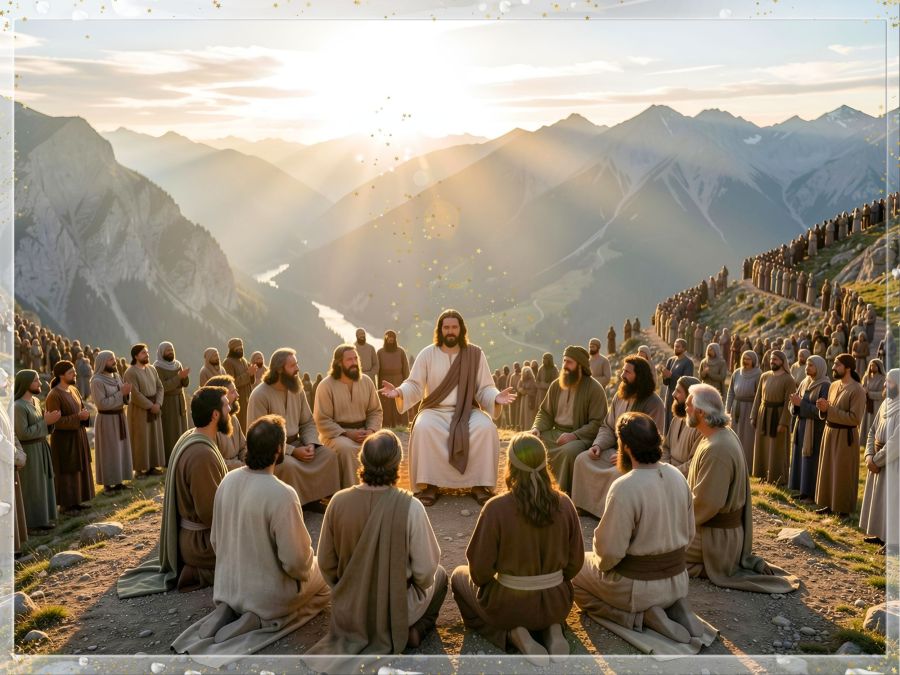
Imagine standing in the desert heat in the Shechem Valley of ancient Israel. You’re listening to the voices of the nation’s tribal leaders shout across two steep cliffs. From one lush green peak, Mount Gerizim, you hear shouts of blessing after blessing poured over the crowds. The shouts promise things like wealth, rain, and victory. And then, from the barren ridge of Mount Ebal, terrifying declarations of curse after curse ring out, warning of catastrophic dangers like poverty, hunger, and exile. This was the environment of the “valley of decision”—the place where God asked for a commitment of loyalty from His people. In Deuteronomy 30:19-20 it says,
Deuteronomy 30:19-20 BSB
[19] I call heaven and earth as witnesses against you today that I have set before you life and death, blessing and cursing. Therefore choose life, so that you and your descendants may live, [20] and that you may love the Lord your God, obey Him, and hold fast to Him. For He is your life, and He will prolong your life in the land that the Lord swore to give to your fathers, to Abraham, Isaac, and Jacob.”

https://bible.com/bible/3034/deu.30.19-20.BSB
For centuries, this was the landscape of ancient Judaism—a clear-cut line where your physical state (blessing or curse on wealth, health, and safety) was your spiritual “report card.” Originally, it had a beautiful purpose in driving loyalty to The Creator and away from the many false gods of the surrounding nations.
But even good things can become co-opted by human misunderstanding until they no longer resemble their original purpose. Over time, religion began to use those “report cards” as excuses to elevate or destroy people based on how they determined God must be judging them. (Think of Job’s “friends.”) If you were successful, you were deemed blessed, and if not, you were deemed cursed.
Suddenly, instead of “one people” gratefully serving the One Lord who delivered them from the bondage and slavery of Egypt, religion devolved into a caste society of judgmental haves lording themselves over the have-nots. It didn’t help people’s hearts grow closer to Yahveh at all. In fact, His heart broke for every person driven away from Him by those whose service to Him was shallow and purely on the surface.
But fast-forward to a different hill in Galilee. Here, a radical new Teacher sits down with the crowd. He looks far beyond the external “report cards” and instead looks deep into the eyes of the poor, the grieving, and the socially rejected. Even if they only came for a free meal or healing, he doesn’t shout at them from a mountain of curses.
Instead, He catches everyone completely by surprise. He looks right at the broken and says, “Blessed are you.”
Welcome to the Upside-Down Mountain of Blessings, where YahShua (Jesus) rewrites everything we thought we knew about the favor of God.
When we talk about this event, we call it The Sermon on the Mount in the book of Matthew, and The Sermon on the Plain in the book of Luke. On the mountain, YahShua mirrors Moses going up the mountain to receive the laws of God, bringing tried-and-true instructions for Kingdom living to His disciples. On the plain, He acts more like Joshua delivering those historic blessings and curses—except He turns them totally upside-down.
We call them “The Beatitudes” (from the Latin word beatus meaning “blessed” or “happy”) and “The Woes.” Notice how the traditional “report card” gets completely flipped. Here’s the account from Luke 6…
Luke 6:20-26 BSB
[20] Looking up at His disciples, Jesus said:

“Blessed are you who are poor, for yours is the kingdom of God.
[21] Blessed are you who hunger now, for you will be filled.
Blessed are you who weep now, for you will laugh.
[22] Blessed are you when people hate you, and when they exclude you and insult you and reject your name as evil because of the Son of Man. [23] Rejoice in that day and leap for joy, because great is your reward in heaven. For their fathers treated the prophets in the same way.

~~~~~~~~~~~~~

[24] But woe to you who are rich, for you have already received your comfort.
[25] Woe to you who are well fed now, for you will hunger.
Woe to you who laugh now, for you will mourn and weep.
[26] Woe to you when all men speak well of you, for their fathers treated the false prophets in the same way.

https://bible.com/bible/3034/luk.6.20-26.BSB

(You can also read Matthew's account of The Beatitudes, which focuses on the blessings without the woes, here: https://bible.com/bible/3034/mat.5.3-11.BSB)
In all of this, you can see how far humanity swung the pendulum of religion away from God’s original intent of “encouraging” people to choose His ways. From the Old Testament mountains to the hills and plains of the New Testament, religious systems had stripped away God’s mercy—leaving a distorted picture that still causes people today to accuse God of being a bully in the Old Testament. But YahShua demonstrated the true heart of The Father by fully ministering to the actual needs of those who followed Him.
And now, as you see your hardships are not a sign of God’s judgment or abandonment, you can release that crushing burden of being required to perform flawlessly for Him to earn your mountain of blessings.
But this leads to a slightly uncomfortable question: If the Kingdom is a place where the empty are filled and the broken are blessed, how do we actually receive it? What does it look like for Our King to roll up His sleeves, kneel down on the ground in front of us, and offer to do the one thing our spiritual pride hates the most—minister to us in our messy and broken conditions?
In Part 2, we will look at exactly that scenario as YahShua declares Himself a servant and washes the feet of His disciples. Read Part 2 here.
In the meantime, check out this fantastic ApologetiX parody of “Venus” by Bananarama and titled “Jesus (Sermon on the Mount). While this specific video isn’t sung directly by them, it’s an excellent parody with great visuals and full lyrics included!
Note: Parts of this study (and a few of the words) were assisted by Google Gemini, alongside website studies at Bible Hub and Got Questions, but I’ve edited and personalized all of it before publishing.
Share this post on:

🎵 Not Comfortless
![A digital image of a parchment scroll nailed to wooden planks as created by Wombo Dream AI. On the scroll are the following Bible verses: John 14:16, 18, 23 BSB
[16] And I will ask the Father, and He will give you another Advocate to be with you forever —
[18] I will not leave you as orphans; I will come to you.
[23] Jesus replied, “If anyone loves Me, he will keep My word. My Father will love him, and We will come to him and make Our home with him.
With a link to the Bible website at... https://bible.com/bible/3034/jhn.14.16-23.BSB I have listed this image as Creative Commons Zero (CC0) so people can share it freely since the Bible version used is also public domain.](https://crystal-writes.com/wp-content/uploads/2026/05/image_editor_output_image-1423944457-177961460619373770593684482955.jpg?w=900)
Creation by Crystal A Murray (CC0 Use Freely)
Because we are in the midst of Shavuot (Pentecost following The Feast of Weeks), I wanted to unpack this major promise from YahShua about not leaving His disciples as comfortless orphans. When read all together, these 3 verses from John 14 say so much about who YahShua actually is, and how He revealed Himself to the disciples (and to us through the Word we have now).
I don’t know that I could ever give the amount and quality of information they have at the Hebrew for Christians website, so I’ll refer you to them for all the details on the Feast of Pentecost that happened 50 days after the Passover. I learned while studying for this that Shavuot in Judaism is kept to remember when Moses was given the Torah (Law) on Mt. Sinai. One site suggested the sound of rushing mighty wind in Acts 2:2 would’ve been like the roaring and thunder they heard on the mountain while Moses was up there, so those gathered in the upper room and Jerusalem that day may have understood the deeper meaning in it.
Acts 2:2 BSB
[2] Suddenly a sound like a mighty rushing wind came from heaven and filled the whole house where they were sitting.

https://bible.com/bible/3034/act.2.2.BSB
Whatever that sound meant to those gathered for the festival, we know what it meant to the 120 believers gathered in the Upper Room that day. It was the fulfillment of the John 14 promises, and it gave them the boldness they needed to proclaim the Gospel of Messiah YahShua from that point forward. Peter himself went from one who denied Christ in front of a few people to one who stood and boldly proclaimed His salvation to many thousands all at once. That’s what real comfort can do.
YahShua (Jesus) told the disciples that if two or three gathered in His name, He would be in the midst of them. Most of us who have followed Him for any amount of time can point to at least one instance where a gathering, small or large, included moments much like the disciples on the road to Emmaus in Luke 24:32 where our hearts “burned within us” and we knew the Presence of The Lord was there. In those moments, we did not see a body with us, so that confirms the Spirit of Christ who said He would not leave us comfortless but that HE would come to us. The fullness of The Godhead dwelt in the human body of YahShua…
Colossians 2:9 BSB
[9] For in Christ all the fullness of the Deity dwells in bodily form.

https://bible.com/bible/3034/col.2.9.BSB
… AND, the fullness of that One Spirit (from John 14:23) shows unity with The Holy Spirit even though YahShua said of Himself and The Father, “We will come to him and make Our home with him.” (Emphasis mine.)
Ephesians 4:4-6 BSB
[4] There is one body and one Spirit, just as you were called to one hope when you were called; [5] one Lord, one faith, one baptism; [6] one God and Father of all, who is over all and through all and in all.

https://bible.com/bible/3034/eph.4.4-6.BSB
See, we do not have a God or High Priest that is “somewhere out there” and unable to be touched by our needs. We have a very real Savior who longs to be real to us and not just a mystery we cannot know, even though exactly how He does it may be a mystery like it says in 1 Timothy 3:16, which I really like from The Complete Jewish Bible…
1 Timothy (1 Ti) 3:16 CJB
[16] Great beyond all question is the formerly hidden truth underlying our faith: He was manifested physically and proved righteous spiritually, seen by angels and proclaimed among the nations, trusted throughout the world and raised up in glory to heaven.

https://bible.com/bible/1275/1ti.3.16.CJB
Hebrews 4:15 BSB
[15] For we do not have a high priest who is unable to sympathize with our weaknesses, but we have one who was tempted in every way that we are, yet was without sin.

https://bible.com/bible/3034/heb.4.15.BSB
But one day, when every knee bows and confesses that Jesus (YahShua) is Lord (Adonai is the actual word translated to Lord here), we will be able to say, “He did not leave us comfortless, but He kept His promises to come to us whenever we called on Him.”
Philippians (Php) 2:10-11 CJB
[10] that in honor of the name given Yeshua, every knee will bow — in heaven, on earth and under the earth — [11] and every tongue will acknowledge that Yeshua the Messiah is Adonai — to the glory of God the Father.

https://bible.com/bible/1275/php.2.10-11.CJB
I’ll close with this very upbeat song from way back when I was learning to follow Him as a new believer…
And one more video of a song I’ve never heard before, but I really like it, and I like the images they used …
Share this post on:

🎵Rededicate 250 — Thoughts
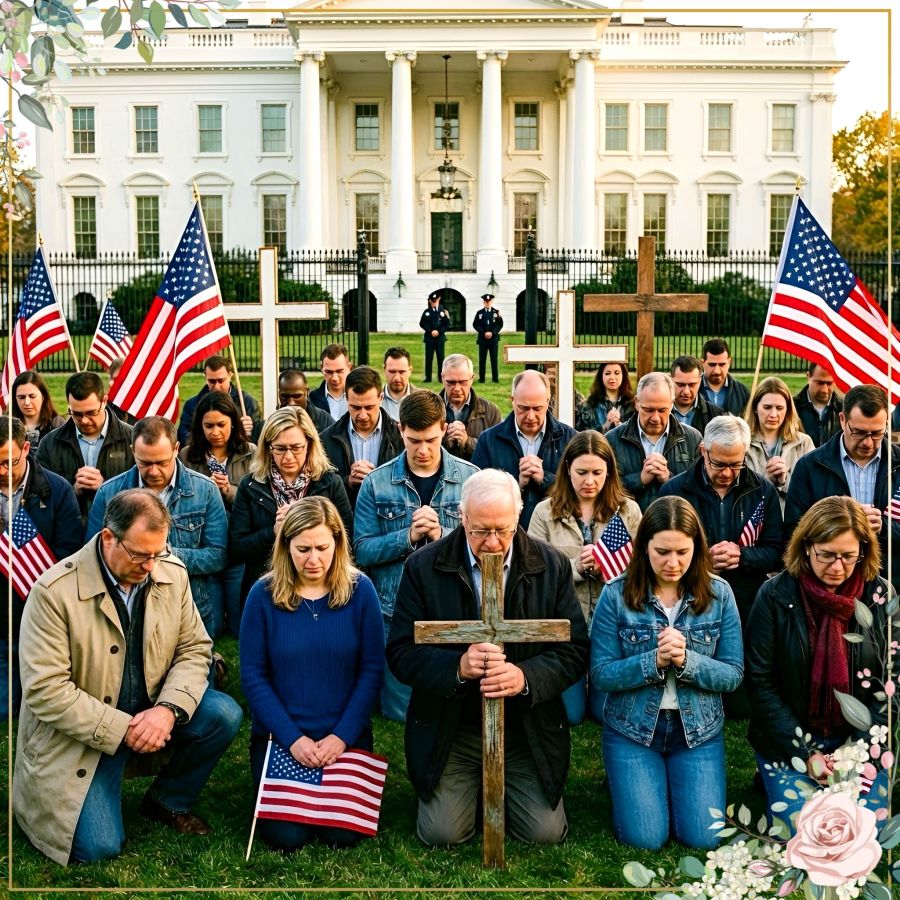
I’m not one of those who follows every event dubbed as “Christian” or a follower of everyone who says they are Christian, but some moments are worth supporting in my own prayer life. I do not have to like or agree with every person invited to speak or pray at the May 17th event to be supportive of the goal for the event: Rededicate the United States of America back to the godly roots of prayer from our establishment.
You can do a search for “Rededicate 250” to learn more about it. The link I’ve provided is a Copilot search with a list of speakers and links to other info about the day. There’s a lot of stuff out there, and a lot of complaints about evangelicals getting involved in DC, but from the perspective of one who values my current freedom to worship God, I’m not interested in kowtowing to those who only serve themselves instead of The Lord. I am, however, interested in setting the right example to those unbelievers, so their complaints can only be with God and His Word and not how I represent Him or His Word.
So I had AI make an image of people praying at The White House to make sure there was no highlight on specific or favored individuals if I grabbed images from online. To truly rededicate ourselves means that our only source is Yahveh Almighty Himself, and our only purpose is being the most obedient to His Word and Spirit we can be no matter what anyone else is doing or saying. It’s not about our opinions or thoughts about God’s direction in our lives, but rather it’s about having a heart that says He is worthy of our total trust even when we may not understand.
The longer I’ve lived, the more I’ve experienced things I did not get the “whys” of, and things I couldn’t figure out how God took care of. They both taught me that God is totally sovereign and trustworthy, and He walks with us through those places where things aren’t going according to our perfect plans. But He walks there when He is invited. Sometimes, His overflowing mercy and grace puts Him places before being invited, but He still waits for that true desire of whosoever will to fully move in a life.
And that’s what rededication is really all about; making sure The Lord is invited into our country and our hearts to pour out His love in and on both. If you’ve never invited Him, please consider it. Even if you only want to test the waters, don’t test them by taking a 4-wheel-drive over smooth residential streets. Give Him your whole heart, mind, body, and soul. Trust Him with everything you’ve got. Act as if you plan to serve Him for eternity even if you are still wondering a little. When I got saved, I told Him I would try my best but couldn’t promise what I’d do if “church people” hurt me again. Fortunately, He moved in so fully that when I did encounter hurts, I didn’t reject Him for it anymore. It’s truly worth giving it all completely to His will and ways. And if you have tried serving Him but never did much beyond “the sinner’s prayer” or baptism, take these days with so much prayer in the air to totally surrender and rededicate yourself more completely than ever before. Invite Him today!
Isaiah 1:18 BSB
[18] “Come now, let us reason together,” says the Lord. “Though your sins are like scarlet, they will be as white as snow; though they are as red as crimson, they will become like wool.

https://bible.com/bible/3034/isa.1.18.BSB
James 4:7-8 BSB
[7] Submit yourselves, then, to God. Resist the devil, and he will flee from you. [8] Draw near to God, and He will draw near to you. Cleanse your hands, you sinners, and purify your hearts, you double-minded.

https://bible.com/bible/3034/jas.4.7-8.BSB
Be washed in your heart and mind and then wash the outside in baptism to proclaim it.
And if you’ve been washed but feel like you need a new cleansing, this song about rededication is a perfect anthem.
Share this post on:




My Latest Flickr Photos


Others’ Posts I’ve Liked


