Same but Different

by Crystal A Murray (CC BY-NC-SA 4.0)
If you’ve known me for any time at all, you know I have a real thing for butterflies. A lot of my text and Messenger signatures have butterflies in them, and my uncle once asked me why I added it.
Many years ago, I was a member of a group called Ala-Teen. It’s where I first encountered the 12 Steps. They are a path of realization and healing that can help anyone. I believe my time studying and applying the steps in my own life set me up with a better attitude for understanding deeper biblical principles when I began walking with The Lord. Though the 12 Steps I’ve linked to, are related to alcohol, they’ve been adjusted on several platforms to line up with healing goals. Like, “We admitted we were powerless over gambling,” or “drugs” instead of “alcohol.” They can be applied as needed because the principles work for all of us made in the image of Our Creator—that is; having a body, a soul, and a spirit.
There’s even a great set of 12 steps for Bible believers that say, “We admitted we were powerless over our sin—That our lives had become unmanageable.” That one, and the other 11, are in a book called A Hunger for Healing by J Keith Miller. It’s on Kindle (including Kindle Unlimited at the time of this writing), but I also recommend the workbook which is better in print format. (Used affiliate links for tracking purposes.) Step 1 in this book and study are based on Paul’s words in Romans 7:15-20…
Romans 7:15-20 WEBUS
[15] For I don’t understand what I am doing. For I don’t practice what I desire to do; but what I hate, that I do.
[16] But if what I don’t desire, that I do, I consent to the law that it is good.
[17] So now it is no more I that do it, but sin which dwells in me.
[18] For I know that in me, that is, in my flesh, dwells no good thing. For desire is present with me, but I don’t find it doing that which is good.
[19] For the good which I desire, I don’t do; but the evil which I don’t desire, that I practice.
[20] But if what I don’t desire, that I do, it is no more I that do it, but sin which dwells in me.

https://bible.com/bible/206/rom.7.15-20.WEBUS
I separated the verses to make them easier to understand, but here I also want to share this in “The Message Bible” because it reads more like you would expect someone nowadays to speak to you.
Romans 7:14-20 MSG
[14-16] I can anticipate the response that is coming: “I know that all God’s commands are spiritual, but I’m not. Isn’t this also your experience?” Yes. I’m full of myself—after all, I’ve spent a long time in sin’s prison. What I don’t understand about myself is that I decide one way, but then I act another, doing things I absolutely despise. So if I can’t be trusted to figure out what is best for myself and then do it, it becomes obvious that God’s command is necessary.
[17-20] But I need something more! For if I know the law but still can’t keep it, and if the power of sin within me keeps sabotaging my best intentions, I obviously need help! I realize that I don’t have what it takes. I can will it, but I can’t do it. I decide to do good, but I don’t really do it; I decide not to do bad, but then I do it anyway. My decisions, such as they are, don’t result in actions. Something has gone wrong deep within me and gets the better of me every time.

https://bible.com/bible/97/rom.7.14-20.MSG
Anyway, somewhere in all of my 12-step discoveries, I was introduced to the concept of metamorphosis as represented by the change a caterpillar makes when it turns into a butterfly. It is literally the same “bug” it was born as, but after the struggle and change, it’s a more beautiful version of that bug.
Knowing that all of us who have been created by God are essentially the same in our most basic ways, and knowing we are all (as King David points out) “born in sin and shaped in iniquity,” means a few things. It means we all need to go through a change (metamorphosis) to become our best; it means we are all able to change; and it means that God loves each of us enough to offer us His mercy and grace before the change along with the love and strength we need to become new rather than staying trapped in our old selves.
So my butterflies mean, change is possible! And for me, they mean change has happened in beautiful ways. The saying goes something like, “I know I’m not yet what I want to be, but I thank God I’m no longer what I used to be.” 🦋
And if you’re interested in an outline of all 12 steps as applied biblically and with a bit more detail, you can visit the Uncuffed Ministries site for what they call “The 12 Steps of Christian Discipleship.”
This next image should bring home what I’m saying. I used exactly the same prompts but a different filter. It’s the same, but yet it’s different. I don’t know how many different filters God used during creation, but I know that He is the common denominator. And HE (His Spirit) is also the filter by which we can change our entire lives into something better and more beautiful. He knows us as we are, He laid down His life for us while we were yet sinners, and He is ready to help us to experience the change that will allow us to rise up to walk in the newness of life.

Just for your information, here are the 12 Steps as applied to sin aka the 12 Steps for Overcomers…
1. **Step 1** – We admitted we were powerless over sin—that our lives had become unmanageable.
2. **Step 2** – Came to believe that a Power greater than ourselves could restore us to sanity.
3. **Step 3** – Made a decision to turn our will and our lives over to the care of God as we understood Him.
4. **Step 4** – Made a searching and fearless moral inventory of ourselves.
5. **Step 5** – Admitted to God, to ourselves, and to another human being the exact nature of our wrongs.
6. **Step 6** – Were entirely ready to have God remove all these defects of character.
7. **Step 7** – Humbly asked Him to remove our shortcomings.
8. **Step 8** – Made a list of all persons we had harmed, and became willing to make amends to them all.
9. **Step 9** – Made direct amends to such people wherever possible, except when to do so would injure them or others.
10. **Step 10** – Continued to take personal inventory and when we were wrong promptly admitted it.
11. **Step 11** – Sought through prayer and meditation to improve our conscious contact with God as we understood Him, praying only for knowledge of His will for us and the power to carry that out.
12. **Step 12** – Having had a spiritual awakening as the result of these steps, we tried to carry this message to others, and to practice these principles in all our affairs.
Share this post on:

🎵A Very Big Tree
I’m keeping this shorter tonight.
I was thinking about the conversation Eve had with the serpent in the garden. Here’s the beginning of it from Genesis 3:1:
Genesis 3:1 KJV
[1] Now the serpent was more subtil than any beast of the field which the LORD God had made. And he said unto the woman, Yea, hath God said, Ye shall not eat of every tree of the garden?

https://bible.com/bible/1/gen.3.1.KJV
Do you see the anxiety-inducing, manipulative question in that statement? “…Ye shall not eat of EVERY tree of the garden?” (My emphasis here.) In many translations, the word “every” is replaced by “any” which still shows the manipulation, but I think every reveals the hidden agenda a little better. Basically, the enemy made ONE tree bigger than ALL the trees of the garden. One tree that God forbade to protect their innocence became more desirable than who knows how many others with wonderful and sweet fruit available to them 24/7.
That manipulation still goes on today, and sometimes even using words from The Holy Bible. Someone will use the word “slave” as an excuse to avoid God and His words, even though far more of them are filled with mercy and grace. A Christian battling with performance or perfection issues will find a verse like “Be ye perfect” larger than “My grace is sufficient.”
So, I just want to remind you today that the garden was bigger than one tree. And God’s plans for salvation are bigger than any man-made set of do’s and don’ts that demand our adherence to earn God’s love. When you encounter anxiety from the written word, ask God to show you through His Holy Spirit how to understand it and correctly apply it to your own life. It will be His pleasure to let you know because it’s His desire for you to spend your eternity with Him.
2 Peter 3:9 BSB
[9] The Lord is not slow in keeping His promise as some understand slowness, but is patient with you, not wanting anyone to perish but everyone to come to repentance.

https://bible.com/bible/3034/2pe.3.9.BSB
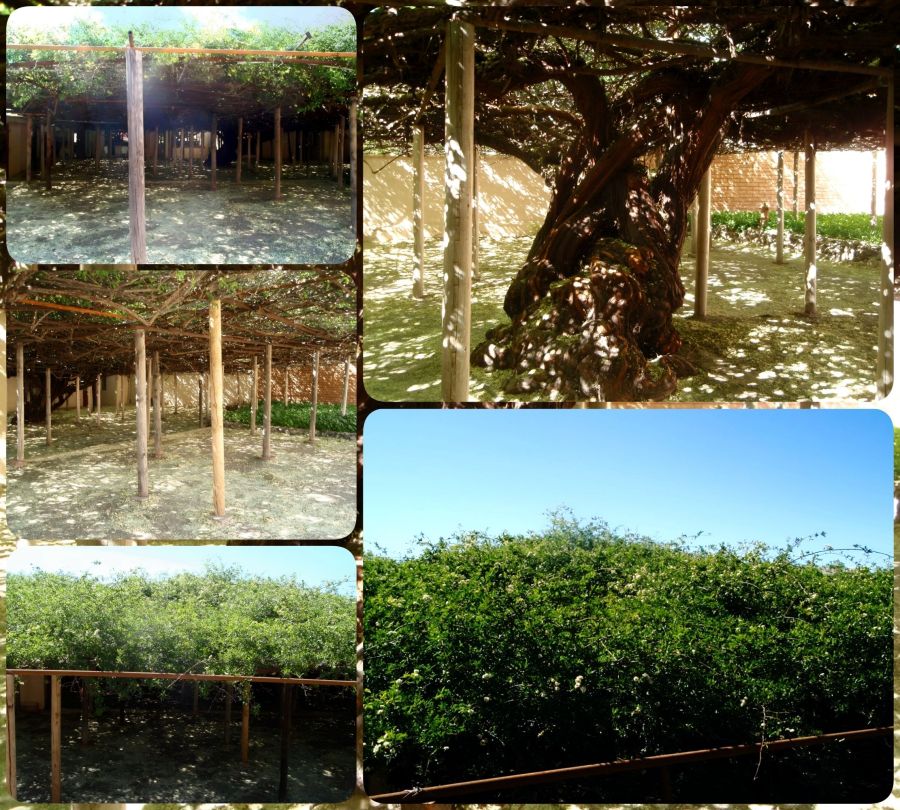
And if you travel while on this Earth and if those travels take you out Arizona way like they did me in May of 2010, stop and see the World’s Largest Rose Tree and museum in Tombstone, Arizona. I wish my pictures were better at showing how magnificent it is, but the images and video on the website should.
And now, since we’re talking about roses, sing along with this beautiful bluegrass version of “Where the Roses Never Fade.”
Share this post on:

The Upside-down Mountain of Blessings; Part 2
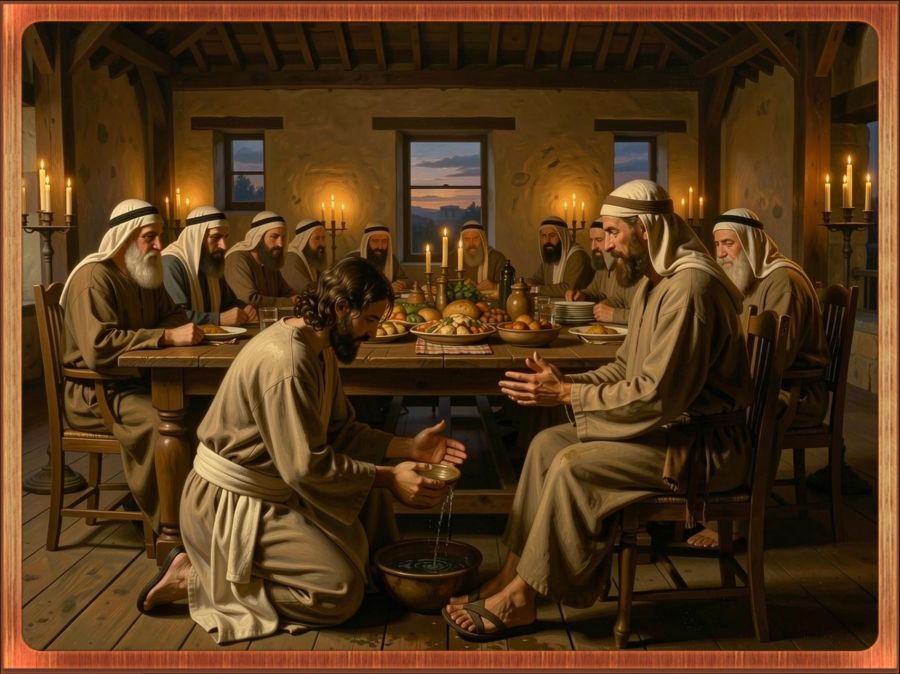
Picture a candle-lit upper room at dusk on the night before the crucifixion. The air is heavy with tension, and the disciples are doing what human beings always do when they are insecure: arguing about who among them is the greatest and therefore deserves the seat of honor nearest the Messiah.
Suddenly, the room falls dead silent. Everyone turns toward the front of the table where YahShua has pushed aside His plate of bread and the cups of covenant He had just taught about.
Silently, The Rabbi stands up and ties a towel around His waist. The others watch as He pours water into a basin and lowers it to the floor. He kneels before the first disciple to wash his dirty, dust-covered feet. And then He washes the feet of the next one, and the next. These are moments of profound beauty—and total theological panic. The stunned disciples submit to their Master, but it all feels upside-down to them.
When YahShua gets to Peter, the tough fisherman recoils in flat-out refusal. Even though YahShua had just stated He was there to serve them, Peter’s religious training told him that followers serve the Master, not the other way around.
“But it’s me who should be washing Your feet,” Peter exclaims!
YahShua looks up at Peter from the floor. In a loving moment of warning, He reminds him that without submitting to Him as a servant, Peter will have no part with Him.
Now Peter swings the pendulum the other way requesting for his Master to wash him head to toe. It’s a beautiful way for Peter to state that he is sold out to The Messiah and is fully committed to His ministry. We know that commitment will be tested within the next couple days, and Peter will fail, but it won’t be the end of his ministry.
YahShua has seen the future denials, but He has also seen the future. In Mark 16:7, He sends an angel to specifically include him: “go tell the disciples and Peter” to meet Him in Galilee.
Mark 16:7 BSB
[7] But go, tell His disciples and Peter, ‘He is going ahead of you into Galilee. There you will see Him, just as He told you.’”

https://bible.com/bible/3034/mrk.16.7.BSB
This story of deep messages and lessons across the dinner table is shared in all four gospels, though not all parts are in each rendition. Still, for quick reference to read these yourself, check out these links at Bible Hub where you can read a variety of Bible translations and even put them in parallel.
Matthew 26... https://biblehub.com/bsb/matthew/26.htm

Mark 14... https://biblehub.com/bsb/mark/14.htm

Luke 22... https://biblehub.com/bsb/luke/22.htm

John 13... https://biblehub.com/bsb/john/13.htm
My introduction to this upside-down view of YahShua came during a recent Bible study in the YouVersion app. It’s called “Daily Encouragement,” and it’s a year-long study of 366 devotions written by a lifelong missionary. On Day 207, the devotion covers the verse in Mark 10:45 (“For even the Son of Man did not come to be served, but to serve, and to give His life as a ransom for many.”) Then he gives a quote from Bible teacher P.T. Forsyth that really got to me:
“Christ came not to be ministered to but to minister, and our first duty therefore is to be ministered to by him.”
From Peter’s experience and this quote, I’m trying to look at how letting Christ serve me is an act of obedience.
In the devotion, the missionary mentions some of the words to describe God like Comforter, Shepherd, Helper, Keeper, High Priest, Husband, and Father. All of these words show actions in service to us. If we ask Him for comfort, and then we actually let Him comfort us, we are submitting to His service toward us. The same when we ask Him to save us, deliver us, or heal us.
Going back to yesterday’s thoughts in Part 1, it’s not about being the perfect performer to earn His blessings. The upside-down reality is that while He is the Master, submission and obedience to Him means receiving what He offers us.
If you are a follower of Christ, you took that first step of obedience by submitting to the mercy and grace found in His blood, allowing Him to wash your sins away just as He washed Peter’s feet. It didn’t elevate you above your Master or make you perfect any more than it did Peter, but it did prove that obedience given out of trust and love is the very definition of redemption.
That submission to salvation is the first step of many. But if you’re like me, your next steps took all the responsibility onto your own shoulders as you struggled to please The Lord (and maybe a few preachers) with flawless performance. You forgot—or maybe weren’t taught—you had stepped into a submission of receiving from The King of Kings Himself, the One who declared Himself your servant.
True Christian obedience doesn’t begin with a checklist of things we do for God; it begins with the vulnerability of opening our hands and letting YahShua (Jesus) minister to us through His salvation, healing, and comfort. Asking, seeking, and knocking (Matthew 7;7) isn’t an act of begging a distant deity—it is the posture of a child receiving from a good Father.
But here is where the pendulum usually swings to the opposite extreme. If the Christian life is entirely about passively receiving the grace and service of Christ, does that mean our actual behavior doesn’t matter? Can we just claim mercy and live however we want?
In Part 3, we are going to look at how to stop the pendulum from swinging between legalism and laziness, and discover what it truly means to build a life on the only Rock that stands firm when the storms hit.
Note: Parts of this study (and a few of the words) were assisted by Google Gemini, alongside website studies at Bible Hub and Got Questions, but I’ve edited and personalized all of it before publishing.
Share this post on:


A Passover Prisoner Exchange
by Crystal A Murray (CC BY-NC-SA 4.0)
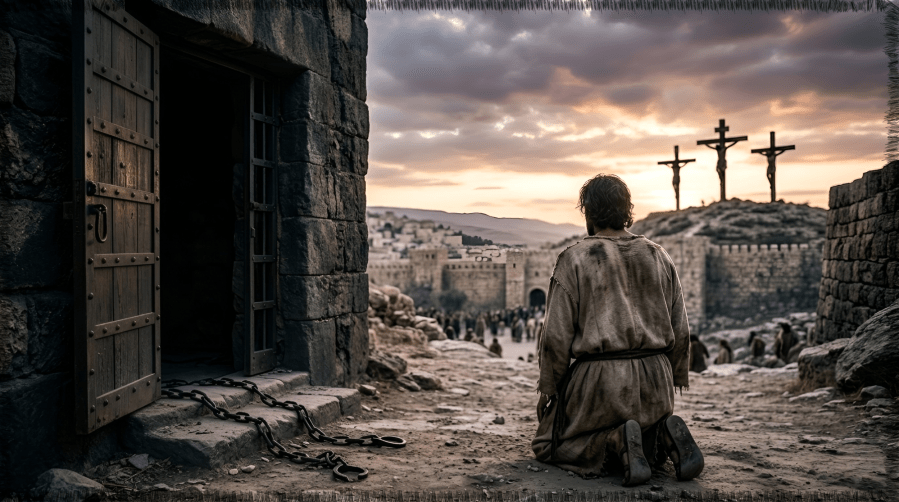
Who could this prisoner be whose freedom now hits him square between the eyes while he watches a substitute take his place on the cross? His cross! He was found guilty. He was sentenced to die that death. And he knew how wrong he was for committing his sins because he’d been raised better than that. He was supposed to be a preacher–not a prisoner. And now he is free even though he didn’t do anything to deserve it. The weight of the chains that once bound his wrists now weighs even heavier on his heart. What will he do with his new freedom?
I’m not going to tell you his name yet. I’m going to let you guess, or study, or maybe a little of both. If you already know, you’ve probably never thought of him as a backslidden PK (Preacher’s Kid). If you don’t know, I’ll tell you tomorrow. But today, I’ll remind you that because of the ultimate Passover sacrifice, no one is without hope.
Share this post on:

🎵Behold the Lamb!
(CC BY-NC-SA 4.0)
Scripture tells us that there is safety in a multitude of counselors. I think that’s because perspective is created by individual experiences mixed with the wisdom we’ve been taught. We share our perspectives with others (hence the proliferation of blogs, podcasts, videos, etc.), and when that is mixed with someone’s experience, they get new perspectives with which to counsel others.
I love to read, but not so much book-length manuscripts. I’ve read a few novels that kept me enthralled, but it’s just a handful of authors that have that effect on me. So, I read lots of articles and blog posts, and other quick content. I love the Bible app by YouVersion because of the abundance of Bible studies there. And I can study alone or with others. Their plans are best on the app, but this page should work even if you don’t have the app yet… https://www.bible.com/reading-plans and you can search plans by topic, length, author, etc.
My latest study is called “A Gospel View of Christ, the Lamb of God” by Returning to the Gospel. The link should take you right to it.
In reading this study, which is happening during Passover week (and Easter week) because I didn’t start it right when I planned, I’ve read of an amazing “coincidence” (we know it’s more likely a “God-incidence”) about the examination of the Passover lambs. All of Exodus Chapter 12 is about the Passover, and you can read it at Bible Hub, but here are the 2 verses that gave me a new perspective…
Exodus 12:3, 6 BSB
[3] Tell the whole congregation of Israel that on the tenth day of this month each man must select a lamb for his family, one per household.
[6] You must keep it until the fourteenth day of the month, when the whole assembly of the congregation of Israel will slaughter the animals at twilight.

https://bible.com/bible/3034/exo.12.3-6.BSB
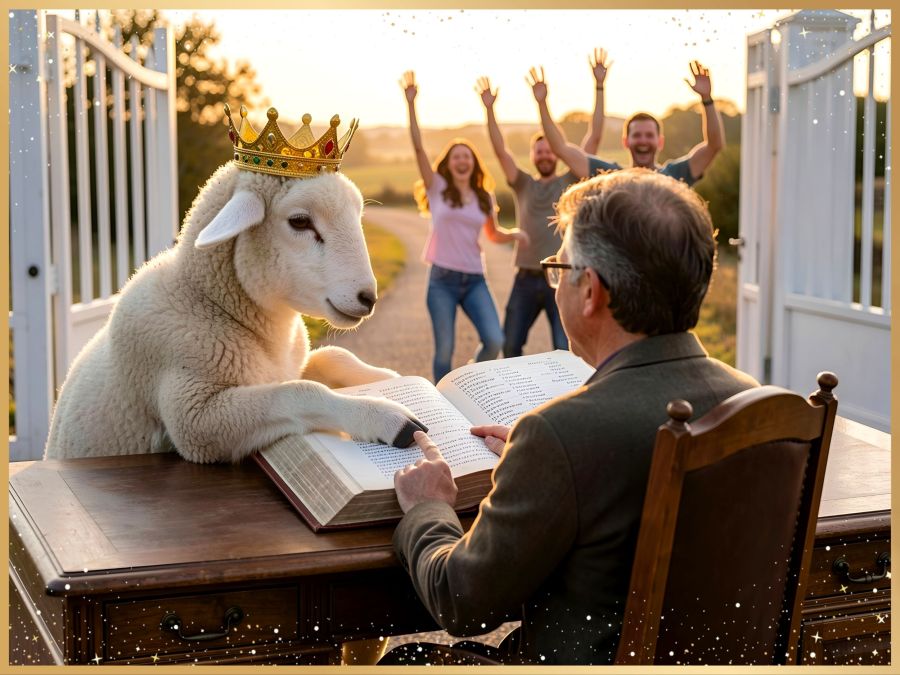
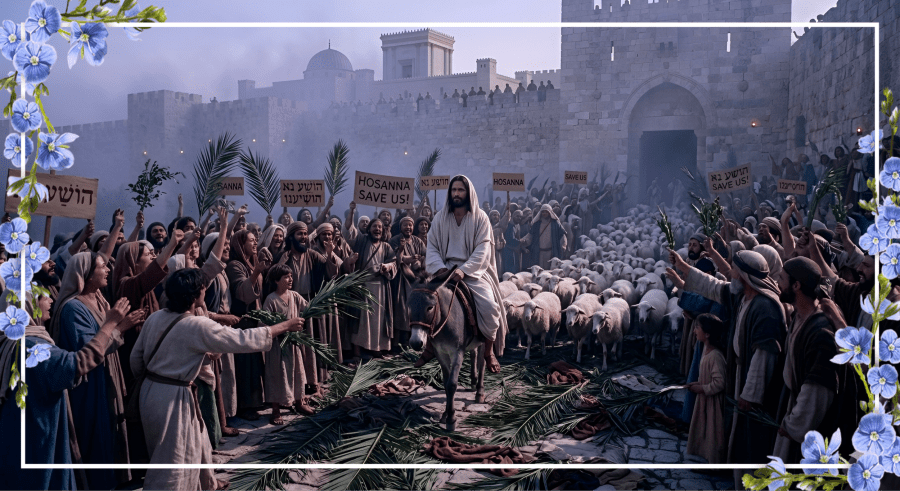
I added bold emphasis to point out the 10th and 14th days. They chose a lamb but did not slaughter it until it had been thoroughly examined, and then all the people slaughtered their lambs at the same time. The study pointed out that on the 10th of Nisan on the Hebrew calendar, the sheep were being brought through the “Sheep Gate” to be examined for the Passover. It is known as “Shabbat HaGadol” and is a significant Sabbath for the feast. On that same day, Messiah YahShua was entering another gate riding on a donkey. He would have dinner with His disciples, and then they would go pray in Gethsemane. From there, the betrayal would mean His arrest and then a whole lot of examination. And they found no spot or blemish, so He was ready to be sacrificed.
I don’t believe Abba Yahveh Almighty lets any of that just happen. It’s a full plan to redeem us and to remove any excuses from those who know the details but refuse to believe. It wouldn’t surprise me to find out one day that each thing that happened back then was on a clock that matched the original Passover to the minute–or even to the second. An article at “Hebrew for Christians” has even more amazing details. My favorite is the connection between the Passover lamb and the first and last letters of the Hebrew alphabet: Aleph (pronounced ah-lef) and Tav (pronounced tahv). In Hebrew, these are written as א and ת.”
In the Hebrew Scriptures, these two letters often appear together. While they act as a grammatical pointer, they also represent the ‘First and the Last.’ Remember that YahShua said He was the Alpha and Omega, which is the Greek equivalent of Aleph and Tav, or A and Z, or First and Last. I used the parallel Bible at Bible Hub to view the Hebrew letters, and it’s as they say. Read the whole article for more at… https://hebrew4christians.com/Holidays/Spring_Holidays/Shabbat_HaGadol/shabbat_hagadol.html
And with all that information, now I want to turn to the reason for seeking these things. We need to behold The Lamb so we can fully understand what He did for us and share that good news (or God news) with others. Close your eyes and imagine that pure and spotless lamb, silent and waiting, not even knowing the power that would flow from it’s perfect body to cover the door posts of Israel and protect them from the Death Angel when it entered Egypt. And then, envision another Lamb, this One knowing the power in His precious blood. Pray with me…
Abba Yahveh, our Father, we thank You for not just teaching us, but for loving us. Before we knew what we were missing, You were creating and perfecting a plan to remove every barrier that separates us from you by covering sin in perfect blood. Before we knew You (while we were yet sinners), You already loved and wanted us for Your own. You literally moved Heaven and Earth to make it happen! As You reach out and pursue us, even into the depths of the bondage of sin, may we look up and reach out to You and allow You to deliver us and set us free. It is not Your will for any of us to perish without You. Thank you for that and for ALL of Your wonderful mercy and grace. May Your Holy Presence dwell with each person who brings this prayer to You. In Jesus’ Name, Amen.
And now, a beautiful song written by Dottie Rambo called “Behold The Lamb.”
Share this post on:

My Latest Flickr Photos


Others’ Posts I’ve Liked


