🎵Prompt Response: Alien Communications 👽🖖
If aliens arrived tomorrow, what’s the first thing you’d ask them?
We Come in Peace
Wait, aren’t they supposed to be the first ones talking and telling me they come in peace? I know I’d probably feel better about talking to them if they started the conversation that way. But then if we’re both waiting for each other to speak first, it could get awkward.
So let’s just assume that, with or without an introduction, communication is easy and free-flowing. Maybe they’re asking about Earth or humanity, and I’m trying to think of a better ice-breaker than; “Are you offended by alien jokes?” 😂
Jokes
But just in case that was my first question, and just in case they said they were okay with them, here are a few just for fun.
- Why don’t aliens golf in outer space?
- There are too many black holes.
- How do aliens keep their pants up?
- They use asteroid belts.
- What kind of music do aliens listen to?
- Neptunes. 🎶
- How do alien poets write their poems?
- In Uni-Verse.
But In All Seriousness…
I like my husband’s idea the best. Remind the aliens that I’m an alien, too. After all, what does Scripture say?
“But our citizenship is in heaven, and we eagerly await a Savior from there, the Lord Jesus Christ, who, by the power that enables Him to subject all things to Himself, will transform our lowly bodies to be like His glorious body.”
In another place it says:
“For here we do not have a permanent city, but we are looking for the city that is to come.”
So, once we’ve established some common ground, maybe then I could ask the aliens if they are familiar with The Creator of the Universe. I know I’d be surprised whether they said they knew all about God and interacted with Him frequently or whether they knew nothing at all but wanted to learn.
We don’t know for sure if there are aliens, what they look like, or what they know. But, if they exist, we know Who made them and we know He has a plan.
Like the aliens may be looking for a new place to call home because their original planets are facing troubles, we have our own share of troubles on Planet Earth, so a new home promise is a good hope. This life may be temporary, but God’s promises are eternal. Have you given your heart to The Lord, so you can also look forward to eternal hope?
And this is the perfect topic for a great old hymn:
Share this post on:

🎵Cliché Month: When Pigs Fly
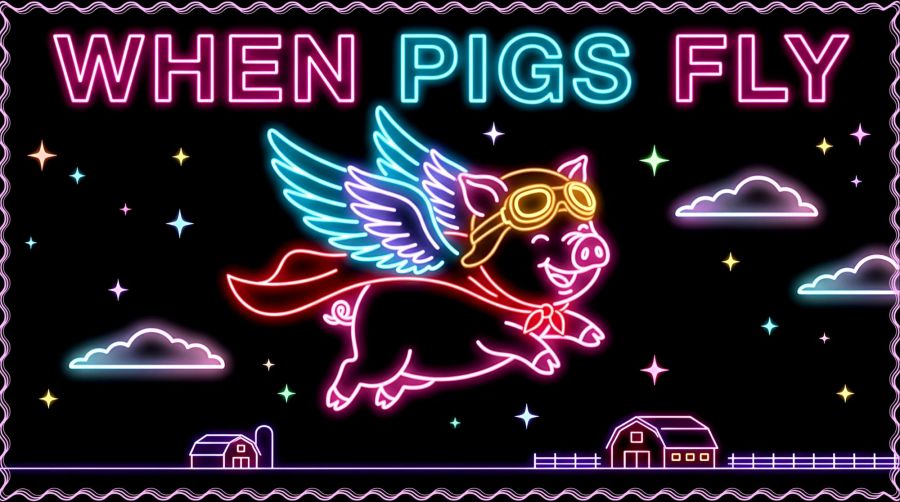
The Ultimate Badge of Impossibility
Whenever someone says something completely absurd, improbable, or unlikely to happen—ever in a million years, our wonderful English language gives us a delightfully sarcastic reply: “Sure… and pigs might fly, too!“
It belongs to a colorful family of expressions known as an adynaton—a figure of speech so exaggerated that it highlights an absolute physical impossibility. We use these sayings whenever we want to express skepticism with a wink, whether we are talking about waiting “until the cows come home,” looking for something like “a needle in a haystack,” or promising to tackle an unpleasant chore “on a cold day in July.” Or maybe “when the sun rises in the west.”
Note: An ancient example of an adynaton was “Till the rivers run backward.” Of course, they could not have known that in 1812, an earthquake on the New Madrid Fault would do exactly that to the Mississippi River. It’s an interesting factoid you can read here.
From 17th-Century Satire to Real Biplanes
Long before our neon aviator pig took to the skies, people were using airborne swine as a comedic punchline. The earliest known variations appeared in 16th-century Scottish proverbs, but it was formally recorded in English print by lexicographer John Clarke in his 1639 collection Paroemiologia Anglo-Latina. His phrasing carried a wonderfully silly visual: “Pigs fly in the air with their tails forward.” It was the go-to retort for calling out someone telling tall tales or making promises they had no intention of keeping.
For centuries, the phrase remained safely locked in the realm of sarcasm. But on November 4, 1909, an eccentric English aviation pioneer named Lord Brabazon (John Moore-Brabazon) decided to take the idiom literally. Determined to prove the cynics wrong, he strapped a small wicker basket containing a live piglet onto the wing strut of his biplane. Before taking off into the skies over Kent, he pinned a hand-lettered cardboard sign to the basket that read: “I am the first pig to fly.”
With that short flight, history gained its first official airborne pig—and the world lost its most foolproof guarantee of an impossible event! And if you think that’s funny, check out my previous post about the first cow to be milked in an airplane.
What’s on Your “Flying Pig” List?
We all encounter dreams where our first instinct is to look up at the clouds, throw our hands in the air, and say this cliché or something else meaning we don’t believe it will ever happen. Maybe we try to tell ourselves that “With God, all things are possible” but that often doesn’t go beyond the encouraging words. What big dreams or everyday moments make you think you are more likely to see a pig soaring through the stratosphere than to complete your task?
- Getting a book published?
- Getting an entire house decluttered and organized?
- Emptying out your storage shed?
- Or finally crossing off the last lingering chore on your to-do list?
While we will always find things that seem impossible, with a little extra determination and maybe some ingenuity, we can do more than we think possible. Share your comments, and we’ll pray for each other to find hope (or supportive friends) to help us tackle the overwhelming obstacles that try to hold up our dreams. And speaking of tackles, here’s something fun:
A Super Bowl Take on Flying Pigs
One of the funniest modern takes on the idiom came from the 2015 Super Bowl in Doritos’ fan-created commercial contest. When a boy asks an older man on a porch for a chip, the man smirks and says, “Sure kid, when pigs fly!” Refusing to take no for an answer, the kid builds a harness with rocket fireworks and wings for a farm pig—launching the airborne swine right past the stunned man’s porch to claim his bag of chips! Here’s the video…
A Parting Riddle
And speaking of flying things…
Why did the boy throw his alarm clock out the window?
Because he wanted to see time fly! ⏰✈️
Share this post on:

Cliché Month: Read Between the Lines 🧩
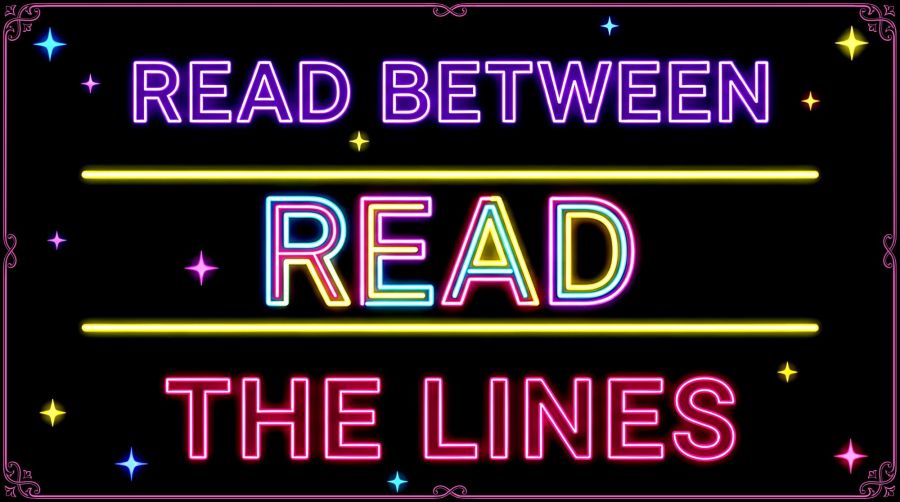
It’s a cliché AND a game! What more could we want, right? And though I planned something simple for a relaxing Sabbath weekend, I ended up having to learn some new things, but I’m very happy to share a cool new trick at the bottom. After you look at the rebus puzzles to try and figure them out, you can click to reveal the answers. And this is so much easier than trying to print upside-down text like I tried first. 🙃
So for this cliché, it’s a phrase we all the time whenever we sense some kind of unspoken truth lurking beneath polite conversation. To “read between the lines” is human nature’s built-in radar for deciphering what is meant beyond what is merely said. But long before it became a way to “hear” the subtext in everyday dialogue, reading between the lines was a literal, tradecraft—essential for wartime communication, diplomacy, and survival.
Invisible Ink and Wartime Grids
The idiom traces back to the mid-nineteenth century and has direct roots in cryptography and steganography. Military couriers, spies, and clandestine correspondents needed ways to transport secret directives through enemy territory without raising suspicion. The solution was deceptively simple: write an ordinary, innocuous letter with unusually wide gaps between the lines of text.
In the blank space between those visible sentences, the author penned the real message using sympathetic, or invisible, ink made from organic acids like lemon juice, milk, cobalt chloride, or vinegar. To an officer who tried to intercept the message, the parchment appeared to carry a simple, and maybe even mundane, missive. But once the intended recipient exposed the paper to heat, a candle flame, or a specific chemical wash, the hidden writing would darken and reveal itself. If you did not know to literally read between the lines, you would miss the mission entirely.
A similar tactic relied on physical cutout masks known as Cardan grilles. When a recipient placed a custom stencil over a lengthy, seemingly boring letter, only specific words from alternating lines were visible through the cutouts, spelling out the real message.
Not by Words, But by Things
Visual rebuses operate on that exact same creative frequency—they challenge our eyes and minds to decipher hidden meaning from spatial placement rather than literal text alone. The word rebus originates from the Latin phrase non verbis, sed rebus, meaning “not by words, but by things.”
Originating during the Renaissance as intellectual parlor games across Europe, rebuses eventually evolved into the beloved graphic wordplay puzzles we know today. Placing a word in a specific direction, altering its size, or planting it firmly between physical boundaries forces our brains to decode subtext in a playful, visual way.
Try Your Hand at Deciphering
To celebrate the art of hidden messages, try solving the puzzle card below. Look at the spacing, arrangements, and word positions to unlock each common phrase or idiom.

Click here to reveal puzzle answers
1. For once in my life (four ones in my life)
2. Forget it
3. Try to understand
4. Travel overseas / Overseas travel
5. Breakfast
6. Downtown
7. Eyeshadow
8. Stepfather
9. Once upon a time
10. Potatoes (pot 8 O’s)
11. 3D movie
12. Top secret
Shabbat Shalom and let me know if you had fun with these. You can visit the ESL Vault Rebus Page for a bunch more free puzzles, and you can also find some rebus puzzles—including one called Read Between the Lines at the Google Play Store.
Share this post on:

My Latest Flickr Photos


Others’ Posts I’ve Liked


