🎵Cliché Month: You Are What You Eat 🥗🍨
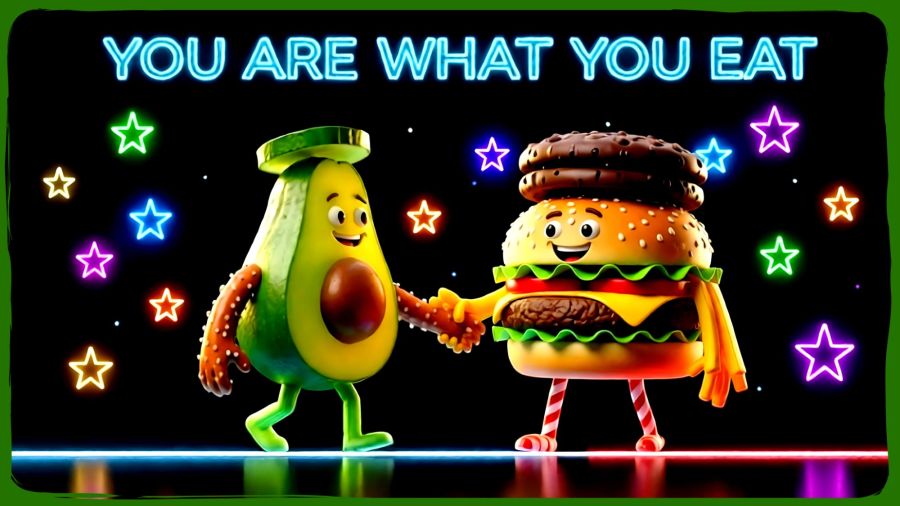
by Crystal A Murray (CC BY-NC-SA 4.0)
To Joke or Not to Joke
Remember those classic funny-book-title jokes from childhood? 50 Yards to the Outhouse by Willy Make-it, Ten Yards to Go by Betty Won’t, or French Cooking by Sue Flay. Every time I see today’s cliché, I think about the funny book title of You Are What You Eat co-authored by Frank Furter and Patty Melt. 🤣
Jokes aside, we have all heard that warning since childhood. Usually, it gets tossed around when someone reaches for a second slice of cake or trades a fresh salad for a double cheeseburger. The physical truth is undeniable—the fuel we put into our bodies directly dictates our physical health, cellular energy, and daily vitality. As Christian believers, it also plays a part in how our temples (of the Holy Spirit) react when we need them to be strong for worship or working for The Lord.
1 Corinthians 6:19 BSB
[19] Do you not know that your body is a temple of the Holy Spirit who is in you, whom you have received from God? You are not your own;

1 Corinthians 6:19(BSB)

Romans 12:1 BSB
[1] Therefore I urge you, brothers, on account of God’s mercy, to offer your bodies as living sacrifices, holy and pleasing to God, which is your spiritual service of worship.

Romans 12:1 (BSB)
The concept in the cliché originated in 19th-century France with lawyer and gastronome Anthelme Brillat-Savarin, who wrote in his 1825 book Physiologie du Goût: “Dis-moi ce que tu manges, je te dirai ce que tu es” (“Tell me what you eat, and I will tell you what you are”). Over a century later, nutritionist Victor Lindlahr popularized the exact English phrasing in the 1930s and 1940s to promote mindful eating.
Not Easy to Break the Comfort Molds
If you’re like me, most of your life took this advice lightly. But as I age, I start wishing I’d have applied it more when I was younger (and thinner). But the platitude Better Late than Never applies well here as it’s never too late to substitute at least one order of fries for some grilled zucchini.
A friend recently mentioned how those deep-fried or sweet foods that presented comfort in our youth are even harder to break away from when our brains associate them with comfort. But I recently learned that oils used for deep frying (typically seed oils like soy because of their higher smoke point) are prepared in ways I’m not super comfortable with continuing to put in my body. That makes it easier to turn down the desire for comfort and turn up the desire to feel better. (See this Grokipedia page about what chemically refined industrial seed oils really are if you want to know about their use of things like hexane gas and bleaching.)
Feeding the Five Senses
But limiting this concept to what sits on our dinner plates misses a much broader reality. Consumption is not just about calories, vitamins and good and bad fats. We are constantly “eating” through all of our five senses every single day:
- Sight: The visuals, news feeds, and endless digital screens we gaze upon.
- Touch: The tactile comfort of our spaces.
- Taste: The simple flavors we savor.
- Smell: The familiar aromas that stir desires and memories.
- Sound: The conversations, messages, and background frequencies we let into our minds.
Just like a steady diet of junk food leaves the body sluggish, a constant intake of cynical news, gossip, and negativity will leave the mind and spirit completely exhausted. Everything we absorb through our eyes and ears acts like paint and wallpaper on the temple we live in. What goes inside is ultimately what radiates on the outside.
Nourishment for the Ears: Saved By His Scars
Just as balanced nutrition fuels physical strength, intentional listening feeds the soul. Uplifting music and truth-filled lyrics have an immediate way of shifting our perspective, easing stress, and pointing our focus back to what truly matters.
And speaking of fresh spiritual and auditory nutrition, my brother Shayne Savage just released a brand-new single today titled “Saved By His Scars.” This one has some genuinely strong heavy metal riffs and a fantastic set of lyrics. It’s part testimony and all hope. I’m so honored to share another of my brother’s quality songs. They make my big-sister heart just brim with joy. If your daily sound intake could use a faith-filled uplift filled with deep Southern bluesy rock, give his latest release a listen below:
After you listen to this one, go find Shayne on your favorite streaming service and follow him. And don't forget to check my older posts for his first two releases:

SAVAGE GRACE
SAVAGE GRACE WITH LYRICS
MAKIN' CHAINS

Find more info on his website with links to his pages on Meta and more.
Share this post on:

🎬Cliché Month: (don’t) Follow Your Heart 💓
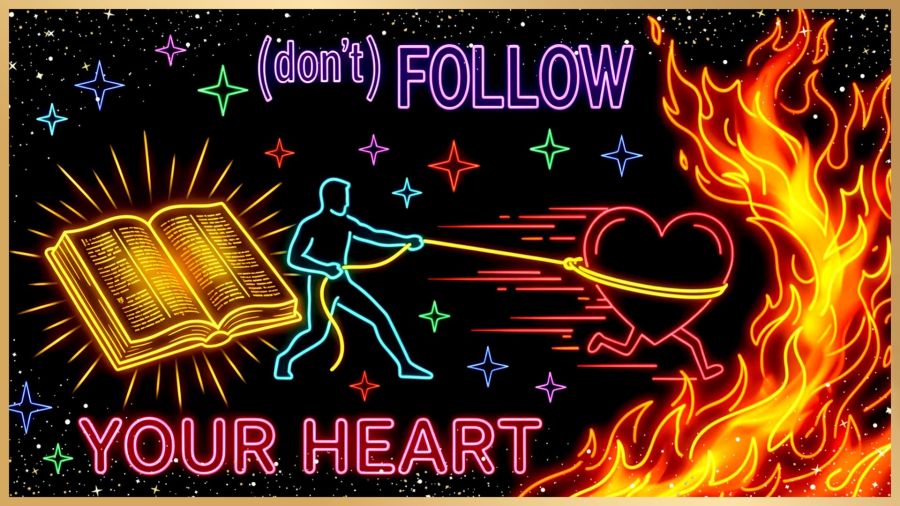
Follow Your Heart?
Have you ever followed your heart only to have it lead you someplace you didn’t expect to go? Maybe you thought you were following true love. Maybe a religious experience turned out to be a little too much like a cult instead of being Bible based. Maybe you were totally certain you were supposed to go to a certain school, job, or address and all the promises fell flat.
Few platitudes are as universally celebrated as “follow your heart.” You’ll find it in graduation cards, you’ll hear animated heroines speak it as a mantra, and Hollywood pushes it as the way to fulfill your dreams. On the surface, it sounds empowering. But beneath the romanticism, there’s an uncomfortable truth: our hearts (emotions) are fickle, easily swayed, and often terrible navigators. Even God’s Word says our hearts are so deceitful that we can’t even know them ourselves.
Jeremiah 17:9 WEBUS
[9] The heart is deceitful above all things and it is exceedingly corrupt. Who can know it?

https://bible.com/bible/206/jer.17.9.WEBUS
Danger and Deceit
This is the danger of following your heart. Even though we’re told things like, “The heart knows what it wants,” or “Listen to your heart,” those efforts often lead us to a broken heart or into hopeless depression. And why? Because they mix up emotional desires with being led through this life by our loving Creator. Only the Spirit of The One who made us can lead to the places He planned and designed for us. Every other direction is hit and miss. Maybe it will lead to someplace great; maybe not. John Bevere speaks on this in his message: “Breaking Intimidation.” He says things of the soul can imitate things of The Spirit.
The affiliate link above is for the book at Amazon, and I’m not certain if that portion is in the book or only on CD, so I asked Microsoft Copilot for a summary of that portion of the message. Here’s that summary…
John Bevere warns that the soul (mind/will/emotions) can imitate the Spirit, creating impulses that feel right, sound noble, and even look “spiritual,” yet still come from human desire rather than God. He uses John the Baptist as the example: everything about his priestly family line suggested a respectable ministry path, but the Spirit led him into the wilderness instead—camel hair, locusts, and a calling no one expected. Bevere’s point is simple and sharp: following your heart is often just following your soul, and the soul, no matter how sincere, “cannot receive the things of the Spirit.” True direction comes from the Spirit, even when it contradicts what seems good.
1 Corinthians 2:14 BSB
[14] The natural man does not accept the things that come from the Spirit of God. For they are foolishness to him, and he cannot understand them, because they are spiritually discerned.

https://bible.com/bible/3034/1co.2.14.BSB
The Romantic Rebellion
The belief that our inner feelings are the ultimate moral compass took root during the late 18th-century Romantic Era. Poets and philosophers, who reacted against the cold rationality of the Industrial Age, argued that personal passion and raw emotion were inherently pure. Over the 20th century, pop psychology and modern individualism cemented the idea that it was unhealthy to suppress our desires. They suggested that trusting immediate emotional impulses was the highest form of self-discovery.
An Ancient Warning
Long before modern cinema made the human heart into the hero of every story, ancient wisdom urged caution with yielding to wild emotions. In classical philosophy, Plato illustrated the human soul as a charioteer (Reason) struggling to manage two horses—one noble, and the other a wild, rebellious appetite that was “the mate of insolence and pride… hardly yielding to whip and spur.”
Scripture provides more anchors against letting blind, emotional trust lead us to places of destruction or depression:
Proverbs 4:23 BSB
[23] Guard your heart with all diligence, for from it flow springs of life.

https://bible.com/bible/3034/pro.4.23.BSB
Proverbs 3:5-6 BSB
[5] Trust in the Lord with all your heart, and lean not on your own understanding; [6] in all your ways acknowledge Him, and He will make your paths straight.

https://bible.com/bible/3034/pro.3.5-6.BSB
Rather than letting unchecked desires drag us toward a fire, wisdom calls us to tether our hearts to truth, discernment, and sound guidance.
Leading Your Heart
In the 2008 film Fireproof, there is a pivotal conversation between Caleb and his friend (and boss) Michael that perfectly dismantles this platitude. When Caleb tells Michael he is “in” with The Lord and wants some faith advice, Michael gets very excited. He calls Caleb his brother (but you gotta hear how he says it 😁) and then gives great big-brother-type advice:
“And don’t just follow your heart, man, because your heart can be deceived; but you’ve got to lead your heart.”
Share this post on:

Cliché Month: Read Between the Lines 🧩
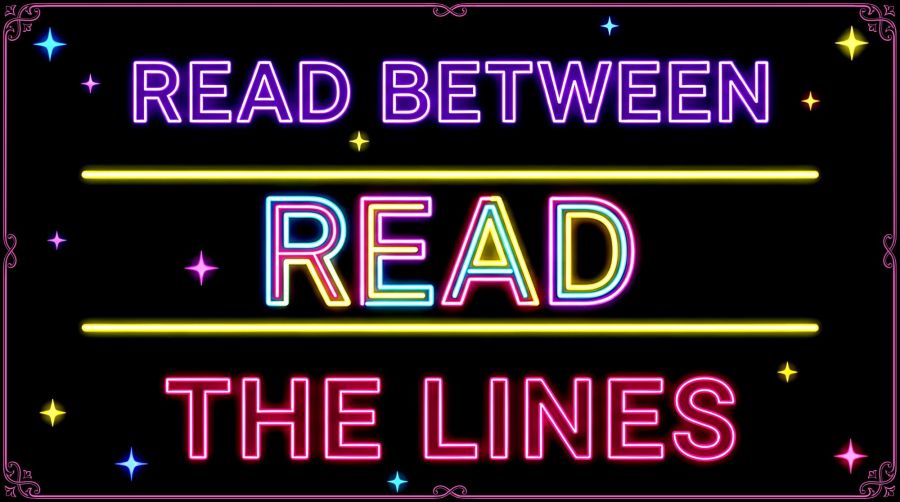
It’s a cliché AND a game! What more could we want, right? And though I planned something simple for a relaxing Sabbath weekend, I ended up having to learn some new things, but I’m very happy to share a cool new trick at the bottom. After you look at the rebus puzzles to try and figure them out, you can click to reveal the answers. And this is so much easier than trying to print upside-down text like I tried first. 🙃
So for this cliché, it’s a phrase we all the time whenever we sense some kind of unspoken truth lurking beneath polite conversation. To “read between the lines” is human nature’s built-in radar for deciphering what is meant beyond what is merely said. But long before it became a way to “hear” the subtext in everyday dialogue, reading between the lines was a literal, tradecraft—essential for wartime communication, diplomacy, and survival.
Invisible Ink and Wartime Grids
The idiom traces back to the mid-nineteenth century and has direct roots in cryptography and steganography. Military couriers, spies, and clandestine correspondents needed ways to transport secret directives through enemy territory without raising suspicion. The solution was deceptively simple: write an ordinary, innocuous letter with unusually wide gaps between the lines of text.
In the blank space between those visible sentences, the author penned the real message using sympathetic, or invisible, ink made from organic acids like lemon juice, milk, cobalt chloride, or vinegar. To an officer who tried to intercept the message, the parchment appeared to carry a simple, and maybe even mundane, missive. But once the intended recipient exposed the paper to heat, a candle flame, or a specific chemical wash, the hidden writing would darken and reveal itself. If you did not know to literally read between the lines, you would miss the mission entirely.
A similar tactic relied on physical cutout masks known as Cardan grilles. When a recipient placed a custom stencil over a lengthy, seemingly boring letter, only specific words from alternating lines were visible through the cutouts, spelling out the real message.
Not by Words, But by Things
Visual rebuses operate on that exact same creative frequency—they challenge our eyes and minds to decipher hidden meaning from spatial placement rather than literal text alone. The word rebus originates from the Latin phrase non verbis, sed rebus, meaning “not by words, but by things.”
Originating during the Renaissance as intellectual parlor games across Europe, rebuses eventually evolved into the beloved graphic wordplay puzzles we know today. Placing a word in a specific direction, altering its size, or planting it firmly between physical boundaries forces our brains to decode subtext in a playful, visual way.
Try Your Hand at Deciphering
To celebrate the art of hidden messages, try solving the puzzle card below. Look at the spacing, arrangements, and word positions to unlock each common phrase or idiom.

Click here to reveal puzzle answers
1. For once in my life (four ones in my life)
2. Forget it
3. Try to understand
4. Travel overseas / Overseas travel
5. Breakfast
6. Downtown
7. Eyeshadow
8. Stepfather
9. Once upon a time
10. Potatoes (pot 8 O’s)
11. 3D movie
12. Top secret
Shabbat Shalom and let me know if you had fun with these. You can visit the ESL Vault Rebus Page for a bunch more free puzzles, and you can also find some rebus puzzles—including one called Read Between the Lines at the Google Play Store.
Share this post on:

Cliché Month: A Walk in the Park
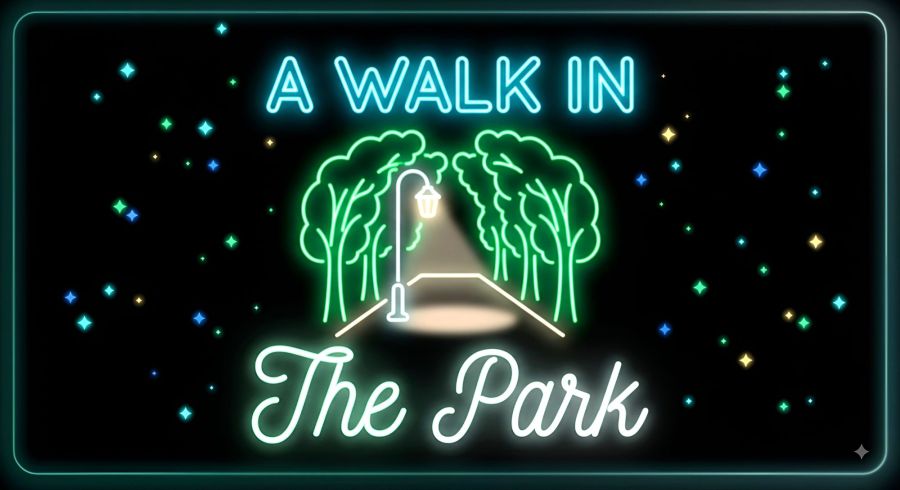
Sometimes, a day or an effort may seem super easy. Other times, what we’re asked to do can be excruciatingly difficult. But no matter how easy or difficult it is, the one thing we don’t want is for someone else to think it will work the same for us as it does for them.
For example, an experienced baker may be asked to do something that, for them, is literally as easy as pie. If you asked me to bake a pie, I could do it, but it may or may not be easy. If I make an easy pie, it is usually a no bake something with a cream cheese filling and a graham cracker crust. 😋
Still, most of us have had moments that could be called a walk in the park. We often use that phrase to describe something effortless, easy, and free of any stress at all. We can see ourselves skipping through the task like we would skip through a park filled with greenery, beauty, sunshine, and even a light Spring breeze. 🏞️
Where Did “A Walk in the Park” Come From?
The idiom emerged in American English during the early-to-mid 20th century. Urban public parks were originally designed as tranquil, landscaped escapes from crowded, noisy industrial city streets. Because strolling down a level, paved park path required virtually no exertion or hazard, the phrase naturally evolved into slang for any task that was delightfully easy or uncomplicated.
The Path of Real Peace
Though our daily responsibilities are rarely effortless, we don’t have to carry the fatigue alone. 1 Peter, Chapter 5, puts it this way:
1 Peter 5:7 BSB
[7] Cast all your anxiety on Him, because He cares for you.

https://bible.com/bible/3034/1pe.5.7.BSB
Stepping onto God’s path and walking with Him allows us to trade our striving for His steady guidance and true restoration:
Psalm 23:2-3 BSB
[2] He makes me lie down in green pastures; He leads me beside quiet waters.
[3] He restores my soul; He guides me in the paths of righteousness for the sake of His name.

https://bible.com/bible/3034/psa.23.2-3.BSB
May your steps be light, unhurried, and peaceful today. 🕊️👣
I’m a little sleepy today, so I got a little more help from Gemini. It’s starting to write more like me, but I still read and edit carefully like I would do in a human collaboration. Still, it was very helpful tonight.
Share this post on:

Cliché Month: Time to Recharge Our Batteries
Shabbat Shalom Y’all (and All Y’all). I haven’t done a blog break this month because there are so many great clichés to bring out, so for this Sabbath, I asked Google Gemini to give me ideas that worked with the rest and rejuvenation of a Sabbath weekend.
I know it could be our batteries, your batteries, or my batteries, and it still means the same thing, so I wanted this to go out to all my readers to wish you a great recharge and restful weekend, especially if you’re in the USA or anywhere else with a strong heat wave.
Where Did “Recharge Your Batteries” Come From?
Unlike ancient agricultural idioms or biblical proverbs, “recharge your batteries” is a modern industrial metaphor applied to an ancient human need; the need to rest and recharge before continuing to move forward. Even God knew we’d need to recharge, which is why we have Sabbath and why YahShua (Jesus) said, “The Sabbath was made for man, not man for the Sabbath.” For this idiom, its history follows the rise of electrical technology before entering everyday speech:
- The Technical Precursor (1859–1900s): French physicist Gaston Planté invented the first rechargeable lead-acid battery in 1859, followed by Thomas Edison’s nickel-iron battery in 1901. For decades, “recharging batteries” was strictly an engineering term used for telegraph lines, submarines, and early electric vehicles.
- The Metaphorical Shift (1920s–1930s): As consumer radios, automobiles, and flashlights became standard household staples, the concept of a “run-down battery” needing to be plugged in to restore power entered popular culture.
- Documented Print Debut (1930s–1940s): By the late 1930s and through World War II, newspapers and military dispatches began using the phrase figuratively to describe weary workers, executives, and soldiers taking leave to rest before returning to duty.
So without adding any other pictures or song references, here are some ideas for your own personal recharge over the hot weekend. This list is fully from Gemini, so I could rest a bit as well. And I love the idea of the cool water foot soak. Comment below if any of these work for you.
Sabbath Recharge: Staying Cool in Extreme Heat
- Host a “Living Room Picnic”: Spread out a blanket inside under the A/C or a direct fan. Have a simple lunch of sandwiches, fruit, and snacks, avoiding any cooking that adds heat to the house.
- Themed Hydro-Sipping: Make staying hydrated feel special by infusing large pitchers of ice water with cucumber, mint, lemon, or frozen berries.
- Cool Feet, Cool Body: Place a shallow basin of cool water by the sofa or a comfortable chair and soak your feet for 15–20 minutes. It is an incredibly fast way to lower your overall body temperature.
- Low-Light Sanctuary: Pull the shades and curtains tight during the hottest hours of the day (noon to 4 PM). It creates a calming, sanctuary-like atmosphere while significantly blocking solar heat gain.
- The Afternoon Audiobook or Podcast: Instead of active reading, simply lay down, close your eyes, and listen to a peaceful audiobook, a podcast about rest, or a relaxing scripture playlist.
- A Taste of Winter: Pull something pre-made from the freezer, like a chilled soup (gazpacho), pre-cut frozen fruit chunks (grapes or banana slices), or enjoy a simple icy treat like a popsicle or a scoop of ice cream.
Share this post on:

🎵Cliché Month: The Left Hand Didn’t Know What the Right Hand was Doing
by Crystal A Murray (CC BY-NC-SA 4.0)
I didn’t grow up attending a parochial school where students had their knuckles slapped for writing with their left hands, though even if I had, it wouldn’t have mattered for me since I’m thoroughly right-handed. In fact, I only crossed paths with a few left-handers throughout my life until I met my husband, a born-and-bred southpaw. (And, no, right-handers are not called northpaws.🤔)
With August 13th marking International Left-Handers Day, it felt like the perfect opportunity to celebrate him and his unique trait that belongs to only about 10 to 12 percent of the world’s population. It also got me thinking about how much strange, unfair baggage has been historically tied to the left side—and the famous clichés and idioms that followed.
In everyday work and planning, we all know the frustration when the left hand has no idea what the right hand is doing. Tasks stall, wires cross, and you end up in a full-blown tug-of-war with your own to-do list. Scripture even reminds us of the practical necessity of coordination—nobody builds a tower without first sitting down to count the cost and make sure all efforts pull in the same direction.
“For which of you, wishing to build a tower, does not first sit down and count the cost to see if he has the resources to complete it? Otherwise, if he lays the foundation and is unable to finish the work, everyone who sees it will ridicule him, saying, ‘This man began to build and was unable to finish.’”
Luke 14:28–30 (BSB)
Yet Scripture also offers a brilliant paradox in Matthew: when it comes to quiet generosity, we are instructed not to let the left hand know what the right hand is doing. In character, humility means doing good without staging a self-congratulatory parade.
“But when you give to the needy, do not let your left hand know what your right hand is doing,”
Matthew 6:3 (BSB)
We truly need both: the intentional coordination where both hands work as a unified team, and the quiet integrity where one hand acts without demanding applause from the other.
Here’s to giving our left hands a little extra appreciation—and making sure both hands stay in sync. How about you: are you a left-hander, or married to one like me? Or maybe both? 🤲
P.S. A fun FYI for you: There’s an old trick I learned from a kid’s album many (many) years ago. If you hold your hands out in front of you with the palms facing away, when you extend your thumb to a ninety-degree angle, your left hand will create the letter “L.” Is that cool, or what?
This is a fun song with a catchy chorus, but I couldn’t find it with lyrics. Still, this is a pretty amazing ensemble singing in this video.
with Dolly Parton, Johnny Cash, Brenda Lee, Kris Kristopherson, and Willie Nelson
Share this post on:

🎵🎬 Cliché Month: The Elephant in the Room

We’ve all been there: Gathered for a group dinner or party when that relative or friend walks through the door, dramatically sporting a new look. Maybe it’s a huge new tattoo, a noticeable facial piercing, a vibrant shock of wild neon hair, or maybe it’s a new relationship partner that no one saw coming.
Instantly, the conversation stumbles. There is a collective hush followed by a palpable second of silent checking and cross-referencing. Everyone’s gaze darts around the table, evaluating reactions without actually sharing an opinion—positive or negative—out of deep social fear that someone else in the room will disagree. The collective breath is held… and that’s when it arrives.
In that exact moment of shared paralysis, no one is just sitting at a dinner table anymore. Everyone is living out a classic, textbook example of The Elephant in the Room.
(That’s usually when everyone quits playing their White Elephant game for a while—though don’t worry, we’ll untangle that particular tradition in a bit!)
Where Did the Pachyderm Come From?
First, how did a giant mammal end up sitting on our living room furniture in the first place? 🐘
The core concept actually stretches back to an 1814 fable by Russian poet Ivan Krylov called The Inquisitive Man, which told of a museum visitor who noticed every tiny beetle and fly, but completely overlooked a massive, live elephant walking among the exhibits.
Later in 1882, Mark Twain adapted that same image for American readers in his short story Mrs. McWilliams and the Lightning, writing that an obvious truth was “as plain as an elephant in a house.”
Yet, the exact, modern phrase we use today—“the elephant in the room”—didn’t officially become a regular part of our language until the mid-20th century, first appearing in newspapers like The New York Times in 1952 before exploding into popular psychology in the 1980s as a way to talk about unaddressed family secrets. We humans, it seems, have spent over two centuries perfecting the art of ignoring the obvious!
The Psychology of Silence
The defining characteristic of an “elephant in the room” isn’t that the issue is hidden or subtle. It is the exact opposite: the issue is so glaringly obvious that everyone is aware of it. Yet, an invisible social contract keeps everyone tight-lipped.
Why do we do this? Usually, it comes from a mix of social conditioning, a fear of creating conflict, or simply waiting for someone else to speak up first. We convince ourselves that ignoring the massive problem makes it go away and hide, when in reality, the pressure to look at it only builds.
The funny thing about naming the elephant is that once someone finally has the courage to say, “So… are we going to talk about this?”, the collective sigh of relief in the room is almost deafening. Light replaces tension, and everyone can finally breathe again.
Speaking of Unwanted Elephants…
Since we’re on the subject of giant, awkward things in the room, let’s talk about a related pachyderm phrase that hits close to home—especially for those of us in writer’s groups or holiday parties that host a annual White Elephant Gift Exchange like we do in my local LCW group!
Have you ever wondered where that term came from? The history is surprisingly brilliant (and a bit petty).
Legend has it that in ancient Siam (modern-day Thailand), rare albino elephants were considered sacred royal property. Because they were sacred, they couldn’t be put to actual labor. If a noble or royal official displeased the King, the monarch would reportedly bestow a magnificent White Elephant upon them as a “gift.”
On paper, it looked like a high honor. In reality? Feeding, housing, and maintaining a non-working, giant, sacred beast was so astronomically expensive that the gift would completely ruin the recipient financially! It was a passive-aggressive masterpiece: a gift that was far more trouble and expense than it was worth, and one you couldn’t possibly get rid of.
Today, we’ve repurposed that royal headache into a fun holiday tradition where we swap quirky, useless, or eccentric items—hoping to pass off our own “white elephants” to a willing friend. And when we add “stealing” to the mix, it becomes quite comedic to watch the few really good gifts make their way into many hands before their final homes are decided.
Honoring the Real Giants
Since August 12th is World Elephant Day, it’s worth stepping away from our human idioms for a moment to celebrate the real animals behind these two (and more) proverbs. Elephants are extraordinary creatures. They are deeply empathetic, protective of their herds, and blessed with incredible long-term memories that keep their families safe through changing landscapes.
Truthfully, the only thing that makes a proverbial elephant in the room anything like the real thing is sheer size. They are certainly more majestic than most of the subjects we may be trying to avoid. So, I guess a way we can honor them as more than just large creatures is to become bigger (metaphorically) like they are and just stampede right over our fears of telling the truth. Directness paired with grace is always the best path forward. Let’s talk about the elephant in the room, or maybe just watch this clip from Hatari with adorable baby elephants and the fun Henry Mancini orchestration of “The Baby Elephant Walk” song:
Lots of help from Gemini on this one, so here’s a shout of thanks for the helpful collaboration. And one final bit of fun, can you tell whether this elephant is real or not?

Share this post on:

Cliché Month: Beauty is Only Skin Deep; plus Beauty is in the Eye of the Beholder

I’m bringing you two related clichés today because they are parts along the same line of looking at real beauty vs false beauty. I write from the point of view of someone who’s never really liked what she saw in the mirror, though I haven’t hated what I see either. It just always seemed like most others were prettier than me. There have been moments where I fixed myself up into something I was more pleased with, but even those never made me feel gorgeous or beautiful.
On the other hand, my acceptance of being more plain than those “real” beauties in my life has driven me to develop inner beauty. Caring how others feel, trying to be helpful to almost everyone, and freely talking about my various failures in life to make sure no one feels like I think I’m better than them has always been among my goals. Even with winning behaviors or skills, if they made someone else feel loss, it took the wind right out of my sails. (Hmm, that’s another cliché, huh?)
Sometime during my travels with the photo studio, a TV was on with a show called Monsters. The episode I watched back then (around 1990) has stuck with me for years even though I didn’t actually know the show or what the episode was called until a few weeks of deep searching gave me the result: Season 2, episode 23, called “The Bargain.” I’ve linked to it on YouTube, but the summary goes like this:
A woman owns a bookstore and has feelings for a customer who doesn’t seem to feel the same. She decides it’s because she’s plain, so when she sees an ad for a new face, she calls the number. Her new face is beautiful but comes with a few prices. In the end, the woman with her old face gets the guy who’d been in love with her inner beauty all along, so she lost everything by focusing on the outer shell. I guess this actually goes a little with yesterday’s cliché to not judge a book by its cover as well.
Now, the second cliché makes a similar point, and the illustration of it is shown perfectly in the old Twilight Zone episode called Eye of the Beholder from season 1, episode 39. But I was unable to find that in a full original episode without commentary. I have linked to the unveiling moment in the remake from 2002 since the point is still shown, and the videography still pulls off some of the tricks of the original.
If you haven’t seen it, I don’t want to spoil this one, so I’ll just tell you that it’s an episode about a woman who has plastic surgery to “fix” her face to give her the beauty of those around her. The surgery fails and the lights come on to reveal that beauty—both hers and others—is not exactly what most expect it to be.
On a side note, if you watch (or rewatch) this full episode, pay attention to the amazing use of shadows and camera angles that hide the actual faces of the cast until the reveal at about 16 minutes in. The strength of the film is in the audio until the lights come on, and you never realize something is being purposely hidden from the audience. It’s done brilliantly.
So how do we look at the world when we’ve been so trained to judge on outward appearances and yet somehow know they are not the answer? The Bible speaks to this in three different ways.
Proverbs 31:30 BSB
[30] Charm is deceptive and beauty is fleeting, but a woman who fears the Lord is to be praised.

https://bible.com/bible/3034/pro.31.30.BSB

1 Samuel 16:7 BSB
[7] But the Lord said to Samuel, “Do not consider his appearance or height, for I have rejected him; the Lord does not see as man does. For man sees the outward appearance, but the Lord sees the heart.”

https://bible.com/bible/3034/1sa.16.7.BSB

1 Peter 3:3-4 BSB
[3] Your beauty should not come from outward adornment, such as braided hair or gold jewelry or fine clothes, [4] but from the inner disposition of your heart, the unfading beauty of a gentle and quiet spirit, which is precious in God’s sight.

https://bible.com/bible/3034/1pe.3.3-4.BSB
Each of us should work on our inner beauty, and we should also strive to see the inner beauty of others. It is that true beauty that will allow us to make genuine connections to each other; connections so strong that they supercede any abundance or lack of external beauty.
This message is portrayed beautifully in the Pure Flix movie called “A Hot Cocoa Christmas” (formerly called “Much Ado About Christmas”) and one I highly recommend is worth renting. I wish I could find the karaoke scene that shows the connection between the couple, but here’s the trailer for the whole movie:
Just imagine a world where the insides truly mean more than the outsides to most people. No more harming others because they’re wearing the shoes someone else thinks they deserve; no more attacking people because of any outward display (age, race, gender, etc.) someone dislikes; no more graffiti and damage to the outsides of buildings or cars or wherever people feel their appearances need to be made; and people dedicated to bringing out the best in others, so their inner beauty can shine. All that would be Heavenly. Dream with me, and let your own inner beauty sparkle. ✨🤩
Shout out to both Google Gemini and Microsoft Copilot for helping me find the info for that old show and for pointing out the symmetry arc my mind naturally found by looking at these three sources to present my points.
Share this post on:

Cliche Month: The Pen is Mightier Than the Sword

I know, I know… If you’re a writer, you’ve been told to “avoid clichés like the plague” (the ultimate cliché in itself!) So why am I planning a month of posts all about clichés?
Though the publisher’s advice to avoid using clichés is not empty advice, totally dismissing them ignores a crucial fact: clichés are clichés for a reason. They are successful linguistic vessels that earned their status by capturing universal truths and vivid imagery so perfectly, they had to be repeated—and repeated again.
While clichés can be efficient methods for driving home a point without launching into a wordy diatribe, overused phrases can make writing feel lazy and flat. Still, a bit of clichéd shorthand to convey a warning or some sage advice is powerful when used correctly.
Throughout August, we’re going to take a deep dive into the paradoxical world of clichés to learn the DNA of persuasive language. We will peel back their layers to expose the colorful, often surprising history and background behind phrases that still bring important punches of truth and deep thought to our prose. We will learn how to transform them from lazy shorthand back into powerful tools of expression.
For example, the exact phrase highlighted in neon text above was coined in 1839 by the writer Edward Bulwer-Lytton for his play Richelieu. Beyond the play, it became the ultimate rallying cry for persuasion over force and freedom of speech.
We see the power of the pen throughout Scripture as well. Way back in Deuteronomy, God told the children of Israel to write His commands where they would see and remember them:
Deuteronomy 11:20 BSB
[20] Write them on the doorposts of your houses and on your gates,

https://bible.com/bible/3034/deu.11.20.BSB
In the book of First John, the authors use the pen to share what they have seen with their own eyes and touched with their own hands to those who read their words. In verse 4, they share their purpose:
1 John 1:4 BSB
[4] We write these things so that our joy may be complete.

https://bible.com/bible/3034/1jn.1.4.BSB
God told Habakkuk to write clearly on stone tablets where a herald could pick them up and carry the penned words to others.
Habakkuk 2:2 BSB
[2] Then the Lord answered me: “Write down this vision and clearly inscribe it on tablets, so that a herald may run with it.

https://bible.com/bible/3034/hab.2.2.BSB
Paul told the Corinthians that he used the power of his pen to write things in ways he knew they would understand:
2 Corinthians 1:13 BSB
[13] For we do not write you anything that is beyond your ability to read and understand. And I hope that you will understand us completely.

https://bible.com/bible/3034/2co.1.13.BSB
And God Himself told Moses to chisel out 2 stone tablets (more than once), so He could use the power of the written word, though He didn’t need pen and ink since He was God and could use His own hand.
Deuteronomy 10:2, 4 BSB
[2] "And I will write on the tablets the words that were on the first tablets, which you broke; and you are to place them in the ark.”
[4] And the Lord wrote on the tablets what had been written previously, the Ten Commandments that He had spoken to you on the mountain out of the fire on the day of the assembly. The Lord gave them to me.

https://bible.com/bible/3034/deu.10.2-4.BSB
So whether it’s the finger of God, a chisel, a paintbrush, an antique pen or feather, a modern roller ball, or a printing press (physical or digital), the power of words conveyed by a writing instrument is significant. The Holy Bible is the most amazing collection of words ever penned, and it still has soul-changing power.
Let’s take this month to learn the power of words, even as used in the form of a cliché, and undo the negative definition of the word cliché. Let’s learn to master the principals that made these succinct moral lessons powerful before they became relegated to the weakness of cliché, ensuring our own words resonate with equal weight and authority.
Many thanks to Google’s Gemini AI for the cool neon word art, the history of today’s cliché, and some inspirational words and editing for putting this all together.
Share this post on:

Blog Break ⛓️💥 I Did it Again

I started off with a simple idea, and then I started the research. How do I caption this? What are the copyright rules to use this song lyric? What do you actually call a piece of cotton growing in a field?
Oh, and which video is the best to embed with this? And why can’t I find one with lyrics? And oh, I should add that anecdote to the story.
If you were in my head, you’d be worn out by the cacophony of thoughts and sounds and ideas. But I can usually tug on a thread to make it more focused for these posts. When I realized that was going to take too long, I decided to ask Gemini to make an image of a blogger with a lot of thoughts. It decided to include almost everything we’ve talked about for various posts, and I’m only now seeing the misspelling of the word “lyrics” but if I keep making changes, this won’t be a break at all. Lol 😂
Good night and I’ll try to finish the promised post by tomorrow. 😴
Share this post on:

🎭How The West Was Lost—Or, Pure As The Driven Smog (Part 2)
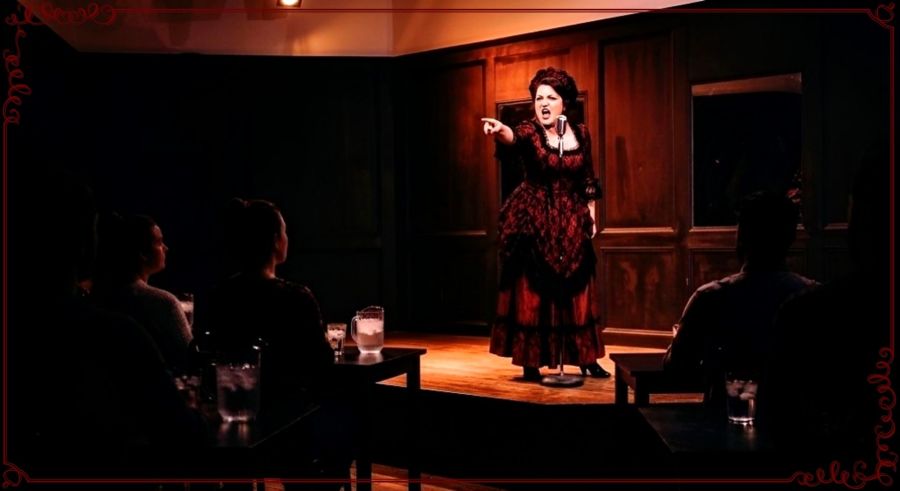
Behind the Curtains
Okay, so maybe the Aquarius Rising Theater didn’t have curtains, but we definitely had a backstage area where all the stress went to play before the play. It’s in that area where one realizes exactly how much work goes into play acting.
I promised you yesterday that I’d introduce you to the powerhouse woman who made all the difference in my stage presence. This castmate was both an actress and a stunt woman, and she had a commanding influence as a trainer behind the scenes. The actress was Spice Williams-Crosby, whom you may have seen play a saloon girl in The Cherokee Kid with Sinbad or the Klingon Vixis in Star Trek V: The Final Frontier. If you want to learn more about Spice and her super health conscious endeavors that make me think she is still just as powerful now as then, check her official website.
Since I was only 16 or 17, I don’t recall if Spice was actually an official director or not, but she definitely directed me and others to pull off a truly great performance. She took our little production as seriously as if it were a high-paying, top Hollywood release. By the end of her training, I knew how to speak and act like a New York newspaper boy, a little orphan girl, and an old Indian woman.
Seven Costume Changes and One Tired Teenager
That newspaper boy had more than one headline to sell, and in between those sales, three little orphan girls had to show up in tattered clothing and then change to more appropriate sleepwear. The fun Irish nanny taught us to have hope for tomorrow with a little song that went something like:
Some fine day when my ship comes in,
I won't care about, never think about,
What my life has been.
I'll have chicken every Sunday,
Never go to work on Monday,
When my ship comes in.
That was the chorus, and I know the verse had the line, “I’ll live the life of Riley, hip hooray” in it, but I can’t recall the rest.
Wild, Wild Mabel
For some reason, though, I can recall all the words and the tune for a song I didn’t sing myself, and that’s the song Wild, Wild Mabel that was sung by Spice.
(Chorus)
Wild, wild Mabel,
Wild, wild Mabel.
There's never been a man who was able
To tame her.
Meaner than a lion, she could scratch and claw.
With a red hot trigger and fast on the draw,
Yes Wild, Wild Mabel was her name.

(Verse--partly spoken)
(Speak)
On a cold dark night,
Back in 74,
Mabel went out
To settle a score
(Sing)
With a tall dark stranger who was known as Dangerous Dan.
(Speak)
A shot was fired,
And the silence was broken,
The door swung open,
With the gun still smokin'.
(Sing)
Yes, Wild, Wild Mabel got her man.

(Repeat chorus)
Wild, wild Mabel,
Wild, wild Mabel.
There's never been a man who was able
To tame her.
Meaner than a lion, she could scratch and claw.
With a red hot trigger and fast on the draw,
Yes Wild, Wild Mabel was her name.
When I shared these lyrics with Gemini to see if they exist anywhere online, I got a little history lesson about an embedded joke in the lyrics. Gemini says, “That is a direct, hilarious nod to ‘The Shooting of Dan McGrew,’ the famous 1907 Robert W. Service poem that practically defined the entire ‘Wild West saloon melodrama’ genre!”
It’s a very long poem, but it has some interesting history and alternate texts, so I recommend looking at its Wikipedia page for all the info, like the fact that Ronald Reagan and Canadian Prime Minister Brian Mulroney did their own alternating recital of it.
Stay Tuned for Our Final Act: Part 3
While the orphans were getting ready for bed, the Irish nanny had some comedic surprises of her own as she sang to us about failing at being a “Shoplifters Daughter,” and then walked to the corner of the room to sing the ultimate guilt-trip torch song, “Tears on My Pillow.”
You won’t find these lyrics anywhere else on the internet (or if you do, please tell me where), so make sure to check back tomorrow for the grand finale of this fun journey down my memory lane.
Share this post on:

🎵Milestones

I’m keeping this really short because I wore myself out today going through many of the milestones I’ve kept in boxes because they are so precious to me. And I’m thankful for the memories, but there comes a time when you’ve got to whittle the physical parts of the memories down a bit. I’ve still got all the good stuff in my heart where it matters most.
And speaking of milestones, my little sister is celebrating a big one, so I played around with some AI music and created a short chorus for her. I made it to just “My Little Sister” so my readers can download it for their little sister’s birthdays as well if they like. Here are the lyrics…
Happy birthday to you sister,
The best little sister I adore.
I celebrate with you, little sister.
Have a great birthday...
And many, many more!
And here is the sound track…
And because I love the Holy Word of God so much, I even found a birthday Bible study to share with her and you all. Just go to Bible.com to find it with this link:http://bible.com/r/ADb which should take you to a study called A Birthday Card from Your Creator (A 7-Day Devotional).
Psalms 139:14 CSB
[14] I will praise you because I have been remarkably and wondrously made.  , Your works are wondrous, and I know this very well.

https://bible.com/bible/1713/psa.139.14.CSB
Share this post on:

🎵 Holy, Pure, and Undefiled (Full Song)🎶

It’s done, and I’m excited to share it with my readers. This is the finished song with 3 verses added to the chorus I shared on the post April 18th. I’m not sure what was harder, writing the lyrics, getting a sound I like from Gemini (Lyria model), or getting this uploaded to YouTube so I could embed it here. Though difficult and time-consuming, I actually enjoyed the process, and now I’m excited to try a bunch more of my poetry set to music. What a fun way to write for the joy of The Lord, and then to make a joyful noise.
1 John 1:4 BSB
[4] We write these things so that our joy may be complete.

https://bible.com/bible/3034/1jn.1.4.BSB

Psalm 100:1-2 BSB
[1] A Psalm of thanksgiving. Make a joyful noise to the Lord, all the earth. [2] Serve the Lord with gladness; come into His presence with joyful songs.

https://bible.com/bible/3034/psa.100.1-2.BSB
I won’t bore you with a ton of details, but there have been some great lessons learned. Part of the learning felt like being in the music studio redoing tracks until they didn’t have any more hiccups. I heard Elvis was famous for doing that hundreds of times. And Marty Robbins was able to go into the studio and sing a song to perfection at the first take. (I’m sure you know who Elvis was, but if you’re not familiar with Marty, look up his album called Gunfighter Ballads and Trail Songs for some you might find familiar like “El Paso” and “Cool Water.” Or you might remember him for “A White Sport Coat and a Pink Carnation.”)
And that was a fun rabbit trail. Lol 🤣 Anyway, to get the recording with which I was finally happy, it took coming back after I ran out of credits, and it took using multiple AI models. The Pro model didn’t want to help once it saw religious lyrics (I’m sad for that part), but the fast model that helps with a lot of Bible queries from me said it’s just how it’s trained. So, I let the fast model create the prompt with all the right spaces and breaks and punctuation to tell the Lyria model how to sing my words. AI knows AI, so the understanding was finally there to get my song, complete with ending tags (though it could’ve done a little better on that part), and a big orchestra & choir sound. The more I’ve played it, the more I’ve liked it.
And the last piece to the puzzle was finding out that Adobe Express would listen to the video and create captions in time with the music. I had to change some font sizes and boldness within the parameters of not having Adobe premium, but I was able to get them done in a way that should help y’all sing along. So, here for its debut blog performance, please enjoy Holy, Pure, and Undefiled with Lyrics by me and all the rest by Gemini and Lyria…
Share this post on:

My Latest Flickr Photos


Others’ Posts I’ve Liked


