Cliché Month: A Bird in the Hand (is Worth two in the Bush)
The first time I saw the letters “FOMO,” I remember thinking how it seemed impossible for enough people to clamor for a coveted thing to be worthy of its own acronym. As a mostly-contented person, it didn’t feel like I could ever fear missing out. But I was only basing that on “stuff,” so I hadn’t realized all the fears that come into play over missing out on things like attention, approval, acceptance, etc. And social media, with all its reactions and love hearts is only making it worse.
But Scripture says it this way…
[6] Of course, godliness with contentment is great gain.
[7] For we brought nothing into the world, so we cannot carry anything out of it. [8] But if we have food and clothing, we will be content with these.

1 Tim 6.6-8 (BSB)
But how to be content with what we have in both tangible and intangible items is its own battle. And it is an old battle based on the history of this cliché.
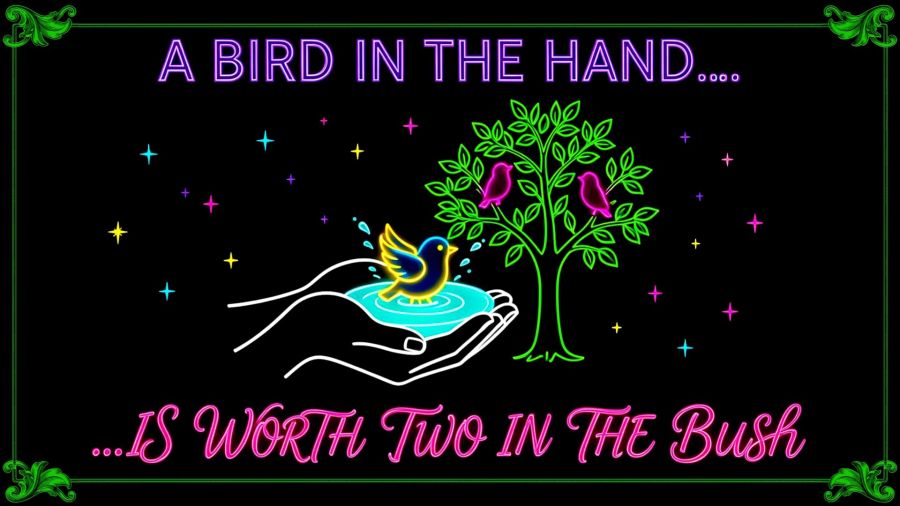
Few proverbs have stood the test of human history quite like the timeless reminder that a bird in the hand is worth two in the bush. For centuries, this folk wisdom has warned us against abandoning the blessings right in front of us to chase elusive prizes rustling just out of reach. While its roots trace through ancient fables and medieval falconry, the deeper spiritual truth it touches on is one our restless hearts constantly need: the power of present contentment.
From Falconry Gloves to Faithful Hearts
In medieval England, the phrase held a literal meaning for falconers. The “bird in the hand” was the trained raptor perched securely on the hunter’s leather glove—a prized, reliable partner. The “two in the bush” were the wild game birds hiding in the brambles. To risk the valuable bird already secured for the mere chance at wild quarry was pure folly. In 1546, John Heywood recorded the sentiment in print, cementing the idea that what is held and nurtured is always worth more than the illusion of the unknown.
In our daily lives, however, human nature tends to do the exact opposite. We focus on the rustling in the bushes—the opportunities we missed, the resources we wish we had, or the uncertain future we cannot control—while neglecting the quiet blessings resting right in our open palms.
“What Is That in Your Hand?”
When Moses stood before the burning bush in Exodus 4, full of fear and insecurity about the massive calling ahead of him, God did not hand him a grand army or an elaborate new treasure. Instead, the Lord asked a simple question: “What is that in your hand?”
All Moses held was an ordinary, weathered shepherd’s staff. A stick! In Moses’ view, it was just a humble tool of daily labor. It wasn’t anything flashy or extraordinary, yet God demonstrated amazing power when He touched that staff and Moses obeyed God’s direction.
When we stop obsessing over what we lack and instead surrender what is already in our grip, He can do the same for us; turn the ordinary into an instrument of His power and grace. Faithful stewardship begins when we look at what God has already entrusted to our care and commit to using it according to His will and plans.
Resting in the Watchful Eye
In Matthew 6, YahShua (Jesus) points us directly to the birds of the air to teach us the antidote to anxiety. They don’t sow or reap. They don’t have storehouses full of provisions. Yet their heavenly Father feeds every single one and never takes His watchful eye off of them—even when they fall. If God interacts this way with the sparrows among the branches, we can be confident that He will do even greater things in His interactions with us. After all, YahShua Himself said we are worth more than many sparrows.
King Solomon, in Proverbs 15, says it this way…
Proverbs 15:16-17 Berean Standard Bible:
[16] Better a little with the fear of the Lord than great treasure with turmoil.
[17] Better a dish of vegetables where there is love than a fattened ox with hatred.

Prov 15:16-17 (BSB)
True peace is not found in owning everything or scrambling after every bird in every tree. It is found in cupping our hands in gratitude as God sends provision our direction. Cherishing the daily blessings God has placed before us will allow His peace to fill the spaces where worry used to dwell. A bird or an education; a typewriter or a pencil; multiple talents or just one thing you do with heart: God can take what He has given you and make it exceedingly abundant above all you can ask or even think. So, for this day, look at what’s in your hand from The Lord with total focus; more than on all the desires outside of your grasp. He can and will do more than whatever you can imagine.
1 Corinthians 2:9 BSB
[9] Rather, as it is written: “No eye has seen, no ear has heard, no heart has imagined, what God has prepared for those who love Him.”

1 Cor 2:9(BSB)
As I put this together, I couldn’t help but think of the following hymn:
Share this post on:

My Latest Flickr Photos


Others’ Posts I’ve Liked


