Cliché Month: Raining Cats and Dogs
Raining Cats and Dogs: The Truth Behind the Downpour
I’ve always been a cat person, but I’ve had some special dogs in my life as well. The first one I remember was Kute Kitty Kolleen of Keswick. She was a very red Irish Setter, and I was told she put up with me teething on her nose. (Yuck!?) I do not recall my teething days, but I sure loved that dog and her puppy Kollette. They both lived with my grandparents. I’ll save the other dog memories for National Dog Day on the 26th of this month.
With August 8th marking International Cat Day and the entire month of August celebrated as National Dog Month. (Wait, cats only get one day and dogs get a whole month? Not fair!) Both of our favorite four-legged companions are sharing the spotlight for this blog. That makes it feel like the perfect moment to dive into one of the most famous pet-centric sayings in the English language: “raining cats and dogs.”
The Slippery Roof Myth
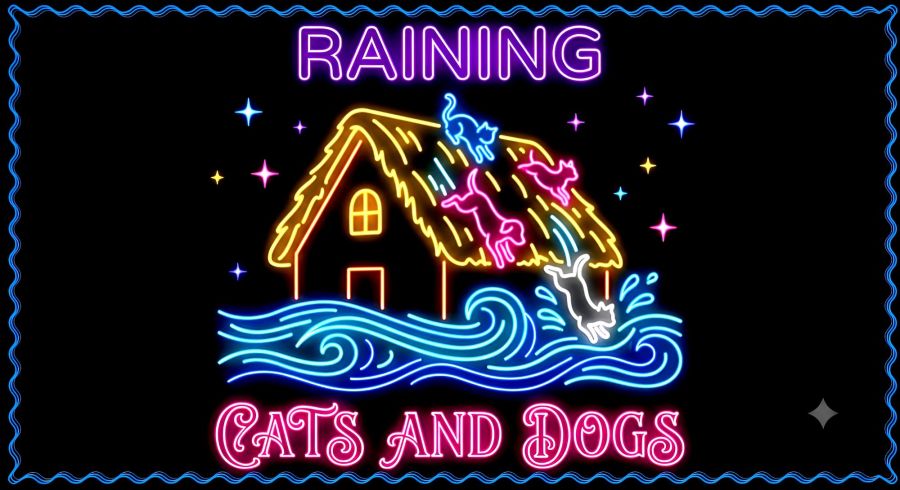
At some point, I heard the story behind the cliché. The legend states that back in the 1500s, homes had thick thatched roofs made of straw and reeds. Cats, dogs, and other small animals would climb up to sleep in the thatch for warmth. Then, during torrential downpours, the wet thatch would get slippery or cave in—literally raining pets through the ceiling and into the living room!
It’s an amusing visual, and one I thought of immediately upon deciding to use this cliché, but it turns out that linguistic historians have largely debunked it. A properly constructed thatched roof was a foot or more thick and tightly packed, so even an abundance of rain wouldn’t send sleeping critters tumbling through the ceiling.
So, where did the phrase actually come from? While its official origin remains mysterious, historians point to two far more likely roots:
- Norse Mythology: In ancient Norse lore, dogs were symbols of the wind (associated with Odin, the storm god), while cats represented heavy rain and atmospheric turbulence (tied to Freyja, whose chariot was pulled by cats). A fierce storm of howling wind and driving rain was figuratively called “dogs for the wind, cats for the rain.”
- 17th-Century City Streets: In 1600s London, poor drainage meant that sudden, severe rainstorms created heavy street flooding. The rushing runoff would sweep up debris and, tragically, stray animals that hadn’t survived the storm, making it look to people passing by as though they had literally fallen from the sky.
Raining Dogs and… Polecats?
Early variations of the phrase in the 1650s actually described severe downpours as “raining dogs and polecats” before settling into the catchy pairing we use today.
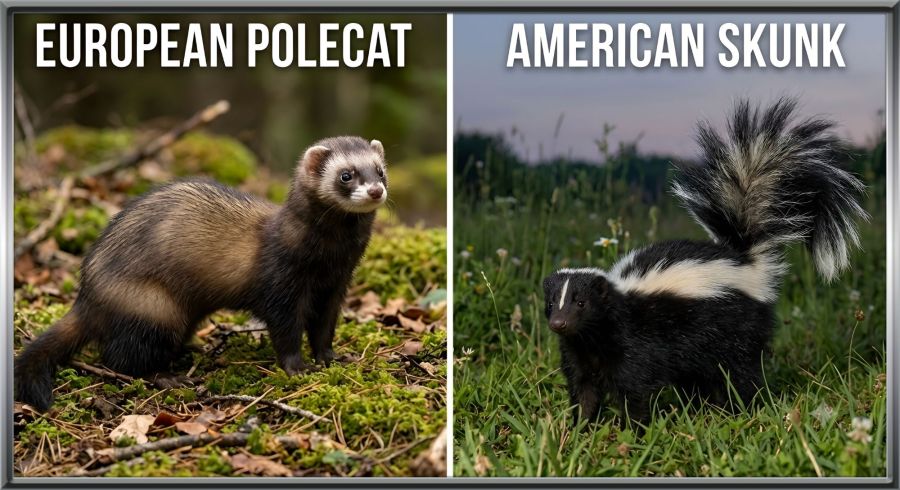
Fun Fact: Wait, isn’t a polecat a skunk?
If you grew up in North America hearing “polecat” used to describe a skunk, you’re not alone! But when 17th-century English writers wrote about “polecats,” they were referring to the European polecat (Mustela putorius)—a wild, agile cousin of the ferret. When European settlers arrived in the Americas and encountered skunks, they saw a similarly sized, dark-furred animal with a potent scent gland and borrowed the name “polecat” as slang.
Rain Chaos and Muddy Footprints 🐾
It’s funny all the directions a mind can run from one little thought!
About pets and weather, isn’t it amusing how these idioms stack up? You’d think if it were literally raining cats and dogs, they’d be fighting like cats and dogs just to scramble for cover and get out of the deluge!
Unlike the disciplined ants in the old children’s rhyme (another thought direction altogether,) who politely march one by one, hurrah, hurrah to get out of the rain, a sudden downpour usually brings pure chaos when pets are involved.
So if it rains for you this month, I don’t think you’ll find any cats or dogs falling from the sky, but you may get wet neighborhood cats showing up on your porch for food. Here’s a collage with 4 of our rainbow bridge kitties who were indoor-only cats (2013) plus 4 of the outdoor cats who used to show up at feeding time (2022). We still have 3 of them showing up in 2026.
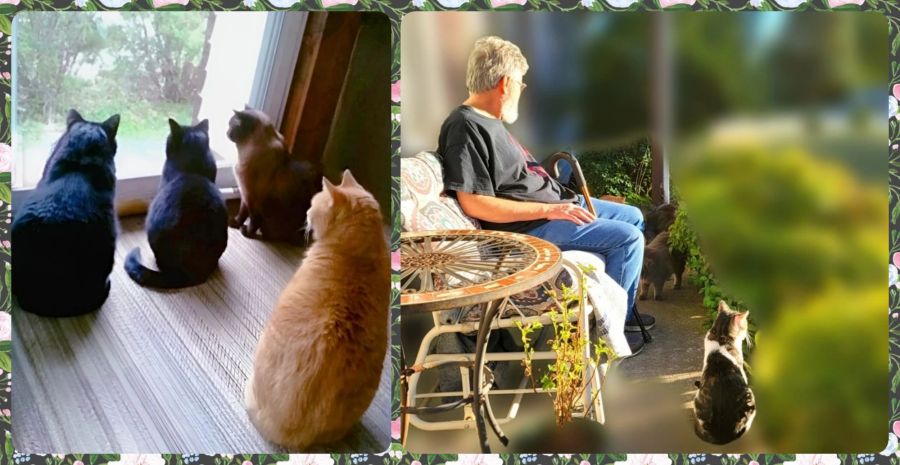
by Crystal A Murray (CC BY-NC-SA 4.0)
Share this post on:

My Latest Flickr Photos


Others’ Posts I’ve Liked


