Aesop’s Fables Month: The Milkmaid and Her Pail
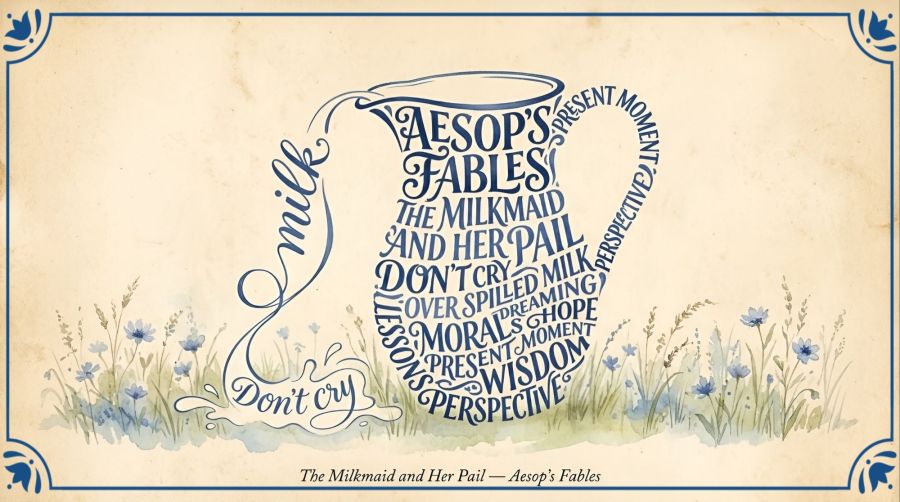
Yesterday, I promised you the follow-up to the cliché Don’t Count Your Chickens Before They Hatch from the Aesop’s Fable of the milkmaid. I had initially assembled something built on general references, intending to simply re-read the fable, make sure I had highlighted all of the important points, and then hit publish. Only, things did not go as planned. In a single evening of digging, I uncovered a rich, traveling history that I simply have to share.
The Classic Fable Retold
In the traditional fable, a young milkmaid named Patty walks to market balancing a full pail of milk on her head. Lost in daydreams of selling the milk to buy eggs, hatching a flock of chickens, selling the poultry to buy a fancy gown, and tossing her head at suitors, she accidentally tosses her head in real life—sending the pail crashing down and spilling every drop.
The Compass of a Tale
Growing up, moral tales were never just light bedtime reading to me; they laid down the invisible boundary lines that secured my world. From a very young age, stories like The Boy Who Cried Wolf sank deep into my conscience, teaching me to weigh my words and never shout for help unless I truly meant it. Fables offered a reassuring sense of order—a moral compass whispering that actions carry weight, that character matters, and that, eventually, truth and justice will find their footing.
September’s Journey & The Traveling Tale
As we open September’s journey into Aesop’s Fables, that well-known mishap of a milkmaid named Patty turns out to be only one of many rewritings of the same story. If you dig into the archives expecting a neat, 2,500-year-old Greek script, you will find quite a surprise: the story of the shattered vessel didn’t begin with Patty at all.
Not Aesop?
Centuries before it arrived in European schoolrooms, it began in ancient India within the Panchatantra as a tale of a poor holy man kicking over his jar of rice while lost in a daydream as he rested on his mat. It traveled through Persian and Arabic folklore before French poet Jean de La Fontaine reimagined the main character in 1678 as Perrette, skipping with joy down a country road until her pot tumbled.
By the time English translators named her Patty, our culture had organically woven two separate, timeless idioms around her solitary walk. We have the motherly warning when Patty went to her to confess her spill: don’t count your chickens before they hatch; and the quiet grace we must summon afterward: don’t cry over spilled milk.
Beyond Aesop
Looking across the centuries, the variations are abundant. I found versions with and without the milkmaid being named, characters carrying baskets or pots instead of milk, and wildly different reasons for the final mess. In some, Patty tosses her head in haughty disdain to reject the boys attracted to her new dress. In others, she flips her hair in pride as she prances in front of a rival village girl’s anticipated jealousy.
Yet within every variation lies the same core truth: disaster strikes the moment our full attention abandons the present task for an imagined future.
My Takeaway
What finding all these stories taught me is that humanity is desperate for a moral compass. In the depths of our hearts, we desire a world where right is right and justice prevails. Throughout the history of these moral tales, storytellers subtly altered the characters and settings in ways to fit the needs of their audiences at the time. But the underlying intent never changed: we need to communicate that knocking down the first domino inevitably tumbles everything behind it. We write and rewrite the same moral lessons with different characters because we hope people will learn, take heed, and—if necessary—change their ways.
In The News (Justice & The Law of the Harvest)
When we look at the world around us, this tension feels sharp as we read current headlines. We watch society wrestle between human empathy and the hard demand for accountability when terrible choices are made that cannot be taken back no matter the excuses or reasons for them. The story of the mother who strangled her 3 children has been weighing heavy on me as people make excuses for her deciding their lives had no value. She had choices, like dropping the children off at a fire station. But no matter how torn we are, we inherently know something is broken with the idea that someone could plant corn and grow tomatoes. We know that in truth, each person will reap what they sow.
But Grace
But grace is God’s idea; His answer for our human failures. While He does not change the law of the harvest (we still grow what we plant), He offers unmerited favor to sustain us through the consequences, anchored by the promise of an eternity in His presence.
Salvation won’t undo every consequence (Patty’s milk was still soaked into the dust). But grace helps us look up when we would otherwise be crushed by hopelessness. That grace is a free gift to us, (and free to mother who took the lives of her children as well), but it cost The Lord everything! And because that price has already been paid, He’s waiting now with an outstretched arm to walk with you—even through the consequences.
Hebrews 4:16 BSB
[16] Let us then approach the throne of grace with confidence, so that we may receive mercy and find grace to help us in our time of need.
A Light Finale:
Q: What do you call a camel when it gets upset over spilled milk?
A: A "drama dairy."
😁🐫🥛
Share this post on:

Proverbs 9: Folly’s Fatal Feast vs Wisdom’s Wonderful Welcome
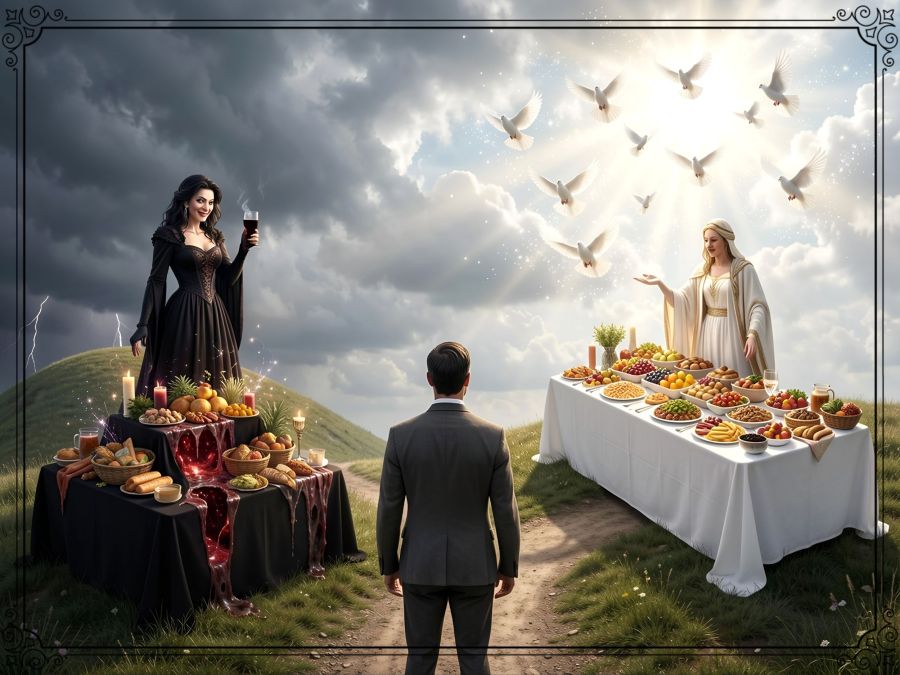
When you’re hungry, even the bitter may taste sweet, so it’s the perfect opportunity for the enemy of your soul to show up with what looks like a tasty feast but is instead poisonous. Use discernment and not just eyesight to examine what you allow your mind and soul (and body) to consume.
Lady Wisdom is here for another visit in Proverbs Chapter 9. This time, in verses 1-6, we see her building a strong house and then preparing a tasty and nourishing feast. She invites whosoever will to join her for a meal. There is so much to offer that she’s sent others out with invitations, and even those who are simple-minded and lacking judgment are welcome to attend. Beyond sustenance, those who feast with her can leave their folly behind to live and walk in understanding.
In verses 7-9, Solomon breaks into a short lesson (maybe a quick rant) about the troubles you’ll have if you try to correct a mocker. Instead, he says, look for wise and righteous people to teach if you don’t want the stress of being hated for your message. While it is true we can see more pleasant fruit by looking for wise and open personalities to instruct in yet more wisdom, this was also written before the shed blood of Christ who told His disciples they would be hated by all for the message. We don’t want to strive with those who have made up their minds to resist God no matter what, but keeping the feast available may still change a life.
Verses 10-12 speak again about walking in the (proper) fear of The Lord and knowledge of The Holy One. While it gives promises, it also says the main benefits are to you alone. But, hey, an advantage is an advantage, right? And if we each get our own benefits, then those we teach do, too.
Finally, in verses 13-19, we are introduced to the woman named Folly. Like the brazen seductress in previous chapters, she’s looking for victims. She shows up in the high places (which could even represent the church) with her own “feast” and begins calling out to those walking straight paths. See, she wants to destroy what is right. From there, she also calls out to those who lack judgment, but instead of promising deliverance, she starts spinning webs of lies. She tells them her stolen water is sweeter, and she neglects to tell them the truth about her guests who died from eating her poisons. And the chapter ends there.
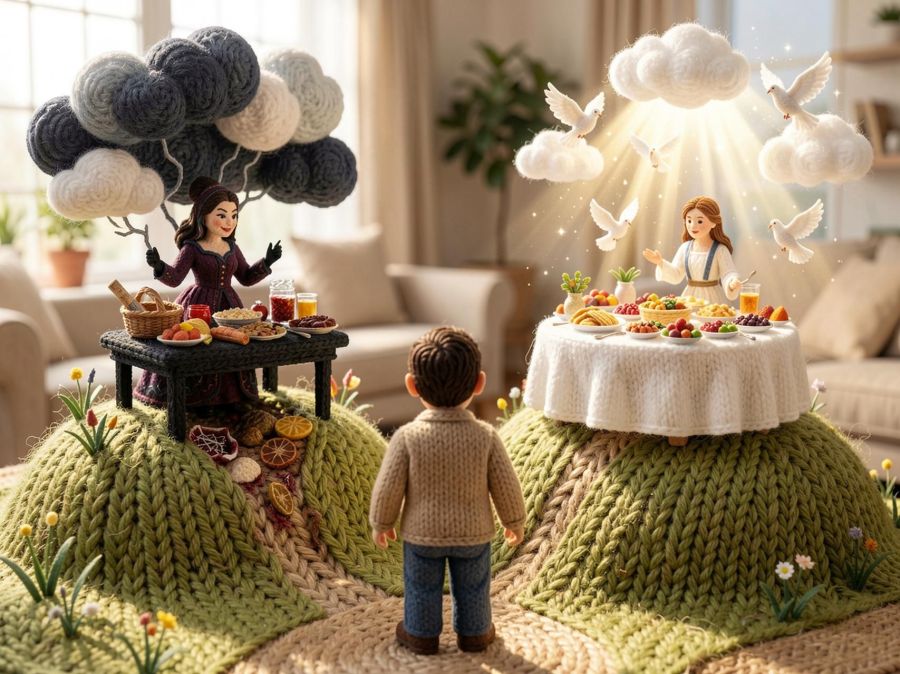
Now, before I end this, I have to share one of the cute images I ended up with when I used the same prompts as for the picture above, but chose the “knitting” filter instead. It’s just fun and cute.
And, now, here’s a song about the feast prepared for us by Jesus, the one guaranteed to satisfy us.
Share this post on:

My Latest Flickr Photos


Others’ Posts I’ve Liked


