Psalm 12 Written in Haiku

I love writing haiku. It’s actually how I journal my day every night. It keeps me focused on short, rhythmic bursts of thought, and the meter is relaxing to me. I have learned about the “correct” use and meaning of haiku, with its nature words and less rigorous syllable count, but for the purposes of my haiku writing, I prefer to focus on the Americanized syllable structure (5-7-5) I learned back in elementary school.
Psalm 12 was the chapter used in my current Bible study called “The Full Story_____From the Beginning to the Amen” by The Bible Project. So here it is condensed into simple haiku verses.
A Psalm of David,
To the choir director.
A song of lament.

1.
I need Your help, Lord.
The loyal have disappeared,
From the human race.
2.
They all keep lying.;
Speaking with flattering lips,
And deceptive hearts.
3.
I'm praying to God,
To cut off the boastful tongues,
And the lying lips.
4.
They claim false power.
They reject God as Master.
And claim the control.
5.
But devastation,
Has caught God's attention, and...
He hears the groanings.

The poor and needy,
Cry out, and God rises up.
He provides safety.
6.
The Lord's words are pure.
They've been refined like silver.
Extra purified.
7.
You, Lord, will guard us.
You protect us forever,
From evil attacks.
8.
Though the wicked prowl,
And the human race exalts...
The worthless wicked.
See, I read this AND listened to it. But I didn’t really hear the pain in King David’s heart until I began to write the words myself. Now, I’m seeing him cry out in verse and begging God to see what men are doing to each other and fix it. I don’t know if he was king when he wrote this, but he obviously felt powerless to change things himself. His hopes were likely dashed because, not only were there wicked and evil men doing harm to each other, but the general populace were praising the wicked instead of holding them accountable.
Sadly, it sounds like much of the world right now. People take power that was never meant for mankind, like deciding what is good or evil based on their own desires, and they reject the wisdom of The One who created all life and wrote the owner’s manual. Our Creator chose how life would form in the womb when we were fearfully and wonderfully made. He even chose that life would form sometimes in less-than-ideal situations. But He asks us to trust that He knows best and has a plan for our good no matter what it looks like at that moment.
But after that life has begun to form, some people take the position of thinking that because they can control it, they should control it. They will snuff out that life because it doesn’t line up with what they think their future desires will be. And, they will find professionals to help them kill the innocent child because somehow, that murder helps their bottom line. And all the ignorant will celebrate the “freedom” obtained by the death without realizing the deeper bondage the death will bring to all who helped make it happen.
Proverbs 14;12 (WEB) says, “There is a way which seems right to a man, but in the end, it leads to death.” And that tells us how much we need to trust the wisdom in Proverbs 3:7-8 (WEB) “Don’t be wise in your own eyes. Fear Yahweh, and depart from evil. It will be health to your body, and nourishment to your bones.” Though the words in Proverbs are not promises, they are the more likely scenarios.
Share this post on:

Put Your Hand in His

I’ve gotta keep this one short, but since I talked about music yesterday, one of my favorites growing up was “Put Your Hand in the Hand” and I still love to sing it. I’ll add more about this tomorrow, but for now, enjoy this image from multiple creation sources and a video from the original performers in 1971.
Share this post on:

Just An Old Fashioned Love Song

I could blog for days on some of my favorite songs, both in hymns and secular music. It’s probably why I like the band, ApologetiX so much because that gives me hymns with the tunes of my secular faves. But for tonight, I want to talk about gathering with people who love The Lord and singing praises to Him. The greatest love is from God to us, so the greatest love songs should be from us to Him.
Now, when I hear the words “community hymn sing,” I’m pretty certain it’s going to be hymns sung by the whole community. I expect a “turn to page 1234” moment where we all pick up a song book and sing together. Of course, most have replaced the song books with overhead lyrics on beautiful backgrounds, but you get the idea. We all worship The Lord with good old-fashioned songs that tell of our love for Him.
But that’s not what happened when we attended the first one for our community. Instead, there were different groups playing and singing, no lyrics for the congregation, and me wondering whether it was okay to sing along. Did I enjoy it? Yes! It was all my kind of music, and most people wanted folks to sing with them. And despite not having the lyrics available, I was surprised at how many I knew by heart.
So, though both my husband and I would’ve preferred what we expected to find there, it does bring up something important. Why did I know so many of the lyrics even without them in front of my eyes? Because I’ve sung them to The Lord for so many years, they’ve become a part of me. This is what Proverbs is talking about when it says to “Train up a child in the way he should go.” It’s not a promised guarantee that a child raised to love and honor Christ will never depart, but if the practice is modeled before them and instilled in them, there’s an excellent chance that what’s been instilled will never depart. And that means, if the child grows up and grows distant from The Lord, there’s a well of memory within him or her which can be tapped into when they are ready.
I had my time of doing things my own way, but teachings and music from my own childhood were a well in me that I’ve tapped into many times since giving my whole life to Christ as a young woman. If you’ve got children, or grandchildren, or nieces and nephews (as was the case for me and my husband when we raised 4 nephews for 5 years), use every opportunity to put something into that well for them. One day, when they realize they’re running dry, what you’ve placed into them could save their soul. You’ll know it and be filled with joy when you hear them singing their own old fashioned love song to their Creator. I’m still hoping and praying for that day because I want all of us worshiping God together for eternity.
And, now, here’s one of my favorite songs from my time in Missionettes as a little girl. It’s called “Pass It On” and the lyrics can still make me cry.
Share this post on:

Hand in Hand with God Almighty
Sometime in the past month, I read a quote that said something like, “God is more interested in what you do with Him than in what you do for Him.” I can’t find it again now to correctly attribute it, but those words say so much to my heart. I did find a similar quote by Malcom Smith that says, “While we are in a frenzy of doing for Him, we are in grave danger of missing the whole point of the Gospel – which is being with Him… He has many servants but few friends!”
In the short video I’ve shared above from The Bible Project (I love their videos and highly recommend them), the guys animate a lesson about partnering with God in this life. When I watched it as part of one of my studies, it made me think of that quote, and the whole message has been working in my spirit.
So many religions, and even non-religious ideologies that require good deeds, have leadership (or gods) that demand allegiance in word and deed but not in any sort of relationship. People do good (and even sometimes evil in the names of their gods) to get to their future reward. And they will pay any price because they think that reward must be earned. And it works for keeping people in line with the rules, but it’s too shallow for a life with a Creator who loves His creation so deeply that He actually left His glory to suffer in the flesh to make sure we can spend eternity with Him. He absolutely wants a partnership with each of us.
Another quote states it well by saying, “When you finally realize it isn’t about cutting off sin, it’s about loving God so much that your desires for sin no longer exist.” That kind of love will bring you all the fruit of God’s Holy Spirit and His Wonderful Presence. In Deuteronomy 4;7, Moses says, “What other nation is so great as to have their gods near them the way the LORD our God is near us whenever we pray to Him?” (WEBUS) And if having that kind of close friendship and love with your Creator sounds good to you, memorize this promise from Jeremiah 29:13 (World English Bible/WEB)…
13 You shall seek me and find me, when you search for me with all your heart.
And here’s an older beautiful hymn with lyrics to sing along; What A Friend We Have in Jesus…
Share this post on:

God Knows Our Form

I think the Apostle Paul said it best in Romans 7:15… “I don’t really understand myself, for I want to do what is right, but I don’t do it. Instead, I do what I hate.” (NLT) But, at the same time, Psalm 103:14 reminds us, “For He knows how weak we are; He remembers we are only dust.”(NLT)
So God made us to be like Him, but He also knows that sin is a very real part of us that will keep trying to lead us away from the paths of righteousness. He made a way for us to have our sinful behaviors go to judgment without us, and He had a plan for it years before Calvary. We find that plan in Genesis 15 where God and Abraham carry out the ritual of the blood covenant.
In verse 17, Abraham is still kinda knocked out, and he sees two flames in front of him that walk through the pieces. They are a smoking furnace (or fire pot) and a flaming torch. I don’t know which one represented God, and which one represented mankind, but since the flames walked both directions through the sacrifices, and since God kept Abraham in a temporary sleep, the covenant was completed solely by God. I added the doves, white hearts, and crosses to the images to represent God’s Spirit in both lamps.
God walked through the pieces to represent His promise, and then He walked through the pieces to represent Abraham’s promise. Because He knew man would fail, He prepared to pay for that failure with His own blood. (In Acts 20:28, Paul exhorts the teachers to feed the church of The Lord, which He purchased with His own blood.)
In the covenant (see Jeremiah 34:18), people make promises to each other and walk through the sacrificial pieces to confirm their promises. Whoever breaks that promise must pay with their own blood. You can read the steps Abraham took to prepare the sacrifices for the ritual in verses 9-11. In verse 12, a deep sleep falls on Abraham as God recites His promises to Abraham about His blessings on future generations that would come from him. Abraham’s part is to remain faithful and upright before The Lord and to teach his family to do the same.
There are other teachings suggesting what the events between Abraham and God could have meant, but when I was taught what the blood covenant was, it made perfect sense to see the future act of Christ at Calvary as being planned by a loving and merciful God who knows our form. He has been so good to me (and to many others I know), and I’ve seen His mercy deliver me from failures more times than I can count. To think He was planning it so far in advance just deepens my awe for His grace and mercy. What does it say to you?
Share this post on:

A Flood of Emotion

If you know any artists or writers or creators of any type, you know they can be temperamental about your reactions to their creations. I don’t watch any of those chef programs, but the previews seem to show some real volatility in recipe creators/cooks who don’t get things their way or get the reactions they hoped for. But I think we come by it honestly from being made in the image of a Creator who puts His whole heart into everything He creates.
I’m up to Day 3 in my Bible study, so the last 2 days included Genesis 4 through Genesis 11. Mankind rejected the Light and Love God gifted him in exchange for what sounded to them like a good idea. Back in Genesis 3, Eve is shown looking at the tree while thinking how it… A: Looked good for food (lust of the flesh), B: Was delightful to look at (lust of the eyes), and C: Was desirable for obtaining wisdom (pride of life). Those three sin-inducing thoughts are at the root of every temptation or sin we face.
So, they did things the human way and rejected God’s way which led to a rejection of the gifts He wanted to shower on them, such as the ability to eat from the ”Tree of Life” and live forever. It was only God’s mercy that sent them away from the tree rather than leaving them in eternal bondage to their sin.
Then came Noah, the grandson of Methuselah, who found grace in the eyes of The Lord and was rescued with his family from a flood meant to wash away all that had destroyed God’s beautiful creations. As I wrote my study comments, I used a crying emoji, and it suddenly made me think of all the flood waters as God’s tears. Can you imagine that much heartache?
But, after it was all said and done, God ached for the many lost people (and critters) washed away and buried with no chance of salvation. He placed the scientific phenomena of a colorful spectrum in the Creation sequence, so water now reflects His desire to rescue mankind with a hope of redemption and restoration.
And now, for a little fun, here’s a video by my favorite Christian parody band, ApologetiX, with their song Noah Man to the tune of Nowhere Man by ”The Beatles”.
Share this post on:

Into A Dark World… A Creator and A Savior

In the YouVersion app, I’m doing one of the year long studies from The Bible Project. This one is called, “One Story that Leads to Jesus.” You can find it at… http://bible.com/r/GP4
The day 1 study included an animated video and then Genesis 1, 2, & 3 + Psalm 1. It had inspiring images of chaos and such that God turned into a world of life and peace. And it made me think of a song I wrote many years ago. The first line said, ”Into a dark world, a Savior came.” Since the study is going on with a group of people, it includes discussion. Here’s what I wrote…
Because of the mystery of God’s creation, the exact nothingness that preceded creation isn’t truly known. My writer’s brain took elements, like the enemy being cast down, and put that together in a story where the darkness that covered the earth was a result of that battle and belonged to the cast out devil.
And then…
Because there is nothing that is more powerful than The Almighty Creator, I imagine God driving His hand straight through that icky darkness and proving that Light is the most powerful.
Just like Jesus brought Light and Salvation into a cold and dark world, I believe the type and shadow before it was God bringing a garden of salvation into a place the enemy only thought he had control. God’s wonderful creations are all part of the story with the happiest ending of all, life forever with our Creator Abba Father.
~~~~~~~~~~~~~
Tell me what my commentary means to you, and if you like the study idea, I’d like to hear if you joined YouVersion and signed up for this or any other study. Blessings on your week and all of January!
Share this post on:

God Likes New Things

Yes, and so do most of us. Even when we repurpose used things, we typically try to find new ways to use them. Even old recipes change in New kitchens, and old songs change with new bands. Could it be that we are just like our Creator?
I’ve never been one for New Year’s resolutions, but after neglecting this blog for 6 years, I thought getting back to it was a worthwhile resolution. I may not write big and wonderful posts every day, but I want to share something each day. And today, because it’s a new year, I decided an old note I’d written myself about new things in the Bible, was a great jumping off point. Or, I should say, jumping back in point. (I really did start this on January 1st, but it will show posted on January 2nd because I forgot how long it takes to add tags, alt text, make sure the image fits, etc. Now I need new mercies. 😎)
Below is my simple list of some new things I’ve found in the Holy Scriptures, in no particular order, and I’ll include their references with links to Bible.com aka You Version. I’m using the World English Bible as it is in the Public Domain and easy to understand. Please comment on what you think or any new things you think God likes that I haven’t listed.
†New Life (Romans 6:4 WEBUS)
[4] We were buried therefore with him through baptism into death, that just as Christ was raised from the dead through the glory of the Father, so we also might walk in newness of life.
https://bible.com/bible/206/rom.6.4.WEBUS
†New Heaven (2 Peter 3:13 WEBUS)
[13] But, according to his promise, we look for new heavens and a new earth, in which righteousness dwells.
https://bible.com/bible/206/2pe.3.13.WEBUS
†New Earth (Isaiah 65:17 WEBUS)
[17] “For, behold, I create new heavens and a new earth; and the former things will not be remembered, nor come into mind.
https://bible.com/bible/206/isa.65.17.WEBUS
†New Songs (Psalms 96:1 WEBUS)
[1] Sing to Yahweh a new song! Sing to Yahweh, all the earth.
https://bible.com/bible/206/psa.96.1.WEBUS
†New Jerusalem (Revelation 21:2 WEBUS)
[2] I saw the holy city, New Jerusalem, coming down out of heaven from God, prepared like a bride adorned for her husband.
https://bible.com/bible/206/rev.21.2.WEBUS
†New Thing (Isaiah 43:19 WEBUS)
[19] Behold, I will do a new thing. It springs out now. Don’t you know it? I will even make a way in the wilderness, and rivers in the desert.
https://bible.com/bible/206/isa.43.19.WEBUS
†New Man (Colossians 3:10 WEBUS)
[10] and have put on the new man, who is being renewed in knowledge after the image of his Creator,
https://bible.com/bible/206/col.3.10.WEBUS
†New Heart (Ezekiel 36:26 WEBUS)
[26] I will also give you a new heart, and I will put a new spirit within you. I will take away the stony heart out of your flesh, and I will give you a heart of flesh.
https://bible.com/bible/206/ezk.36.26.WEBUS
†New Mind (Romans 12:2 WEBUS)
[2] Don’t be conformed to this world, but be transformed by the renewing of your mind, so that you may prove what is the good, well-pleasing, and perfect will of God.
https://bible.com/bible/206/rom.12.2.WEBUS
†New Creation (2 Corinthians 5:17 WEBUS)
[17] Therefore if anyone is in Christ, he is a new creation. The old things have passed away. Behold, all things have become new.
https://bible.com/bible/206/2co.5.17.WEBUS
†New Covenant (Hebrews 9:15 WEBUS)
[15] For this reason he is the mediator of a new covenant, since a death has occurred for the redemption of the transgressions that were under the first covenant, that those who have been called may receive the promise of the eternal inheritance.
https://bible.com/bible/206/heb.9.15.WEBUS
†New Testament (Hebrews 9:16 WEBUS)
[16] For where a last will and testament is, there must of necessity be the death of him who made it.
https://bible.com/bible/206/heb.9.16.WEBUS
†New Wine/Wineskins (Matthew 9:17 WEBUS)
[17] Neither do people put new wine into old wine skins, or else the skins would burst, and the wine be spilled, and the skins ruined. No, they put new wine into fresh wine skins, and both are preserved.”
https://bible.com/bible/206/mat.9.17.WEBUS
And a final verse about God’s mercy and how it is fresh and new for us each day because He knows our forms and that we need new mercies on a regular basis.
†New Every Morning (Lamentations 3:22-23 WEBUS)
[22] It is because of Yahweh’s loving kindnesses that we are not consumed, because his mercies don’t fail. [23] They are new every morning. Great is your faithfulness.
https://bible.com/bible/206/lam.3.22-23.WEBUS
Share this post on:

Yahshua The Jew
The above video has beautiful lyrics to celebrate Our Messiah. I pray it blesses you to listen to the group “Lamb” and their excellent worship music.
You can see by the copyright date that I wrote the below poem many years ago. It came about just as I was learning about the Hebrew/Jewish roots of the Christian faith in which I was raised. Learning the Hebrew roots of my faith changed my walk with God more than I can put into words. It made the “Old Testament” come to life for me, and it explained so many of the words of Jesus I had grown up with. Through studying, especially in using The Complete Jewish Bible, I learned that Jesus/Yahshua actually quoted many Old Covenant words as He ministered. I recommend the above study Bible, which also comes with some great notes and appendices. I enjoy it in print and on my Kindle.
I have shared my testimony in previous posts, so I thought it was a good night to share the poem that came from my new understanding of The One who was both The Jewish Messiah and the Christian Messiah I had grown up with.
YAH-SHUA THE JEW
© 1999 By Crystal A. Murray
If Yahshua had come teaching
All the things we teach these days;
If He came not as a Rabbi,
But taught modern “Christian” ways;
If He said, “Stop being Jewish
For their laws & feasts are old;
Just form a church on Sundays
And give the pastor all your gold.”
If He taught multi-religions,
And many-faceted beliefs & ways
Religious & sin tolerance:
No judgment, no prices to pay;
If He taught that love means acceptance
No matter what other people do,
Would ANYone have believed in Him
As Messiah, King of the Jews?
See, it’s not the miracles He did,
Or the hungry that He fed.
Or His interpretation of the Scriptures,
Or any fancy words He said,
It’s the old, anointed, prophecies,
The promises of a virgin-born Son,
That proved He was THE Messiah,
Lion of Judah, and The Holy One.
‘Cause He could not have grafted anyone;
Into a vine of Love, pure and true,
If He, Himself, was not The Vine,
The Lamb, Son of Yahveh, and a JEW!
Share this post on:

Treasure In My Heart

Heart Leaf in The Park in Decorative Frame
Welcome to the first installment of Theologically Thursday. The word of God and the doctrines of serving Him are good for every day of the week, so you may see theologies on other days as well. However, my goal will be to always bring something specifically related to Scripture and Bible study on my Thursday blog posts.
For a simple post about matters of the heart, I started with a search for Scriptures that pointed to the heart, and that brought me to the one in the image above from Matthew 6:21 in the King James’ Version.
Next, I read over Psalm 37:4 where the words from the New King James’ Version say, Delight yourself also in the LORD, and He shall give you the desires of your heart. And then I read in Proverbs 4:23, in the Complete Jewish Bible, the following: Above everything else, guard your heart; for it is the source of life’s consequences.
There are so many Scriptures on the heart that I can see a variety of topics drawing me in for deeper study. For today, however, I will focus on the idea that God is in the business of granting our desires in the same way good parents want to grant the desires their children have. A good parent doesn’t say “yes” to everything–no matter how much the child whines and begs. Instead, a good parent teaches a child why some things are better to desire than others. For example, a good father doesn’t help his son find drugs that will harm him no matter how much the son thinks he wants them to “be cool” to his friends. And, a good mother will teach her daughter to desire a mate that will treat her as a person of value rather than helping her get the attention of the most popular guy in school just because that what she says she wants at the time.
In His holy word, our Abba Father teaches us that if we will focus on Him, seeking Him first above all else, He will grant us our desires. I believe that if our treasures are truly wrapped up in Him, our desires will be for things He desires to fulfill. The Scripture in Psalm 37 may actually mean that God will literally place the correct desires in our hearts.
To make sure our loving Father can freely bless us with whatever we desire, all we need to do is protect our hearts from distractions that seek to turn our thoughts away from God and His love. If we trust in His sovereignty, we will have desires, but we will not covet anything not already in our lives because we will trust that He is our provider of right desires and of fulfilling those right desires.
May we all seek to hide an abundance of treasure from God’s word in our hearts that we will not sin against Him even in our desires, and may He fulfill every right desire of our hearts.
Share this post on:

Old Man Winter Meets Baby New Year
It is now officially winter, so whether we call him Old Man Winter or Jack Frost, he’s here to stay with us for the next three months. Because he always comes to visit less than two weeks before the end of the year, we can be sure the old and new will cross paths with one another.
Our lives are filled with times of crossing old and new, and like the crossing of winter and the new year, the meeting does not always mean the old disappears right away. It is said that it takes 30 days to develop a new habit, so in that 30 days, the old habits slowly die away. Winter takes a little longer. For the old to go away any faster, it takes a miraculous change, and there are many stories of such miraculous changes because of one newborn baby some 2000 years ago. That miracle-bringing newborn is our Savior, Christ the King.
One of my all-time favorite Christmas songs is the one written in 1865 to the English tune of Greensleeves; the carol What Child is This?
The video above uses the entire set of lyrics, some of which are often left out in popular recordings but have so much power that I searched through a number of videos to find one that had them. Here are verse and chorus one…
What Child is this who, laid to rest,
On Mary’s lap is sleeping?
Whom Angels greet with anthems sweet,
While shepherds watch are keeping?This, this is Christ the King,
Whom shepherds guard and Angels sing;
Haste, haste, to bring Him laud,
The Babe, the Son of Mary.
This next verse is sometimes left out, but even when it is included, people often sing the above chorus instead of chorus number two. When you read the words for the second chorus, you’ll understand the beauty and power in words that speak of the price our Savior paid for our eternal souls. I have trouble not crying when I sing this entire verse and chorus.
Why lies He in such mean estate,
Where ox and ass are feeding?
Good Christians, fear, for sinners here
The silent Word is pleading.Nails, spear shall pierce Him through,
The cross be borne for me, for you.
Hail, hail the Word made flesh,
The Babe, the Son of Mary.
See what I mean? I’m the “me” in that 2nd line, and you’re the “you.” He was born, and His cross was borne, for me and you to receive forgiveness of all our sins, so we can live with Him for eternity. Once we receive that blessed salvation, we can lift praise for His mercy and grace. Here’s verse and chorus three…
So bring Him incense, gold, and myrrh,
Come peasant, king to own Him;
The King of kings salvation brings,
Let loving hearts enthrone Him.Raise, raise a song on high,
The virgin sings her lullaby.
Joy, joy for Christ is born,
The Babe, the Son of Mary.
I love the second-to-last line–Joy, joy, for Christ is born! Because He was born, we have a promise that our old lives and sins can be washed away, and we can be cleansed and made whiter than snow. Because of the blood of Yeshua, we are made both whole and new. As it says in 2 Corinthians 5:17 (NKJV)…
Therefore, if anyone is in Christ, he is a new creation; old things have passed away; behold, all things have become new.
When Old Man Winter meets Baby New Year, may their introduction be an invitation to you to surrender your old life and let Christ make you new. You don’t even have to wait until then because we have the call in Scripture that Now is the day of salvation. Merry Christmas, and may this season bring you the newness and joy of life with our Savior, Christ the King! Amen.
Share this post on:

Heaven on Earth
We all want a perfect life. We don’t want troubles and trials, sickness and loss, or any of that stuff that brings us grief and heartache. If we could have it, we would gladly take Heaven on Earth. This desire is likely as old as creation’s move from a perfect garden to a world overrun by thorns and thistles. I believe we have this desire to keep our hope alive for a future eternity, and the story of The Savior’s birth that we celebrate during the Christmas season renews it.
Another of my favorite Christmas songs is Oh Holy Night. Since the first time I heard it, I cried at the imaginings of a world filled with darkness and having no hope; not hearing from The Lord through prophets or otherwise for around 400 years.
The first verse tells us the condition of the world on that holy night…
O holy night! The stars are brightly shining,
It is the night of our dear Saviour’s birth.
Long lay the world in sin and error pining.
‘Til He appeared and the soul felt its worth.
That third line, Long lay the world in sin and error pining, says so much. Imagine being in a world where even the church is infiltrated by the government. Our world….if we give in to mayors who demand copies of sermons and laws that demand we live up to government expectations instead of biblical ones. We wait now for a promised Messiah to deliver us from the certain end we are facing if things continue as they are. Servants of God then also waited for deliverance according to promises they had read in the books of the prophets.
The last line, Til He appeared and the soul felt its worth, gives us that first glimmer of hope for the deliverance the Messiah would bring. The end of the first verse continues that hope and can be sung with a more lively beat.
A thrill of hope the weary world rejoices,
For yonder breaks a new and glorious morn.
Can you hear it? The beat that would go behind that thrill of hope? That lively beat then leads to the acknowledgment of such powerful mercy and grace that it can bring us to our knees in praise. The song’s author must have felt this as he penned these words…
Fall on your knees! O hear the angel voices!
O night divine, O night when Christ was born.
The rest of the lyrics from the video are on the YouTube page, and there are even more verses and versions in the history of both the song and the poem. Visit Wikipedia to learn more. Another beautiful story behind the song is available at Beliefnet.
He brought life into a dark world, and He brought hope into a world of hopeless emptiness. His word tells us that He came to break the chains of bondage and set the captive free. Even though we have wars and troubles in this life, we have a hope for our future eternity if we continue to run our race with patience and perseverance. All of this is because of that one Holy night. I’ll close with a final verse and chorus.
Truly He taught us to love one another,
His law is love and His gospel is peace.
Chains he shall break, for the slave is our brother.
And in His name all oppression shall cease.Fall on your knees! O hear the angels’ voices!
O night divine, O night when Christ was born
O night divine, O night, O – Ho-ly – Night.
Share this post on:

God Does Not Need an Alarm Clock
For another post on my favorite Christmas songs, I’m including the lyric video from the Burl Ives’ version of I Heard the Bells on Christmas Day. This version has a slightly different tune than what we find in many songbooks and by many singers, but it’s the one most familiar to me. I grew up playing the Burl Ives vinyl album called Holly Jolly Christmas for years. If you want to hear other tunes, including a newer one by the Christian group “Casting Crowns,” click the title to view the Wikipedia article.
In reading the history of this song, I’ve found that this poem by Henry Wadsworth Longfellow was written after a number of life tragedies. History has it written in either 1867, or in 1863 in the midst of the American Civil War. Whether during or after the war, this poem was likely written when, in addition to personal tragedy that included a war-injured son and recently deceased wife, the writer’s heart was close to breaking.
Put yourself into the life of Mr. Longfellow. Imagine getting up in the morning, struggling to find any hope in your day or in your life. Your home and family no longer feel like the safe places of comfort they once were. Then, just when it seems nothing else can go wrong, war in your own homeland takes away your last place of security and stability. You stand on your front porch wondering what it’s all about when the church bells start ringing just as they did when life was safe and war was not raging. Here’s verse 1…
I Heard the Bells on Christmas Day
Their old familiar carols play,
And wild and sweet, the words repeat
Of peace on earth, good will to men.
The poet laments how the song goes on when it seems life should not. The Christmas season and its accompanying song are unbroken, the exact opposite of the author’s heart. He writes about this in verse 2…
I thought how, as the day had come,
The belfries of all Christendom
Had rolled along the unbroken song
Of peace on earth, good will to men.
It was more than the author could take. His pain brought him to one of his lowest points in life. He writes of this low point in verse 3…
And in despair I bowed my head:
“There is no peace on earth,” I said,
“For hate is strong and mocks the song
Of peace on earth, good will to men.”
The air is thick with his hopelessness. Can you feel it? Have you been there in your own life? He sees no possibility of peace on earth or any good will to men as things stand now. Whatever else he was thinking and doing here, I imagine he was also praying. It is only in heartfelt prayer that a man could hear a voice of hope reminding him that God is still on the throne. Here’s my favorite verse, verse 4…
Then pealed the bells more loud and deep:
“God is not dead, nor doth he sleep;
The wrong shall fail, the right prevail,
With peace on earth, good will to men.”
God is not dead! He is not even nodding off for a nap, and He doesn’t need an alarm clock of war or tragedy to wake Him. He is and always has been (and always will be) on His throne. His desire is peace on earth and good will to all men. For that desire to come to pass, God knew there had to be a covering for the sins man commits while misusing his free will.
The best use of our free will is to choose God, and that’s God’s hope for all mankind. Unfortunately, we lean too often on our own understanding instead of on His will, His ways, and His everlasting arms, so we need the blood of Yeshua to rescue and deliver us. That salvation through Christ is the best reason of all to celebrate His miraculous birth. God is still on His throne, wide awake and preparing a hopeful future for those who love Him. The wrong shall fail! The right shall prevail! And, one day, we will have true peace on earth and good will to men.
Share this post on:

Oh Come, Oh Come, Emmanuel
I’ve decided to do some posts on Christmas songs that really touch my heart. I don’t yet know how many I will do. I’ll start with songs from my top-ten list in no particular order. The first song I’ll use is Oh Come, Oh Come, Emmanuel.
The video is a performance of the song by Selah (one of my favorite groups), and it’s a wonderful rendition with the tune from Hatikvah (The Hope) played between the verses. The lyrics are on the video, and I’ll put some of them here as well so I can add commentary. I’m pulling these from the carols.org site, and you can click there to read all five verses.
Verse 1
O come, O come, Emmanuel
And ransom captive Israel
That mourns in lonely exile here
Until the Son of God appear
Rejoice! Rejoice! Emmanuel
Shall come to thee, O Israel.
We read of this name, Emmanuel, in Matthew 1:23. Here it is from the King James’ Version…
Behold, a virgin shall be with child, and shall bring forth a son, and they shall call his name Emmanuel, which being interpreted is, God with us.
I once heard a story about a man and his wife who opened their door on a snowy evening to see some little white kittens romping in the snow. The wife was on her way to a Christmas Eve service while her husband chose to stay home because he couldn’t understand the importance of Christmas. As she walked farther away, the man tried to call the kittens to the door to come in from the snow. He even poured some warm milk into a bowl, but they still refused to come to him.
Eventually, the frustrated man hollered at the cats, “Don’t you cats know that if you stay out there you’ll freeze to death? How come I can’t make you understand? I guess I’d have to become a cat myself and talk in your language before you’d believe me.”
Just then, the church bells rang in the distance, and the man fell to his knees with understanding.
God knew we would die in our sins without His intervention. He needed to look like us and speak like us for us to believe that He only has our best interest in His mind and heart. He prophesied these things, and then He spoke to Joseph in a dream using the name, Emmanuel, which means “God with us.” Think on these things as you ponder the reason for this season.
Even without believing this to be the exact time of year for His birth, we can celebrate His birth every day, and that includes the days now upon us. What a blessing to have a time of year when God’s love, brotherly love, giving to others, and receiving from others, are all wrapped up in bows and lights and beauty. What a privilege to rejoice in His gifts from all time and for all time. HalleluYah! Now, here are the lyrics from the last two verses of the song.
Verses 4-5
O come, Thou Key of David, come,
And open wide our heavenly home;
Make safe the way that leads on high,
And close the path to misery.
Rejoice! Rejoice! Emmanuel
Shall come to thee, O Israel.
O come, O come, Thou Lord of might,
Who to Thy tribes, on Sinai’s height,
In ancient times did’st give the Law,
In cloud, and majesty and awe.
Rejoice! Rejoice! Emmanuel
Shall come to thee, O Israel.
When I think of God’s promises to us, His deliverance from hopelessness, and all He has done to draw us close to Him and give us the right to call Him “Abba, Father,” it moves me beyond words. I am nothing in and of myself, and yet He decided I am worth the amount of love it takes to robe Himself in flesh to set an example for my life, and the greater love to lay down His life for me.
If you don’t know Him, or you don’t know Him with this kind of intimacy, seek Him with all your heart and soul and you will find Him. That’s His promise. I pray for your understanding and desire to receive the gift of salvation paid for by sacrifice and blood. He does love you, and He desires to ransom you out of your sin, so you will no longer have to live in bondage to it. Rejoice with me and be free to go and sin no more. Amen.
Share this post on:

It Can Be A Wonderful Life

Still from It’s A Wonderful Life by Flickr User Insomnia Cured Here, CC License = Attribution, Share Alike
Click image to open a new tab/window to view the original image and to access the user’s full photo stream at Flickr.
I spent this evening in a dinner theater with friends. We watched a well-performed musical version of It’s a Wonderful Life, which is always a nice reminder of rethinking our perspectives at this time of year. I am always brought to tears when George learns just how much people will be there for him after all he has given up in being there for them through the years.
The thing I notice about the story is that George Bailey is extremely generous with his time and money, but he’s a bit stingy with his emotions. He gives in the same way Jonah ministered to the people of Nineveh (yesterday’s post)–grudgingly. He has so many dreams he wants to carry out, and every time he thinks he’s on his way to one or the other, some tragedy strikes or something comes up to change his plans. An abundance of these events with George “giving in” to whatever call is on his life leads him to feeling suicidal.
What changes for George in the end to give him more hope? Nothing externally. His attitude changes before he finds out that his friends and neighbors are ready to be there for him and meet his needs the way he’s always done for them. His grudging giving was still giving, so it didn’t hurt his relationships in the long run, but he likely missed out on some joy through the years. A stack of days without joy can certainly lead to the dark day where George meets the angel named Clarence. (Who, by the way, gets his wings when the bell in the above image rings.)
Attitude makes all the difference in the world. As said by Charles Swindoll, “Life is 10% what happens to me, and 90% how I react to it.” (Click the word “attitude” to see the whole message in context.) How we respond to difficulties in life does not change how difficult they are to us, but it changes how much damage they’ll be allowed to do to our spirits. We’re not guaranteed happiness, but joy is a fruit of the Spirit of God, so circumstances can’t take it away. God’s spirit of joy is there to strengthen us to face our difficulties if we will let it.
Chip Brogden brings up a good point in today’s Infinite Supply newsletter when he points out that God sees every sparrow that falls, but He doesn’t stop them from falling. He may not take the difficulties or storms away from us, but He Himself will be our very present help in times of trouble; a shelter during our stormy times. As a matter of fact, here’s how King David spoke of God’s sheltering Spirit in Psalm 61:3-4 (NKJV)…
For You have been a shelter for me,
A strong tower from the enemy.
I will abide in Your tabernacle forever;
I will trust in the shelter of Your wings. Selah
If we respond with an attitude of expectation for that help, comfort, and shelter, we will find the strength of God’s joy right when we need it. Then, no matter what happens to us, it can be a wonderful life.
P.S. If you click the movie title above, it will take you to a special on the DVD set. As of this writing, it’s $7.99 instead of $24.99 for the two-disc set that includes both black & white and color plus some bonus features.
Share this post on:

Jonah Jonah
I don’t think I’ve used this video yet, but it’s one of the first songs I heard by ApologetiX, and as Larry the Cucumber would say, “I laughed; I cried; it moved me, Bob.” Just wait until you hear what they say the whale thought Jonah tasted like. Oh, and listen all the way to the end because they tag a couple funny lines on. If you want the full lyrics, there’s another video at the bottom with no images but all the lyrics.
So what do we know about Jonah–from the song or otherwise? We know he’s a minor prophet with his own book in the Bible. It’s a short book with four chapters that tell us a story of God’s abundant grace and mercy. It opens with God’s request to this Hebrew who is a faithful servant of God until God asks him to minister to the ungodly. He runs and says he’d rather die than to see God have mercy on Nineveh.
As Jonah sleeps on a ship at sea, God stirs up a storm, and even those who don’t serve Him figure out why. They don’t want to throw Jonah overboard because they don’t want his blood on their hands, but they do it to calm the storm. Just in case, though, they make an offering to God to repent to Him. In the meantime, it takes three days of Jonah floating in belly acids and darkness to figure out that God is also having mercy on him for his disobedience. He repents to God and declares that salvation belongs to The Lord, and God speaks to the whale to vomit Jonah onto dry land.
This time, Jonah obeys God and preaches to Nineveh. He is okay with it as long as he is berating them for their sin and threatening them with disaster, but when they repent, he gets upset. Imagine that. Imagine preaching “Hell” to someone you’ve seen thoroughly disrespect God and seeing them seemingly get away with their behavior because God takes away the price of their sin. Hopefully, if we have experienced God’s grace in our own lives, we will be happy for those we can help get delivered from eternal damnation.
Jonah should be glad at their repentance, but he isn’t. God, however, is glad to be merciful to people He created, and their repentance is beautiful to Him. In one of Jonah’s tantrums, God tries to explain this to him by comparing the pity Jonah himself showed for a dying plant with God’s love for a dying people. I’m thinking Jonah never really understood it, but the job he did to bring about repentance of the people of Nineveh mattered enough for Jonah to be included in the gospels Matthew and Luke and the ministry of Yeshua.
In Matthew 12:41, Yeshua even said to the Pharisees that the people of Nineveh would rise up in condemnation against them because Nineveh repented at the preaching of Jonah and the Pharisees refused to repent even though Yeshua was the greater prophet.
God hasn’t changed, and His mercy hasn’t changed, so He sent the same message into the midst of people in sin, and He desired the same result. He even upped the ante and provided a perfect sacrifice to give them the best chance ever. The grace and mercy at Calvary were so great, it overflowed from those who rejected it to give whosoever will an opportunity to receive it now.
The Prophet greater than Jonah is still here, and His blood still flows from Calvary. Listen to His heart as He looks over Jerusalem and weeps (in Matthew 23:37)…
“O Jerusalem, Jerusalem, the one who kills the prophets and stones those who are sent to her! How often I wanted to gather your children together, as a hen gathers her chicks under her wings, but you were not willing!”
The plan that started with Jonah still exists, and Yeshua still has love for Israel. Read all of Romans 11 for the whole story. I like the way it reads in the Contemporary English Version. Here are a couple verses from Romans 11 in the CEV…
- 1a) Am I saying that God has turned his back on his people? Certainly not!
- 11) Do I mean that the people of Israel fell, never to get up again? Certainly not! Their failure made it possible for the Gentiles to be saved, and this will make the people of Israel jealous.
- 15) When Israel rejected God, the rest of the people in the world were able to turn to him. So when God makes friends with Israel, it will be like bringing the dead back to life.
- 25) I will explain the mystery of what has happened to the people of Israel. Some of them have become stubborn, and they will stay like that until the complete number of you Gentiles has come in.
- 28a) The people of Israel are treated as God’s enemies, so that the good news can come to you Gentiles. But they are still the chosen ones, and God loves them.
- 29) God doesn’t take back the gifts he has given or forget about the people he has chosen.
What a promise! God doesn’t forget, He doesn’t change, and He doesn’t stop loving us. He still loves His chosen ones, and He loves those of us grafted into the root of the chosen. I’m thankful for what Jonah started way back then because it opened a door for what is offered through the blood of Yeshua now.
And here’s the Jonah Jonah video with lyrics…
Share this post on:

Runaway Train
I love this song, and I really like to travel on trains. I like the little ones in amusement parks, and I like the big Amtrak trains that cross the country. I love the clickety-clack sounds, the views, the well-dressed staff, the observation car, and so much more. The video above has some great train footage in addition to the song Life’s Railway to Heaven sung by Johnny Cash. I hope you enjoy it. Me; I like trains so much that if I didn’t have to drive about 2 hours to get to a train station, I would likely travel as often as I could get away–even if it was only for a day trip.
You know, I’ve heard that travel on trains can be less safe than commercial airlines, but that’s not something that causes me even as much anxiety as getting on the road in a car. I think it has something to do with the safe feeling of being on a straight track that can only go where it is directed. The only dangers come when the train leaves the track or something crosses the track at the wrong time or place. Of course, the engineer makes most of the difference in whether the train does what it has been built to do.
So, what would happen if the engineer just decided to jump off the train and let it run on its own? Okay, and what if all the staff, including the brakeman, jumped off? Yep, we’d likely have a runaway train. Would it be any fun then?
I know I am beyond the month of sharing the Infinite Supply newsletters by The School of Christ dot org, but the one shared today is one of my favorites. In about 6 years, I’ve probably seen the devotion at least 3 or 4 times, and it resonates with me each and every time. Plus, it goes so well with my point about our need for The Engineer to be on our train. Here’s the main text from the devotion entitled “To Be With Him”…
You are called to be with Jesus. That is your calling. That is the primary thing, the highest ministry. Going forth to preach or do anything else is of secondary importance. We should be with Jesus; after that, He might send us forth to preach. But before Jesus said, “Go into all the world” He said, “Be with Me.” (John 17:24)
The call of the Lord is not more important than the Lord of the call. The work of the Lord must not replace the Lord of the work. No amount of ministering FOR the Lord will make up for a lack of ministering TO the Lord. And knowing the Word of God does not necessarily mean that we know the God of the Word.
Source: The Church in the Wilderness by Chip Brogden ©1997-2013 TheSchoolOfChrist.Org.
I underlined the last sentence in the first paragraph. I love that it says that before Yeshua sent anyone out into any ministry, He first called them to be with Him. To be with Jesus/Yeshua is to have Him on board your train of life to make sure you don’t end up without an Engineer. Wherever we go, we need Him running the show. Without Him, life will be chaos and violence (like we see all around us), and we will be a wild runaway train.
I’ll end with one more video that adds to the idea of needing The Lord in our lives. This one is by Don Francisco, and the first line of the chorus says, “If you’re not livin’ by the word of God, you’re flyin’ by the seat of your pants.” Enjoy!
Share this post on:

Rearrange Your Path
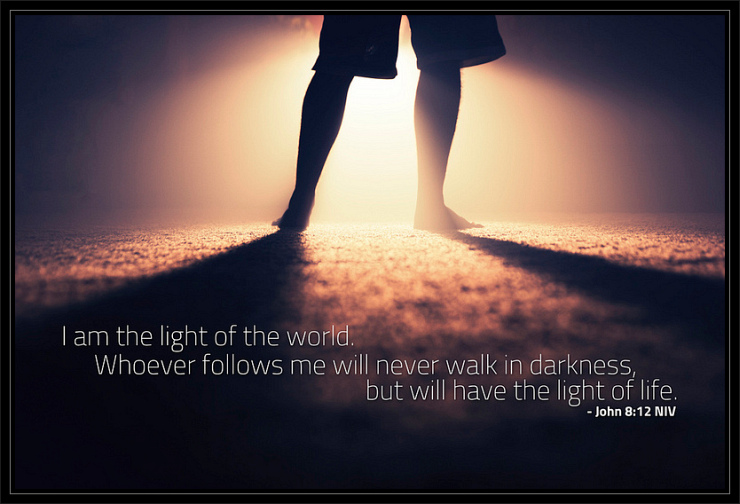
Following the Light by Flickr User Nathaniel Eldridge, CC License = Attribution, Noncommercial
Click image to open a new tab/window to view the original image and to access the user’s full photo stream at Flickr.
Have you ever gotten lost? Have you been so lost that it felt like you were going in circles, stuck in an endless loop of hopeless twists and turns that never get you where you wanted to go? I’ve been there on foot, and I’ve been there in a vehicle–at night, in a bad neighborhood. Getting lost is no fun. Being lost from God is no fun either, but God in His mercy allows us to rearrange our paths. As author Allison Gappa Bottke puts it, God Allows U-Turns.
If your path is filled with the chaos of uncharted turns and bumps and misdirections that keep ending you in places of frustration and hopelessness, make a change and rearrange. (I just couldn’t help but to make that rhyme. 🙂 ) To illustrate some rearrangement, I’m going to rearrange some verses from Proverbs Chapter 4. Using the New King James’ Version, I’ll list them in no particular order as bullet points. See what the verses in the following order might tell you about your own path of life.
- Ponder the path of your feet.
- Let your eyes look straight ahead
- Do not turn to the right or the left.
- Remove your foot from evil.
- Do not enter the path of the wicked.
- Do not walk in the way of evil.
Avoid it, do not travel on it;
Turn away from it and pass on. - The way of the wicked is like darkness;
They do not know what makes them stumble. - But the path of the just is like the shining sun,
That shines ever brighter unto the perfect day.
And from Isaiah 30:21…
- Your ears shall hear a word behind you, saying,
“This is the way, walk in it,”
There’s plenty more in Proverbs 4, so I recommend reading all of it. As a matter of fact, I find a lot of inspiration in the idea of reading the entire chapter of Proverbs on whatever day of the month it is. So, since this post was started on December 4th, I took a visit to Proverbs 4, and all those verses about paths are what jumped out at me. With a little rearrangement, I love the wisdom and promise that’s presented.
To continue with the message about your path, here’s a little bit from some of lessons I’ve gleaned as I’ve walked before Yahveh Almighty.
Many paths will visualize before you on your life’s journey, but only one path will lead you where you want to be in the end. It begins with a narrow gate, so no one but you can fit to walk through it. You don’t get through on the coat tails of a preacher or a parent; or even a friend or loved one. You get through it by using a key of mercy and grace provided when you walk through the blood of your Savior, Yeshua.
Once you’ve chosen to walk through the narrow gate, you’ll be on a straight path. It’s not as narrow as the gate, so you’ll have friends to encourage you and walk with you. Fellowship with them and make it a joyful walk. God will light that path for you, and His Holy Spirit is always there to comfort you on your journey. Trust Him to guide you. Seek His wisdom and understanding because the way that seems right to man doesn’t have the promise of God’s way. Look carefully, watch your step, train your eyes on the prize, and listen for that still, small voice that tells you the way to walk.
And here’s one bit of caution… Take heed of anyone who tries to lead you off the path onto another path. God’s path is always the straight one. Because God’s path is straight, even if it looks like it’s a long way off, the end should always be a clear vision ahead of you. Without that vision, you can be turned away and perish, so keep your eyes trained on the goal, and keep pressing forward. Don’t give up, and you’ll cross the finish line and receive your reward.
If you are on a path that doesn’t have a promise of eternal life at the end, ponder your steps and seek God. If you are still breathing in and out, it’s not too late to rearrange your path and follow God.
Share this post on:

Not One Who Kneels
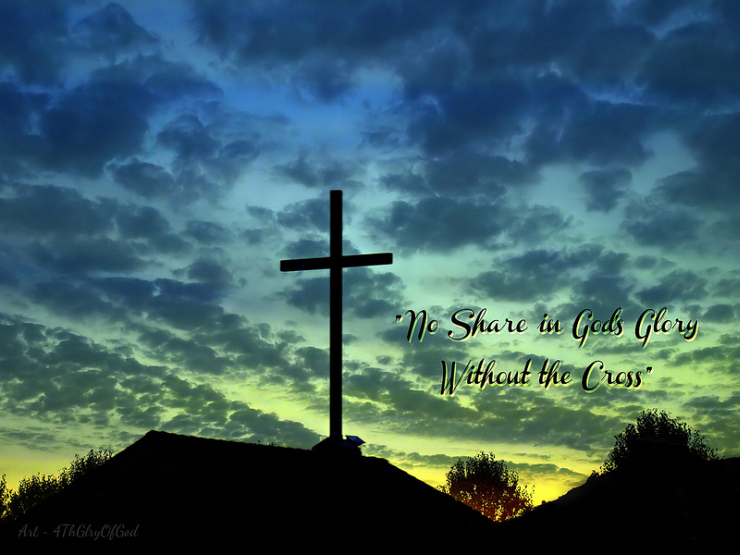
No Share in God’s Glory w/o the Cross by Flickr User Art4TheGlryOfGod, CC License = Attribution, No Derivative Works
Click image to open a new tab/window to view the original image and to access the user’s full photo stream at Flickr.
Have you ever read the lyrics to all the verses from Frank Sinatra’s classic hit My Way? In case you haven’t, here are the words for verse three…
For what is a man what has he got
If not himself then he has not
To say the things he truly feels
And not the words of one who kneels
The record shows I took the blows
And did it my way
Notice the words of the fourth line. For all the confidence-building and encouragement the song is supposed to inspire in those who may feel a lack of personal empowerment, it lacks real power. Real power, like so many things, begins with an acknowledgement of who and where we are and what we need to move forward. Think of the Twelve Steps in multiple anonymous programs. They all start with the first step and the words “I admitted I was powerless.”
What has changed in the modern church world? There’s more preaching about power than powerlessness. There’s more push to gain and be the head and not the tail than of losing ourselves to make Christ the Lord and head of our lives. There’s too many messages about what God can do for us, and not enough messages about the blessing of giving our all for a God who already gave it all for us.
I think the problem is from a lack of blood flow (aka Calvary). We want to go right from sinner to saint without stopping to kneel at the cross first. We tell people that with a few minutes at an altar, or a simple confession of Christ, they are saved. It’s like hiring someone for a job without checking any qualifications or doing any training. What will an untrained person do when he faces a struggle for which he is not prepared? What will a new Christian do with temptation if he has not left all his sinful desires under the blood of Yeshua and made a decision that all sacrifice is worth it for his loving Creator?
We’ve got the proverbial cart before the horse when we introduce someone to Heaven and future hope before we teach them how to live for Christ on earth right now. And if we try to teach an unrepented soul how to live a new lifestyle before he has died to the old one, we’re doing it again. When we plant a seed in the earth, the seed dies before it sprouts to new life. How do we claim a new life until we have died to our old life? As Scripture says, we can’t put new wine into old bottles or they will burst.
Do we trust that what God has to offer is better than anything anyone on earth can offer us? If not, we can never die out to doing things our own way. If we don’t die out to our way and our old ideas and skewed understanding, we can never rise up to walk in the newness of life. If we want God’s glory, we must give up our personal glory and be willing to kneel before our Eternal Creator. We must choose to fall in repentance at the cross of Yeshua and let His blood wash over and cleanse us, and then we must take up our cross daily and follow Him. Once we do that, we can rewrite the words above to line up with the Scripture from Mark 8:36-37 (NKJV)…
For what will it profit a man if he gains the whole world, and loses his own soul? Or what will a man give in exchange for his soul?
The new words might read something like…
For what is a man what has he got
Without The Lord then he has naught
To think God’s words and to Him yield
And be a man who repents and kneels
His sins will go under the flow
When he’s walking God’s way
And if you want to hear another person’s version of the whole song, sung to the tune of the original, here’s a video I found at YouTube…
Share this post on:

The Ferguson Golden Rule

Agape by Flickr User Marcelino Rapayla Jr., Creative Commons License = Attribution
Click image to open a new tab/window to view the original image and to access the user’s full photo stream at Flickr.
I’m not sure when it became en vogue to pay people back as we feel they deserve, but it is a horrible twisting of God’s real “golden rule.” Injustice should not breed injustice, especially when the first act has not been proven. What has been proven is that people are excusing bad behaviors as balancing justice. Individuals are burning businesses of people who have done them no wrong, and journalists are publishing private information of the innocent family of a perceived wrong-doer.
And what if we all, including the police, did what rioters are doing in the name of justice? What if, every time an African-American gang member shot a white police officer, the rest of the white police officers burnt down the houses of all the gang members and their families? Without any color or race in play, what if police routinely attacked innocent civilians coast to coast as a method of payback for the deaths of their brothers in blue? Would any consider that to be justice?
What does Scripture tell us that God considers justice or right behavior? Here are a few verses from the New Living Testament…
Matthew 22:39b–Love your neighbor as yourself.
Matthew 5:44-45a—But I say, love your enemies! Pray for those who persecute you! In that way, you will be acting as true children of your Father in heaven.
Ephesians 4:31-32—Get rid of all bitterness, rage, anger, harsh words, and slander, as well as all types of evil behavior. Instead, be kind to each other, tenderhearted, forgiving one another, just as God through Christ has forgiven you.
Two wrongs have never made a right. I believe Yeshua told people to forget the old “eye for an eye” instructions for more than just His mercy. I believe it was because people misused and abused God’s instruction, and they used payback for personal reasons instead of under God’s direction.
If we try hard enough, any one of us could find a reason to hate, or at least dislike, any other of us. I have known people who wished evil on others just because of what state they were born in or what team they favored. This idea that we should hate someone because of the job they do, the race they were born into, their financial status, or whatever, is senseless. Those who incite the hatred in others are just as guilty as those who start the fires because they ignite the matches that ignite the matches.
Here’s what I want to know: Where are those who are using this situation to teach their children why they should never put themselves in bad positions by getting involved in criminal activities? Foolishness is born into the heart of a child, and only the rod of correction will drive it from them. Children aren’t necessarily innocent just because they’re children, and by the time they’re teens, they are old enough to take responsibility for their own behaviors. There’s no personal responsibility for them or their “defenders” in trying to refocus the attention on how the police dealt with the criminal instead of reminding youth that crime doesn’t pay.
This new “Golden Rule” as promoted by events like the Ferguson riots, and older versions of the same, is neither golden nor a good rule to live by. It’s all about division even if it disguises itself as unifying people because it’s only unifying for the purpose of being set against others.
The spirit of division began in the garden when Adam blamed God for the woman who helped him sin, and Eve blamed the serpent for offering the sin. In truth, Eve was responsible for listening to the temptation, and Adam was responsible for choosing to obey a voice other than that of his Creator. It continues to this day in dividing race, gender, status, etc. It won’t stop as long as sin reigns in us, but that doesn’t mean any of us has to live by its rule. Will you be one to choose God’s word and rules over man’s?
Share this post on:

How Tall is God?
At 4 feet, 10 inches (4′ 10 & 3/4″ when I was younger–LOL), I’ve compared my height to a lot of people. I like that I can make even short people feel a bit taller. I remember when I worked in a truck stop travel store. The cash register was on a platform, but it wasn’t obvious, so when I stepped down from it to make coffee by request, it shocked the driver standing there waiting for his coffee. He said it looked like I had just fallen down into a hole.
Unless I’m trying to retrieve something from a tall shelf, I’m happy with being short, and sometimes it can even be fun. But, if everything in my life was way above my head, then I might desire to measure up to those who can reach all things easily. Spiritually, however, it’s a very different story. I don’t know that I can ever grow enough, so I want to keep growing and learning as long as I’m in this life. Today’s Infinite Supply newsletter talks about our need to set a goal to measure up to a stature greater than ourselves.
Infinite Supply Image for November Thirtieth by The School of Christ Click image to open a new tab/window to view the original article at The School of Christ dot org website.
November 30
The Purpose of Ministry
“He Himself gave some to be apostles, some prophets, some evangelists, and some pastors and teachers, for the equipping of the saints for the work of ministry, for the edifying of the body of Christ, till we all come to the unity of the faith and of the knowledge of the Son of God, to a perfect man, to the measure of the stature of the fullness of Christ.”
EPHESIANS 4:11-13
Each of these ministry functions fulfill different roles, but their purpose is the same, and that is, to bring ALL of us into that same fullness, that same spiritual maturity, that same experiential knowing, which the elders themselves enjoy. Thus, He gives SOME, till we ALL… SOME, till we ALL… SOME, till we ALL. Do you see this? And He will continue to give SOME till we ALL. Once He has ALL then the work is complete and these ministries will no longer be needed. Until then they ARE needed, and they are critical to God’s Purpose.
Source: The Church in the Wilderness by Chip Brogden
» Like this? Post your comments…
©1997-2013 TheSchoolOfChrist.Org. Permission is granted for non-commercial (free) distribution provided this notice appears. Share this message with your friends!
~~~~~~~~~~~~~~~~~~~~~~~~~~~~~~~~~~~~~~~
I think this is a great post for my last day of sharing Chip Brogden’s newsletters with readers. Before I go on, I want to encourage readers to subscribe to these newsletters for yourselves. I’ve been on the list since 2009, and even those posts I’ve read more than once have encouraged or taught me great things more than once. To get deeper, purchase the books he takes these studies from, or go to the site and get involved with the discussions.
On this topic, I love the point Chip makes about God giving some to each of the ministries above with the purpose that we will all become complete in Him. Our completion comes with learning how tall Yeshua is, so we can measure up to His stature. When all of us have become perfect and can measure up to The Lord, we will no longer need others to minister to us. For now, we need teaching, guidance, examples, perspective, and accountability. Not one of us has it all together on his or her own, even if we are teachers ourselves.
Our purpose in serving God is not to become better at being human, but to become more and more like Christ. We are promised that we will see Him one day, and on that day we will see Him as He is. At that time, we also have the promise that our bodies will become like His glorious body. How tall is God? We don’t know right now, but we know He is taller than us, so we might as well keep growing.
Share this post on:

Rest for the Weary
While the apostles sat in chains or endured torture, and while they were on their way to martyrdom, do you suppose they ever got weary? Do you suppose they were tempted to give up hope? I can’t say what was in their hearts, but something in them kept pushing forward, or we wouldn’t have the word delivered to us in this day. Maybe The Lord gave them a glimpse of what their sacrifices would be worth, and it rested their souls enough to keep hoping–even to the point of singing praises in the midst of their bondage.
Today’s Infinite Supply newsletter comes with a dose of encouragement to remember that God IS on the throne and in control. He will cause ALL things to work together for the good.

Infinite Supply Image for November Twenty-Ninth by The School of Christ Click image to open a new tab/window to view the original article at The School of Christ dot org website.
November 29
In Due Season
“In due season we shall reap…”
GALATIANS 6:9
The good news is that even if the Ekklesia has been underground, it is still growing and developing. When the season is right it will burst forth and once again those who have eyes to see will indeed discern the blade, the head, and the full grain in the head. In fact the blades have already broken ground in several places and we are even beginning to see some grain taking shape. If you have traced the recovery of the Heavenly Order so far then you know there have been many obstacles and hindrances to God’s Will over the last six thousand years or so of the history of mankind.
So far God has defeated everything that rose up to challenge His Purpose in Christ. Not only has He defeated it, but He has actually used evil to bring about good and further increase His Son. The Scriptures provide us with every expectation and assurance that God will continue to do the same with our generation. He is very much an active part of world affairs, whether they be secular or sacred.
Source: The Irresistible Kingdom by Chip Brogden
» Like this? Post your comments…
©1997-2013 TheSchoolOfChrist.Org. Permission is granted for non-commercial (free) distribution provided this notice appears. Share this message with your friends!
~~~~~~~~~~~~~~~~~~~~~~~~~~~~~~~~~~~
As time moves closer to the end, we may struggle to contain our fears and not grow weary. We’re bombarded by warnings of a future with no freedom and a lack of provision. We know our coming days may include a loss of the free ability to spread the gospel, and we may face battles similar to what the apostles faced in Bible days.
These days, though, it seems our focus is more on our personal struggles. I know I’m not alone in having bad days when the car won’t start, hair won’t cooperate, and the rain keeps coming down. I believe it is the enemy that pushes us to think about our own lives losses, so we’ll focus on ourselves and struggle against personal weariness. I’m certain members of the early church faced personal struggles too, but we rarely read about those things. What we do read of is what Chip talks about; God’s defeat of everything that rose up to challenge His purpose in Christ. God will comfort us in personal battles, but I think we have even more assurance of His deliverance when it comes to battles in working for Him.
As we press forward into the future, we can remember the Scriptural encouragement to not be weary in well-doing. That’s the Scripture used above that ends in the promise of reaping in due season. The whole verse reads…
And let us not grow weary while doing good, for in due season we shall reap if we do not lose heart.
In Hebrews 12:3, we have this reminder…
For consider Him who endured such hostility from sinners against Himself, lest you become weary and discouraged in your souls.
Most of our Scriptural encouragements are about comfort in weariness of serving The Lord, so that tells me we should keep our focus on Him, so we’ll see the comfort when it comes our way. I’ll close with King David’s Psalm of promise to those who keep working even through their weariness. Psalm 126:6 says…
He who continually goes forth weeping,
Bearing seed for sowing,
Shall doubtless come again with rejoicing,
Bringing his sheaves with him.
Share this post on:

No Less, No More
Starting with a little lightness that doesn’t fit the subject so much as it does the title, here’s an actual tombstone inscription from “Boothill Graveyard” in Tombstone, Arizona…
HERE LIES LESTER MOORE, FOUR SLUGS FROM A 44, NO LES NO MORE
Well, I guess someone was trying to make lemonade from the lemons of losing someone to a gun battle. But what about all the times people ignore the lemonade in life and just focus on all the lemons in it? Isn’t that what we do when we complain about all we do not have in this life instead of being grateful for all we do have? Today’s Infinite Supply newsletter points out the abundance we have in Christ.

Infinite Supply Image for November Twenty-Eighth by The School of Christ Click image to open a new tab/window to view the original article at The School of Christ dot org website.
November 28
Blessed With Every Spiritual Blessing
“Blessed be the God and Father of our Lord Jesus Christ, Who has blessed us with every spiritual blessing in heavenly places in Christ.”
EPHESIANS 1:3
Most Christians are taught to approach God and seek these things when they are conscious of some lack. Eventually we must learn that we have everything in Christ already. That thing called “patience” that we are so diligently seeking is not a thing at all, it is Christ. “Victory” is no longer a “thing,” it is a Man.
And so it is with everything else we need. What a difference it makes to realize that He HAS (past tense) blessed us already – not with three or five or twenty blessings – but with EVERY spiritual blessing. However many there may be, we have them all. Where and how has He done this? Thank God, it was done the moment we received Christ and entered into Him as our All in All. God would have us seek Him first, and not His things. To Him there is no “thing,” for they are all summed up into Christ.
Source: Lord of All by Chip Brogden
» Like this? Post your comments…
©1997-2013 TheSchoolOfChrist.Org. Permission is granted for non-commercial (free) distribution provided this notice appears. Share this message with your friends!
~~~~~~~~~~~~~~~~~~~~~~~~~~~~~~~~~~~
The church world is abundant with encouragements to “seek all God has to offer.” We’re told that we can do all things through Christ, ask anything in His name and receive it, and live our best lives with abundant blessings now. Some will even go so far as to point out that if we are not supernaturally blessed (especially in finances), we must be doing something wrong in our walk with God.
The author brings up a wonderful point in the idea of being blessed. If we have Yeshua, we have it all. With Him as our Savior, we have no less than we need, and no other blessing can give us more. Every spiritual blessing means exactly what it says; every spiritual blessing.
Next time you sit down to count your blessings, examine the differences that could be in your life. Imagine your life with your perfect home, perfect car, perfect job, perfect spouse, and no Yeshua. Then imagine your life with the imperfect parts and salvation through our Perfect Messiah. If you have to choose, which one means more?
Like Solomon who asked for wisdom over riches and ended up getting both, if we focus on the right things, we may just receive more than we desire. However, even if we don’t, we can still be satisfied because our focus is on The Lord as our “All in All.” We need no less than Christ and no more than His salvation. If we feel we have all we need and want in Him, everything else will be icing on the cake of life.
Share this post on:

God’s Street Address
Suppose you are a detective hired for an undercover assignment to infiltrate a group of law-breakers. You will need to look like them, talk like them, and in many ways act like them, but you also need to remember that you are not really them. Because you are different at the core of your beliefs, no matter what they ask you to do, you will try your best to uphold the law. You will not unthinkingly or uncaringly violate the law just for fun as the criminals do. If you must violate the law to maintain your cover, you will work as quickly as possible to undo any harm created from that action. Again, above all, you must never forget that you are a law-keeper and not a law-breaker.
Now, suppose you are a child of Almighty God who is on the earth to bring a message from your Father to those who do not yet know Him. You look like unbelievers, in some ways you talk like them, and in some ways you act like them, but you are not truly an unbeliever. Because you are different at the core of your beliefs, no matter what they ask you to do, you will try your best to uphold God’s instruction. You will not unthinkingly or uncaringly violate God’s commands just for fun as unbelievers do. If you do fail, you will work as quickly as possible to repent and undo any harm created by your failure(s). Again, above all, you must never forget that you are a child of The King and not of this world.
Today’s Infinite Supply newsletter speaks of where we get the best rules to live by as children of God.
Infinite Supply Image for November Twenty-Seventh by The School of Christ Click image to open a new tab/window to view the original article at The School of Christ dot org website.
November 27
The Heavens Do Rule
“God does not live in temples made by man.”
ACTS 17:24 ESV
We are not zealous for the establishment of any earthly nation, but for a heavenly nation of kings and priests (Revelation 5:10). We are not praying for the building of a physical temple, but a spiritual temple, a house of living stones, of which Jesus Christ is the Cornerstone, Builder and Architect. We are not looking for the appearance of an earthly Messiah, but a Heavenly Messiah, Who is building His Ekklesia upon the earth; we are not of the earth. This is not our home, for we are from above. Though in the world, we are not of it. We will not eat its meat or drink its wine, and we will not bow down to its idols. Though we live in the shadow of Babylon, we are not afraid of its fiery furnace or its den of lions, for our God is able to deliver us.
The heavens do rule. We affirm it boldly and confidently, regardless of appearances to the contrary. The Kingdom, the Power, and the Glory belongs to God (Matthew 6:13) – not man, not the devil, not the nations of this world.
Source: The Irresistible Kingdom by Chip Brogden
» Like this? Post your comments…
©1997-2013 TheSchoolOfChrist.Org. Permission is granted for non-commercial (free) distribution provided this notice appears. Share this message with your friends!
~~~~~~~~~~~~~~~~~~~~~~~~~~~~~~~~~~~~~~~
God’s address is not behind a manmade wooden pulpit, and He’s not dressed in a clerical collar. As the author points out from Scripture, He doesn’t inhabit manmade temples where we go to visit Him. His purpose in our salvation is to create holy dwellings for His Holy Spirit. Without being covered by His blood, adding His Spirit to us would be destructive rather than comforting as He intends. Once we are cleansed, the word (in 1 Corinthians 6:19–NKJV) says God’s address becomes the same as ours…
Or do you not know that your body is the temple of the Holy Spirit who is in you, whom you have from God, and you are not your own?
Fortunately, we’re not “undercover” here on earth, so we’re not required to hide our true identities. We should be shining His light from within us to attract the lost to a safe harbor in Christ. It’s in the best interests of both us and The Lord to remember that we are not of this world even though we must live within its borders. Oh yeah, and we may freely share God’s address because He has never requested it to be left unlisted. 🙂
Share this post on:

The Taste Test
Remember the old commercial that told what kind of peanut butter choosy mothers selected? They would do a blind taste test to let people choose their preferred flavor without the benefit of knowing which brand they were tasting. Of course, the commercial displayed those who selected the brand paying for the advertising time.
Much of advertising is set to compare one brand to another, so consumers can make a choice between the two. If that comparison is done with actual experience, such as taste or feel, the advertiser best be certain of the quality of his product before putting it to the test. If the product is of good quality, there should be no fear in comparing it with any other brand.
There are a lot of voices in the world hawking their theories and beliefs as to what is truth. With an array of opinions, both old and new, the advertising and reports of each can seem overwhelming. But as old theories are disproven by new facts, the one that stands the test of time is the word of God. Today’s Infinite Supply newsletter speaks of why it continues to stand.

Infinite Supply Image for November Twenty-Sixth by The School of Christ Click image to open a new tab/window to view the original article at The School of Christ dot org website.
November 26
His Word is Truth
“Sanctify them by Your truth. Your word is truth.”
JOHN 17:17
I am frequently asked how do we partake of this fullness? How do we walk in it? What practical application exists for living according to this Truth? We see what God says, but we also see our situation. We see Jesus, but we also see ourselves. God says we are complete in Him, but we say we are incomplete. God says we are blessed with every spiritual blessing in Christ, but we say we still need this or that. What is the problem here? Is it not a glaring discrepancy between what God says and what we say? Whose word is more reliable?
Source: Lord of All by Chip Brogden
» Like this? Post your comments…
©1997-2013 TheSchoolOfChrist.Org. Permission is granted for non-commercial (free) distribution provided this notice appears. Share this message with your friends!
~~~~~~~~~~~~~~~~~~~~~~~~~~~~~~~~~~~~~~~~
King David said it this way in Psalm 34:8 (NKJV)…
Oh, taste and see that the Lord is good;
Blessed is the man who trusts in Him!
When all is presented before us, we must be choosy. Whose report should we believe? The one that goes beyond theories and ideas and stands with personal testimony that cannot be disputed. Our own testimony, and the testimonies of those we love and trust, will tell us more than any educated and intelligent scientist can tell through disassociated theory.
When I served my most recent jury duty, one of the things they taught while going over how things worked was evidence. Testimony, they said, was the strongest form of evidence available. Testimony coupled with physical evidence is what makes the difference in knowing whether a report is believable; otherwise, anything could be called the truth.
God’s word is true and believable. Those who stand against it have rarely put it to an actual test of experience, especially of long experience. I would both encourage and challenge anyone who is unsure about the written word of God to read it and try it for yourself. Read it over and over and apply it to your life. Regardless of what you’ve heard from pulpit heralds, good or bad, nothing will be as convincing as your own experience. The saying goes, “Try Jesus: If you don’t like Him, the devil will always take you back.” I say, take God’s word for your own “taste test.”
Psalm 34:8 from The Message Bible…
Open your mouth and taste, open your eyes and see—
how good God is.
Blessed are you who run to him.
Share this post on:

Revelation Revelation
While many in our current culture are satisfied to just live a moment to moment existence, there are some who seek a deeper life. Those who want more may seek it in almost any area of “great power” because they know it requires more than simple humanity. Some will seek the power in nature, some in witchcraft or magic, some in knowledge, and some in mind-altering chemicals. A few will seek it directly from God, but this is often the minority.
Why would the God who created the whole universe be the last place people want to go for more power? Is it because they don’t feel they can get it from Him? I don’t think so. I think it’s because of the cost involved. Too many people want power without the price, so they buy into something that promises that to them–even if it’s a lie.
Today’s Infinite Supply newsletter gives us the key to finding real revelation in truth.

Infinite Supply Image for November Twenty-Fifth by The School of Christ Click image to open a new tab/window to view the original article at The School of Christ dot org website.
November 25
The Key to All Revelation
“In [Christ] are hidden all the treasures of wisdom and knowledge.”
COLOSSIANS 2:3
It is not that God desires to give us revelation into the many things, but for us to have the Revelation of Jesus Christ. By apprehending Him we will subsequently gain insight in those “things.”
To seek revelation into the “things” apart from the Revelation of Christ fails to give Christ the preeminence. We dare not circumvent the knowledge of Him in the pursuit of “things,” even spiritual things, for they are all summed up into Him.
Source: Lord of All by Chip Brogden
» Like this? Post your comments…
©1997-2013 TheSchoolOfChrist.Org. Permission is granted for non-commercial (free) distribution provided this notice appears. Share this message with your friends!
~~~~~~~~~~~~~~~~~~~~~~~~~~~~~~~~~~~~~~~~~~~
The author mentions seeking revelation in “things” apart from Christ, and he includes spiritual things. Unfortunately, that desire to have “magic” and “power” without the cost has even taken hold in Christianity. It’s right up there with wanting to go to Heaven but not wanting to die.
However, like it says in one of the currently running television series, “All magic comes with a price.” That series also points out that “love is the greatest magic of all.” The unspoken message here is that even love comes with a price. The difference, of course, is that with love, it’s worth the cost. True love doesn’t even count the cost because it’s focused on the reward just as Christ focused on us instead of the nails at Calvary.
Revelation in The Lord means receiving knowledge and wisdom directly from Him. We seek it from Him because we know it is pure truth. We seek it from Him because we want to draw closer to Him. If we seek it simply for power or authority, or for any reason other than walking in God’s will because we want to please Him, we’re at risk of seeking magic instead of revelation. The Scripture used above is clear when read in the Amplified Bible…
In Him all the treasures of [divine] wisdom (comprehensive insight into the ways and purposes of God) and [all the riches of spiritual] knowledge and enlightenment are stored up and lie hidden.
And, in Matthew 6:33 (KJV), we have the promise and inspiration we’ve been singing about since Sunday School if we spent any time in church as children…
But seek ye first the kingdom of God, and his righteousness; and all these things shall be added unto you.
I’ve always heard this as compared to seeking physical things (like riches and provisions) from God, but it also works in seeking power, authority, and revelation. If we seek Yeshua and His righteousness, all that is Him and is from Him will be revealed to us as we walk in His marvelous light. That’s the right way to receive revelation because, like Solomon sought wisdom and received both wisdom and riches, we seek God and receive all he has to offer with Him.
Share this post on:

Do You Bounce?
Some things hit the ground and go splat. Some hit and shatter. Some bounce. Obviously, bouncing is the best response because it means that instead of staying down, you will rise back up. The fancy word for this is resiliency. Resilient people can bounce back like cartoon characters who never seem to find a permanent splat even if they have to pump themselves back up. It’s an important characteristic that some have naturally, but which we can also learn.
Yeshua knew the ultimate bounce–from death to life. Today’s Infinite Supply talks about how Yeshua’s resiliency can help us bounce too.

Infinite Supply Image for November Twenty-Fourth by The School of Christ Click image to open a new tab/window to view the original article at The School of Christ dot org website.
November 24
Accomplished Through the Cross
“We were buried with Him through baptism into death, that just as Christ was raised from the dead by the glory of the Father, even so we also should walk in newness of life.”
ROMANS 6:4
The Cross is the means by which God reduces us to Christ, that we may be raised to new Life. What cannot be accomplished in a lifetime of self-effort is easily accomplished in God through the Cross.
We may take many shortcuts along the way and attempt to escape the inevitable, but the day we cease striving and meekly accept the Cross we find everything is done for us.
Source: Embrace the Cross by Chip Brogden
» Like this? Post your comments…
©1997-2013 TheSchoolOfChrist.Org. Permission is granted for non-commercial (free) distribution provided this notice appears. Share this message with your friends!
~~~~~~~~~~~~~~~~~~~~~~~~~~~~~~~~~~~~~
The trick Yeshua used to bounce back is found in The Holy Spirit. Yeshua didn’t have to fear dying to His earthly self because He knew He would rise again in both body and spirit. He knew death was not permanent, and He knew His new life was worth more than His old life. He also knew the true value of His death–a new life for all those who trust in Him.
I find that people who don’t know The Lord are typically either hopeless or put their hope into things that are likely to destroy them in the end. If they choose the latter, they may look happy in the midst of their partying, but take it away from them and you’ll see how unhappy they are on the inside. If people put their happiness and security in anything this world has to offer, they are only happy as long as they are comfortable.
To the contrary, people who intimately know Yeshua as their Lord, Savior, and Best Friend have hope in spite of discomforts in their lives. The blood of Christ covers us like “Flubber” and helps us both endure and bounce. Serving and loving God gives us the resiliency to bounce back if only to rebound with enough hope to trust in the eternal life He has prepared for our future.
If you are on your way down and know you won’t bounce, it’s not too late to get covered by the blood of Christ in repentance and baptism. Accept the cross and fall at the feet of the Lord before you fall to the bottom of your life, and you can bounce up to a new life and a new hope. When you die to yourself, you open the door for God to raise you up to the newness of life. There’s nothing more resilient than resurrection. Do you bounce? If not, feel free to write to me and ask for more information.
Share this post on:

When We are Weak, He is Strong
No one wants to feel weak because weak equals powerless and powerlessness usually equals fear. It seems we’re bombarded daily with reminders of how powerless we are. We vote one way and the outcome is opposite. What used to be religious freedom rights, like businesses having the right to refuse services, are being stolen away over and over again. We can’t control gas prices, government decisions, pesticides and preservatives in our foods, or what’s being taught in public school classrooms. And just when we think we can control our own health, some new virus or other threat is discovered, and we’re all warned to be on the lookout.
But there is a way to have power even when we must deal with weakness. Today’s Infinite Supply newsletter has an encouraging message by author Chip Brogden.

Infinite Supply Image for November Twenty-Third by Chip Brogden Click image to open a new tab/window to view the original article at the Chip Brogden (fka The School of Christ) website.
November 23
Power Through Weakness
“God chose what is weak in the world to shame the strong.”
1 CORINTHIANS 1:27 ESV
The Wisdom of God teaches us differently. This Wisdom tells us that the weak things are chosen to overcome the strong things, and power works concurrently with weakness.
God desires to give you power, but that power only comes through weakness. Any power not obtained through weakness is illegitimate, no matter how spiritual it appears. The only legitimate power is granted to those who have been made weak. Power is birthed in weakness. Many exude a certain “power,” but there is not the corresponding weakness. Hence, the power only gives them an occasion for boasting. To remedy this, God has ordained that all who would have His power must first be weakened and made empty – we refer to this as being “broken.” The purpose of weakness and suffering is to open the way for His Power. The instrument God uses to weaken us is the Cross. Therefore, the Cross is power through weakness.
Source: Embrace the Cross by Chip Brogden
» Like this? Post your comments…
Copyright ©2017 ChipBrogden.com. All Rights Reserved. Permission is granted for non-commercial (free) distribution provided this notice appears. Share this message with your friends!
~~~~~~~~~~~~~~~~~~~~~~~~~~~~~~~~~~~~~~~~~~~
Crystal’s Notes:
The cross is the one way I think we can imagine and accept weakness because the cross comes with promise instead of powerlessness. We’re told in 1 Corinthians 1:25 (ERV) that God’s strength is dependable because…
Even the foolishness of God is wiser than human wisdom. Even the weakness of God is stronger than human strength.
When we repent and lay ourselves in surrender at the foot of the cross, we have God’s wisdom and strength. Ask those who serve God in love for their testimony, and you’ll likely find it filled with surrenders that begin face-down and end face-up. We often fall beneath the loads of life, but when we land in the arms of The Lord, He lifts us up higher than we can imagine. King David, in Psalm 3:3 (AMP) said of God…
But You, O Lord, are a shield for me, my glory, and the lifter of my head.
He lifts our heads. He turns our faces toward Him. If you serve Him in love, look back on your own testimonies, and you’ll find these promises to be true. We can trust His strength and that it will come through for us even when we’re battle-weary because He assures us He will never leave or forsake us. And because His strength is so much greater than our own, even when we are weak, if we have The Lord, we can say we are strong.
Share this post on:

Who Teaches the Teachers?
I remember an algebra teacher in the ninth grade that made me wonder who was the student and who was the teacher. It was my desire to get a good grade, but it was even more my desire to learn the subject. Apparently, I was a rarity in that. When I approached the teacher for help, he was content to just look up the answer in the teacher’s manual. He was surprised that I wasn’t satisfied with his answer. I explained that knowing the answer and not the solution would only benefit me for that question and not future questions on tests and such. He considered me argumentative.
That’s not the first time I’ve been called argumentative, and it was definitely not the last. What really frustrates me is the times when I have approached Bible teachers for solutions, and they too just wanted to provide a pat answer. You know, the kind of answer like, “Just because it’s always been done this way.” Scripture might tell us to avoid foolish and vain questions, but it does not tell us to avoid questions altogether. I guess what matters on getting answers is who or “Who” we consult.
In today’s Infinite Supply newsletter, author Chip Brogden speaks about teaching and learning.

Infinite Supply Image for November Twenty-Second by The School of Christ Click image to open a new tab/window to view the original article at The School of Christ dot org website.
November 22
When Men Fail
“The anointing which you have received from Him abides in you, and you do not need that anyone teach you.”
1 JOHN 2:27
It was God who gave apostles, prophets, evangelists, pastors and teachers to His Ekklesia, to encourage, edify, and establish all of us deeper into Christ. Can the Holy Spirit in John contradict the Holy Spirit in Paul? By no means.
What then? John was the sole survivor of the first twelve apostles, and now he is very old. Naturally he is concerned with the welfare of the Ekklesia after his death. So God comforts John, and then John comforts us, with this truth: even if we do not have access to the apostle, or prophet, or evangelist, or pastor and teacher, we are still instructed inwardly. The Ekklesia that Jesus is building is not dependent upon the great men or women of God. We are grateful to the ministry gifts when we have them, but we are not dependent upon them for our Life. The Life is greater than the ministers through which it may be ministered.
Source: The Church in the Wilderness by Chip Brogden
» Like this? Post your comments…
©1997-2013 TheSchoolOfChrist.Org. Permission is granted for non-commercial (free) distribution provided this notice appears. Share this message with your friends!
~~~~~~~~~~~~~~~~~~~~~~~~~~~~~~~~~~~~~~~~~~~~~
The “Five-Fold Ministry” (from Ephesians 4:11) the author mentions above is to bring ALL SAINTS deeper into Christ. And we–all of us–must go deeper for a reason. Verse 12 tells us that the ministry is… for the equipping of the saints for the work of ministry. And why are all of us supposed to be equipped for the work of ministry? Verse 12 continues by saying…for the edifying of the body of Christ.
There are teachers and students, but when you read these notes to the Ephesians in context, it should be clear that God’s intention is that we all eventually become teachers. Just like newborns don’t stay infants, and don’t stay toddlers, and don’t stay children; everyone has to grow up eventually. It works the same in spiritual things. Our growing up in The Lord is to “unity of the faith and knowledge of the Son of God” according to verse 13. Continuing in verse 14, we read…
That we should no longer be children, tossed to and fro and carried about with every wind of doctrine, by the trickery of men, in the cunning craftiness of deceitful plotting.
Children can be more easily fooled than learned adults. If we remain spiritually immature, we risk being tricked by apostate leaders who call themselves prophets and apostles of God but are instead blind leaders of the blind. I can’t tell you how many times in my walk with God I’ve heard the term “winds of change.” Most of the time, it has introduced some new “minister” with wild new doctrines or miraculous-seeming powers. With this warning about not being carried about with every wind of doctrine, I think it’s wise to be careful of any doctrine that calls itself new or coming in with winds of change.
Just because people proclaim themselves to be teachers does not make them teachers. 2 Corinthians 11:13-14 speaks of those who transform themselves into apostles. If someone says he or she is a teacher, reverend, minister, prophet or otherwise, we should watch to find out who taught the teacher to see if the teaching is from God. If those teachers are simply parroting what they learned from other men, we must be careful of them. Better yet, If we’ve been serving God for a while, we should be teaching more than being students. We should seek God as our Teacher, so we do not have to fear being blown around by any false winds of change.
In case you wonder if you are living up to what Scripture considers maturity in Christ, I recommend reading all of Ephesians 4. It gives clear and precise descriptions of the behavior that will be displayed by those who walk with The Lord. May we all walk worthy of the calling of God.
Share this post on:

Arrogance in Authority
I’ve been thinking a lot lately about the difference in confidence and arrogance. I worry sometimes when people claim dominion or authority over things in this life and world because God gave it to Adam. That’s just it; God gave it to Adam. To blatantly claim then that we have that same dominion and authority may be based on Scripture, but is it based on context?
More contextual issues arise when I think about the authority Yeshua gave to His disciples. For example, He told them that whatever they bound on earth would be bound in Heaven. Does this give those of us who live today the authority to bind or loose things on earth and claim they are bound or loosed in Heaven? I’m not certain it does, though I still think we have authority but to act as The Lord commands. The latter part is what I feel carries the most weight; as The Lord commands. If God tells an individual that what He binds on earth is bound in Heaven, that person has the authority because God gave it to him.
Today’s Infinite Supply newsletter gives the proper foundation for a life of authority in Christ.

Infinite Supply Image for November Twenty-First by The School of Christ Click image to open a new tab/window to view the original article at The School of Christ dot org website.
November 21
Better Than “Willpower”
“I die daily.”
1 CORINTHIANS 15:31
Paul might have buckled under the pressure. He certainly grew weary. He certainly was misunderstood, rejected, and persecuted. He suffered so much. What kept him going? Verse 29 of Colossians 1 says, “To this end I labor, striving according to His working which works in me mightily.” He labors, and he strives. That’s the way Paul was. Laboring and striving, even when he was laboring and striving for the wrong things, he was absolutely dedicated to the mission. But there is something more extraordinary at work in Paul, something more than sheer willpower or determination.
I tell you willpower will only take you so far. Willpower is overrated. We need something else, something supernatural, something that does not rely upon my limited willpower. What was it? “I strive according to HIS WORKING which works in me mightily.” It was not the strength of Paul, but the strength of Christ in Paul, and through this Christ, Paul said, “I can do all things” (Philippians 4:13). All things!
Source: The Church in the Wilderness by Chip Brogden
» Like this? Post your comments…
©1997-2013 TheSchoolOfChrist.Org. Permission is granted for non-commercial (free) distribution provided this notice appears. Share this message with your friends!
~~~~~~~~~~~~~~~~~~~~~~~~~~~~~~~~~~~~~~~~~~~~~~~~
Context in all things is important. In Scripture, it’s especially important. Without context, we could be thinking that Paul literally lost his life on a daily basis. If we automatically take the words of Yeshua to His disciples as if they are for all of us, then to be in context, we should take all His words to them. For example, if we claim we can bind and loose because they could, then we should never take up a collection for our ministries because the disciples were told not to. Instead, they were to go without script in their purses and trust their hosts to provide their needs. And whatever gospel message we spread, we should begin at Jerusalem.
I know the above paragraph sounds a bit extreme, but considering how extremely to the letter we hold other things, we should consider context in all we claim from Scripture. We should be humble enough to seek the context and foundation behind all our behaviors and rituals, so we can make sure we’re doing them to please God and not men or ourselves. Like Paul, we should die daily to self and ask God for His direction in our lives. It’s better to learn what He would have us do and say and pray rather than to arrogantly claim we have authority just because the Lord gave it to those He sent out.
I don’t find in Scripture where God gave authority to every follower and believer. Those He did give it to were also given instruction to not rejoice in authority but to rejoice that their names were written in The Lamb’s Book of Life. In that, I can see confidence in humility. We realize we only have authority because we have Him. The two cannot be separated, and we should not want them to be. The minute we begin to act just because we think we are something, or have something in and of ourselves, we risk a loss of humility and a gain of arrogance.
Here’s a perfect Scripture to sum this up from 1 Peter 4:11 (NKJV)…
If anyone speaks, let him speak as the oracles of God. If anyone ministers, let him do it as with the ability which God supplies, that in all things God may be glorified through Jesus Christ, to whom belong the glory and the dominion forever and ever. Amen.
Let us be confident and sure in what He gives us as individuals rather than arrogant in what we think we can proclaim just because we read it in the Bible.
Share this post on:

I Don’t Have The Time
So, I’ll start tonight with a confession. I am so not good at controlling my use of time. I tend to do better when I’m right at the edge of a deadline, but even then, I’m often late. I have to schedule myself to be places far earlier than I think I should be there, so when I run late for my schedule, I’ll be on time for the real schedule. I know some of my issues are with being easily distracted. Mostly, however, I know I’m not good at pacing, so I’m either not paying attention to time or rushing and making mistakes that cause me to be even later.
I wonder, if I had the control of time in my hands, would I control it any differently? Hmm, sounds like a possible novel. The main character can discover that she has the ability to control how fast time moves forward around her. so she can move herself faster when necessary. Of course, if she’s stuck in a traffic jam, moving herself faster won’t help her get to work on time. Ugh. I guess that won’t work either.
But really, what if we did have more control of time? Would we make the hours last on the things that mattered and speed them up during the painful times? I know if I knew exactly how much time I had on this earth, I would definitely want to linger in the good times as long as possible. I would hope, though, that I would also learn to get control of focus and pacing, so I could do all that God has called me to do while I’m here on earth.
Today’s Infinite Supply newsletter talks about the disciples’ relationship with times and seasons.

Infinite Supply Image for November Twentieth by The School of Christ Click image to open a new tab/window to view the original article at The School of Christ dot org website.
November 20
Times and Seasons
“It is not for you to know times or seasons that
the Father has fixed by His own authority.
Acts 1:7 ESV
They had asked, “Lord, will You at this time restore the Kingdom to Israel?” The response from Jesus is anticlimactic to the impatient. The King will not be forced, or rushed, or pushed into action. Jesus said, “It is not for you to know the times and the seasons.”
The Kingdom of God is progressive – growing up from a single seed into an abundant tree with many branches and much fruit. Those seedlings were just freshly planted in eleven men and they would not come to maturity all at once but over the course of many seasons of increase and decrease. We cannot speculate as to when He will return in the power and glory of His Kingdom. We must “watch therefore, for you know neither the day nor the hour in which the Son of Man is coming.”
Source: The Irresistible Kingdom by Chip Brogden
» Like this? Post your comments…
©1997-2013 TheSchoolOfChrist.Org. Permission is granted for non-commercial (free) distribution provided this notice appears. Share this message with your friends!
~~~~~~~~~~~~~~~~~~~~~~~~~~~~~~~~~~~~~~~~
I think the disciples might have wanted a bit more control of the time in their lives too. They had watched their world go from almost hopeless with no prophets or prophecies for years to the old books coming to life before their eyes. Why should they have even considered that it was just the beginning of a history more than two-thousand years in the future? After all the waiting, they were excited to have everything fulfilled; not just a few things.
In some ways, the urgency might have been good to get the disciples working on their appointed tasks. So, for us as well, a feeling of urgency to spread the gospel can be good inspiration. We can see that the darkness wastes no time spreading through every venue available, so maybe it’s time we get in the race too. As we get a grasp on the idea of not having the time in our hands, we can also grasp the idea of trusting The One who does. When we do that, it’ll mean something totally different when we say, “I don’t have the time,” and we can add, “but I know Who does.”
Many things about tomorrow
I don’t seem to understand
But I know who holds tomorrow
And I know who holds my hand.(Above chorus from: I Know Who Holds Tomorrow by Ira Stanphill)
Share this post on:

Amazing Grace for Grace
In the second chapter of Acts, those who heard the gospel message asked, “What must we do to be saved?” All who truly hunger and thirst for God’s righteousness will eventually ask that question, and we will receive the answer that we must repent. Later, however, we may look back on that repentance and remember how difficult it was. That may lead us to feel like we have worked for our salvation. That’s where Paul wrote to the church at Ephesus and reminded them that salvation had nothing to do with works they had done. In Ephesians 2:8-9 (NKJV) we read…
For by grace you have been saved through faith, and that not of yourselves; it is the gift of God, not of works, lest anyone should boast.
In today’s Infinite Supply newsletter, author Chip Brogden talks about the grace that brought us our salvation.

Infinite Supply Image for November Nineteenth by The School of Christ Click image to open a new tab/window to view the original article at The School of Christ dot org website.
November 19
Grace is a Man
“All of you be submissive to one another, and be clothed with humility, for ‘God resists the proud, but gives grace to the humble.’”
1 PETER 5:5
The single requirement for grace is humility. But what is grace? Grace is more than just a theological term used to describe how we are saved. Grace is the power of God at work in my life to do what cannot be done in my own strength. Grace is energizing and proactive. When I have reached the end of myself then Grace Himself takes over and does what I am unable to do. In the first place, what I cannot do is save myself, and so I trust in the Grace of God, Jesus Christ, to save me. But Grace will not only bring me through the Gate; He will bring me down the Path. Grace does not just get me started in the right direction, but goes along with me every step of the way. For Grace is a Man!
Source: Embrace the Cross by Chip Brogden
» Like this? Post your comments…
©1997-2013 TheSchoolOfChrist.Org. Permission is granted for non-commercial (free) distribution provided this notice appears. Share this message with your friends!
~~~~~~~~~~~~~~~~~~~~~~~~~~~~~~~~~~~~~~~~
John 1:16-17 (NKJV) says even more to support Chip’s statement that Grace is a Man…
And of His fullness we have all received, and grace for grace. For the law was given through Moses, but grace and truth came through Jesus Christ.
Because God desires to spend eternity with us, He extends His grace to us to receive Yeshua. We don’t have to do anything to receive it other than to repent because Christ stands exactly opposite our sin. We must turn toward Him and away from our sins. When we become humble before the cross, God gives us grace to receive His message and desire to serve Him; We literally have His amazing grace for Grace.
Twas grace that taught my heart to fear, And Grace my fears relieved. How precious did that Grace appear, The hour I first believed.
Share this post on:

Drawing Nearer to The Lord
From Psalm 100:4 (NKJV)…
Enter into His gates with thanksgiving,
And into His courts with praise.
Be thankful to Him, and bless His name.
What a privilege we have to know who our God is and what He has done for us. What a pleasure He has given us to bless us with His presence when we bless Him with our praise. We often attribute the gates and courts with church attendance, but if we see His gate as the narrow gate of salvation, we find even more opportunities to enter with thanksgiving and praise.
In today’s Infinite Supply newsletter, the author speaks of what we find beyond the gate.

Infinite Supply Image for November Eighteenth by The School of Christ Click image to open a new tab/window to view the original article at The School of Christ dot org website.
November 18
His Fullness
“Till we all come to the unity of the faith and of the knowledge of the Son of God, to a perfect man, to the measure of the stature of the fullness of Christ.”
EPHESIANS 4:13
It is the FULLNESS of Christ that we are after, the revelation of Christ as He IN FACT IS. For too many Christians the Lord Jesus is “merely” their Savior. Thank God He is our Savior, but there is a depth and a richness bound up into the personage of Christ that goes far, far beyond “mere” salvation. Salvation is the narrow gate – coming into the fullness of Christ is the narrow path. The gate is only the entrance to something larger.
Source: Lord of All by Chip Brogden
» Like this? Post your comments…
©1997-2013 TheSchoolOfChrist.Org. Permission is granted for non-commercial (free) distribution provided this notice appears. Share this message with your friends!
~~~~~~~~~~~~~~~~~~~~~~~~~~~~~~~~~~~~~~
Something larger; something bigger; something more. Most of us want bigger and more, and it is God’s desire to give us bigger and more. If we were satisfied with only a little, we may not desire or pursue a heavenly reward.
I remember some years ago trying to work with a nephew on the idea of the rewards of sobriety. I presented all the great possibilities a sober life could bring, but none of them worked. For every good thing I presented, my nephew told me he was satisfied with something less. Sleeping on a couch in someone else’s home, getting a ride in someone else’s car, never having anything of his own: All of these were acceptable to him. How can anyone argue with that?
Salvation is so much more than just a ticket out of Hell. Being saved is a gate we should all want to walk through, but there is so much more on the other side–both here and in Heaven. I’ve tried to use food as an example, comparing dog food to a steak dinner, but those who simply do not hunger or thirst for righteousness will often reject that too. They want to be saved because they don’t want to go to Hell, but the idea of filling their life with more and more of The Lord holds no appeal. I don’t get that.
The idea of having more of Yeshua and less of me gives me a reason to press on in this life. In his message called Drawing Near, John Bevere talks about Enoch as walking closer and closer to The Lord until he got so close that he just couldn’t stay attached to this earth any longer. I believe that statement is on the audio CD, but I recommend at least reading about the interaction between Adam and Enoch from pages 11-13 which you can read for free at Google Books. (The link will show you 11-12, but keep reading.)
I’ll close with the lyrics to verse three of song Draw Me Nearer by Fanny J. Crosby. It seems to perfectly capture the heart of longing to be in The Lord’s presence. May you find yourself longing to draw nearer to the fullness of Christ each day you dwell on this earth.
Oh, the pure delight of a single hourThat before Thy throne I spend,
When I kneel in prayer, and with Thee, my God
I commune as friend with friend!
Share this post on:

The Cross for Our Comfort
If someone trades the cross for personal comfort, is it a trade up or a trade down? Well, if you’ve ever truly experienced the comfort of the cross of Christ, you know there is nothing better for which you can trade, so it would be a trade down. His word tells us that the way of the transgressor (one who stands beside the way; a deceiver; or one who deals treacherously) is the way that is hard. It also tells us that Yeshua’s way is the easier way because His yoke is easy and His burden is light. In addition, we have the promise that God’s commands are not burdensome.
Some people get weighed down by having their eyes in the wrong direction, and they exchange the cross for a deception of what might seem more comfortable. However, if we’re struggling like that, if we persevere, we will find that the cross IS the ultimate comfort we are seeking. The truth is, if we are facing any kind of battle, it means our backs are to the cross and we’re facing the wrong direction. We get turned around sometimes without realizing it, but once we know, God gives us grace to turn back to Him.
In today’s Infinite Supply newsletter, author Chip Brogden points out the emptiness of a life without the cross.

Infinite Supply Image for November Seventeenth by The School of Christ Click image to open a new tab/window to view the original article at The School of Christ dot org website.
November 17
Apart From the Cross
“I determined not to know anything among you
except Jesus Christ and Him crucified.”
1 CORINTHIANS 2:2
We can quote these teachings of Jesus, seek to imitate Him as our Example, strive to walk the narrow Way, and even accomplish many good deeds in His Name. But apart from the Cross these activities are wood, hay and stubble.
In calling us to come back to the Cross, God is asking us to lay down our lives and embrace the Wisdom of death, burial, resurrection, and ascension in order to live as sons and daughters within the Kingdom of God. Apart from the Cross we can neither enter the Kingdom nor live in the Spirit, no matter how great the desire. For apart from the Cross, we do not know what it is to turn the other cheek, to go the extra mile, to love our enemies, to pray for those who persecute us. Apart from the Cross, we do not know what it is to submit to the will of God, accept suffering, and cast ourselves upon Him. Apart from the Cross, we do not know what Resurrection is.
Source: Embrace the Cross by Chip Brogden
» Like this? Post your comments…
©1997-2013 TheSchoolOfChrist.Org. Permission is granted for non-commercial (free) distribution provided this notice appears. Share this message with your friends!
~~~~~~~~~~~~~~~~~~~~~~~~~~~~~~~~~~~~~
Plowing the fields God puts in our lives is not always easy, but it is necessary, and the crop yield will be worth it. While Luke 9:62 reminds us that looking back after we have put our hand to the plow makes us unfit to serve, the unspoken reminder there is to turn around. Of course we can’t push forward with our back to the plow, just as we can’t fight with our back to the enemy. But the cross and the word of God before us enable us to stand and fight with the strength of The Lord. His armor prepares us to face our tasks, not to run from them, and His cross brings us the surrender we need to admit our own weakness and find our strength of Christ. That’s why He says to take up our cross daily because He has provided the cross for our comfort.
Share this post on:

Have Thine Own Way, Lord
Do you remember the days of youth when personal decisions were not totally our own? We had to ask an adult for almost every plan we wanted to make. We often thought how we couldn’t wait to grow up, so we could do things without asking.
As adults, we don’t have much more freedom than we did in youth because we have a whole new lineup of authorities that want us to get their permissions. On one hand, people will tell us to follow our hearts, and on the other, some will try to make us feel guilty for acting without seeking their opinions. Of course, we should seek opinions when our actions will affect others, but sometimes we’ve got to listen more to a “Higher Power.” In the Infinite Supply for November 16th, Chip Brogden speaks of Paul’s call to ministry and what permissions he needed to move forward.

Infinite Supply Image for November Sixteenth by The School of Christ Click image to open a new tab/window to view the original article at The School of Christ dot org website.
November 16
No Permission Needed
“When it pleased God… to reveal His Son in me…I did not immediately confer with flesh and blood, nor did I go up to Jerusalem to those who were apostles before me.”
GALATIANS 1:15-17
Paul did not seek credentials, ordination, or affiliation with a human organization. He did not wait for anyone to confirm the call on his life. He did not seek for hands to be laid on him. Preaching the gospel of Jesus Christ was renegade enough, but to preach the gospel to the Gentiles was a departure from the norm for the Christians at that time. It would later prove to be quite controversial and divisive. Prudence would dictate that it would be better to check with the other apostles and get their opinion and feedback before striking out in a new direction. Yet, Paul says once he obtained revelation he had no need to confer with flesh and blood.
Why? Because he was a maverick, an independent spirit, a rebel? No, it is only because the Revelation of Jesus is sufficient guidance. Flesh and blood cannot add to or take away from the Revelation.
Source: Lord of All by Chip Brogden
» Like this? Post your comments…
©1997-2013 TheSchoolOfChrist.Org. Permission is granted for non-commercial (free) distribution provided this notice appears. Share this message with your friends!
~~~~~~~~~~~~~~~~~~~~~~~~~~~~~~~~~~~~~~~~~~
Have you ever felt called or inspired by God to make a move in a particular direction? In any of those times, did you second-guess that call and seek the opinions or permissions of others first? I know I have, and sometimes it has stopped me from moving in obedience to God. I remember a time when I even stopped myself from praying for a girl in public because I was afraid my pastor at the time would not approve. I regret that, but I also know that time is in God’s hands, so I trust He sent someone to her in my place.
In our walks with God, there should always be balance. That means, we will have things that require permission, and maybe opinions. It also means there will be times when we must move forward in faith to what God speaks to our spirit. Sometimes, what He speaks might be to wait or stop, but whatever we do, obedience to His Holy Spirit is what matters most. As Chip says above, obeying God without seeking permission from men does not make us rebellious to people, it just makes us fully obedient to God.
God’s ordination is far more valuable than any ordination or permission, but if we’re not sure we’re hearing from Him, we will need to seek flesh and blood for confirmation. Here’s how Paul states it in 2 Peter 1:10 (NKJV)…
Therefore, brethren, be even more diligent to make your call and election sure, for if you do these things you will never stumble.
Never stumble; wow. What a promise. But if we are His sheep, we will know our Shepherd Yahshua’s voice, and we can be sure of His calling to us when He speaks. If we are sure we’ve heard from The Lord (if so, our direction should also line up with Scripture), we can move as He leads. May our hearts and actions say as the song below, “Have thine own way, Lord, have thine own way.”
Share this post on:

The Spirit of the Law
Today, a friend and I discussed the difference in serving God out of obligation and out of love. A religious spirit can make you get everything perfect on the outside, but your works will not be with any heart. It’s more like an arranged marriage. But a spirit of love will gently push you to uphold God’s law because you desire to bless and please the One who has been so good to you.
In today’s Infinite Supply, Chip Brogden speaks about the loving Spirit who created the law…

Infinite Supply Image for November Fifteenth by The School of Christ Click image to open a new tab/window to view the original article at The School of Christ dot org website.
November 15
The Spirit of the Law
“Teacher, this woman was caught in adultery, in the very act. Now Moses, in the law, commanded us that such should be stoned. But what do You say?”
JOHN 8:4,5
Legally they were on solid ground. But to her accusers, Jesus replied, “He who is without sin among you, let him throw a stone at her first.” And when they all left, being convicted by their own conscience, He said to the woman: “Neither do I condemn you. Go, and sin no more” (John 8:12). We must conclude that however good the Law was, it did not represent God’s highest, or God’s best.
Jesus represents the holiness and purity of the Law but emphasized the part that had been too long overlooked: grace and humility. He came to address the deeper issues of the heart, and in so doing, showed us what God really intended from the beginning. He did not destroy the Law, He superseded the Law! Thus He fulfilled the spirit of the Law – even if it sometimes appeared as if He did not follow the letter of the Law.
Source: The Irresistible Kingdom by Chip Brogden
» Like this? Post your comments…
©1997-2013 TheSchoolOfChrist.Org. Permission is granted for non-commercial (free) distribution provided this notice appears. Share this message with your friends!
~~~~~~~~~~~~~~~~~~~~~~~~~~~~~~~~~~~~~~~
Of course, the One who created the law would most certainly know best His purposes behind it. As the author says, He supersedes the law. It’s our interpretations and perspectives on it that cause it to be grievous and chaotic. But the Spirit behind the law will lead us in keeping the spirit of the law as He intended–as a clear dividing line between unholy and holy.
Romans 2:29 (NKJV) adds some clarity to the thought…
But he is a Jew who is one inwardly; and circumcision is that of the heart, in the Spirit, not in the letter; whose praise is not from men but from God.
When we keep the spirit God input into the law by His Holy Spirit, we will seek to please Him instead of men’s ideas of holiness and perfection. We will desire to be holy (separated from sin) because we love God too much to want to be unholy (separated from God). He wants to draw near to us, so He gave us laws to help us learn how to make room in our lives for His presence.
Unfortunately, even with the best intentions, we let Him down and make it hard for Him to find a place for His presence, so He pours out His mercy through the blood of Yeshua. That’s the dividing line now. We choose either outside of His mercy or under His blood because His blood is what makes us holy so He can dwell with us. So The Holy Spirit of The Law is greater than the letter of the law because mercy through the blood of Christ is more powerful than all the works we can do in and of ourselves.
Share this post on:

Humble Beneath the Heavens
We’re told in Psalm 128:2 that when we eat the fruit of the labor of our own hands, we will be happy. The problem happens when people go beyond happy and become arrogant. While God has created the world according to “the law of the harvest,” we must remember that He is still “The Lord of the Harvest.” He allows us to have the fruit of our labors as a blessing, not just because we deserve it.
In today’s Infinite Supply newsletter by Chip Brogden of “The School of Christ,” we get a reminder that God still rules in the kingdoms of men.

Infinite Supply Image for November Fourteenth by The School of Christ Click image to open a new tab/window to view the original article at The School of Christ dot org website.
November 14
The Most High Rules
“The Most High rules in the kingdoms of men.”
DANIEL 4:17
Christ is increasing and filling all things. Have you seen this? If you have, then embrace it, submit to it, cooperate with it, be in harmony with it, order your life around it, demonstrate it to the world around you, and pray for its fulfillment.
Get aligned with something and Someone higher and greater than yourself. For when you see God’s Purpose, and you adjust your life according to that Purpose, and you consistently pray for the fulfillment of that Purpose, then His Purpose cannot be stopped; His Will cannot be frustrated; His Kingdom cannot be defeated. Heaven singles you out and Hell trembles with fear. You just became undefeatable! You just joined the Remnant.
Source: The Irresistible Kingdom by Chip Brogden
» Like this? Post your comments…
©1997-2013 TheSchoolOfChrist.Org. Permission is granted for non-commercial (free) distribution provided this notice appears. Share this message with your friends!
~~~~~~~~~~~~~~~~~~~~~~~~~~~~~~~~~~~~~~~~
The full context of the Scripture referenced by the author is where Daniel interprets two visions of King Nebuchadnezzar where God issues a warning to him about his future. We can see from the king’s personal statement near the beginning of the chapter (Daniel, Chapter 4) that he still doesn’t understand who God really is. He tells the reader, in verse 8, the following…
“His name is Belteshazzar, according to the name of my god; in him is the Spirit of the Holy God.”
So, he knows that the Creator God is holy, but he doesn’t yet know Him as his own. Daniel warns him that he can repent and stop sinning, and maybe then God will remove the future curse from him, but Nebuchadnezzar doesn’t get it. To the contrary, by verse 30, he says…
“Is not this great Babylon, that I have built for a royal dwelling by my mighty power and for the honor of my majesty?”
“I have built”? “My mighty power”? “For my majesty”? Those things make it pretty clear why the curses from the visions had to come to pass. The king ended up having the mind of a wild animal and crawling around in a wet field until his hair and nails over-grew. By the time it was over, the king knew who God was. In verse 34, he declared something quite different from verse 30…
And at the end of the time I, Nebuchadnezzar, lifted my eyes to heaven, and my understanding returned to me; and I blessed the Most High and praised and honored Him who lives forever.
What he first claimed as the result of his own power, he realized was only the result of God’s power–even over a king and kingdom. As God told him in the vision, “The Most High rules in the kingdoms of men.” Even when we work for it and earn it, or even when we receive it as an inheritance or a gift, our position on this earth is never above God and never without God. When we understand that, we will be humble beneath the Heavens instead of feeling the need to exalt ourselves, and our humility will bring us more power. As Chip says, if we align ourselves with God and His purpose, we become part of the remnant of the undefeatable.
Share this post on:

What’s Your Finish Line?
What is it that you will have accomplished in this life that will make you feel you’ve achieved your best goal? Is there a finish line you see in front of you that will make you feel successful? Some want to die old. Some want to gain riches or fame or some other earthly prosperity.
In today’s Infinite Supply newsletter by Chip Brogden, we’ll read about pressing toward the right goals.

Infinite Supply Image for November Thirteenth by The School of Christ Click image to open a new tab/window to view the original article at The School of Christ dot org website.
November 13
Press Toward the Goal
“I press toward the goal for the prize of the upward call of God in Christ Jesus.”
PHILIPPIANS 3:14
God has a purpose for the universe: that in all things Christ would have the preeminence. This is the Heavenly Bullseye. Since you, dear reader, are part of the universe, you are one of those “all things.” So this purpose includes you.
Actually, this is the same purpose He had in mind for Adam: that Christ would have the preeminence in him. But Adam chose an independent path and failed to give Christ the preeminence. He took the preeminence for himself. Adam missed the mark, which is a life submitted to, and totally dependent upon, God.
Source: The Irresistible Kingdom by Chip Brogden
» Like this? Post your comments…
©1997-2013 TheSchoolOfChrist.Org. Permission is granted for non-commercial (free) distribution provided this notice appears. Share this message with your friends!
~~~~~~~~~~~~~~~~~~~~~~~~~~~~~~~~~~~~
You know what your finish line is by what you focus on each day. For example, do you focus on where you are now with a steady look at where you are going, or do you fill your thoughts with sentences that start with “if only”? If only my ship would come in. If only I’d win the lottery. If only my health were perfect. If only I’d been discovered when I was young, so I could be famous now. If only we had bigger, better, more, etc.
Like the author says, Adam (and Eve) chose the personal finish line. They had those sentences like:
- “If only we could eat from the Tree of Knowledge,”
- “If only we knew what that tree tastes like,” and
- “If only we could be wise and know good and evil.”
Paul would have told them to change their sentences to something like:
- “We have the promise of being able to eat from the Tree of Life,”
- “Thankfully, we have the best flavors from all the wonderful trees we get to eat from,” and
- “It’s so peaceful to just trust God and not have to know everything.”
Paul’s finish line was to become more and more like the Christ he loved and served. He sought to draw closer to Him each day regardless of what it took for him to get there. He learned how to be content in all things by focusing on the steps that were drawing him nearer to Yeshua and Heaven than on anything he was missing here on earth. His finish line was to become less and less attached to earth and its pleasures and more attached to Christ and the promises of eternity with God.
We all have finish lines, little ones and big ones. We all have to set goals in order to know how to run in this life. The big goal, however, should be the same for all of us, and it should run us on the race of faith Paul speaks of in Hebrews 12:1…
Therefore we also, since we are surrounded by so great a cloud of witnesses, let us lay aside every weight, and the sin which so easily ensnares us, and let us run with endurance the race that is set before us.
Pray, read God’s word, and offer praise up to The Lord, and then when you are in His holy presence, as yourself: What’s my finish line? Comment below if you’d like to share what you discover.
Share this post on:

Going Against God’s Will
I recently watched an interview with an author whose new book sounds quite interesting to me. The author is Johnnie Moore, and his book is What Am I Supposed to Do With My Life: God’s Will Demystified. Haven’t we all asked questions about God’s will in our lives? And haven’t we all been absolutely certain we’ve missed the mark and let God down? I know that many, if not all, of us have paid a price for a bad decision (or two) in our lives, and then we beat ourselves up with debilitating guilt for our failures.
The author of this book points out that God’s will is more about who you are than it is about where you are or what you are doing. In other words, if you make a decision to go to tech school instead of gaining a full college doctorate, you don’t have to wonder if tech school was against God’s will. Instead, you should simply make sure that you keep loving God with all your heart, soul and strength whether you are in school for one or eight years.
Today’s Infinite Supply newsletter talks about the real problem when people step out of God’s will; spiritual decline…

Infinite Supply Image for November Twelfth by The School of Christ Click image to open a new tab/window to view the original article at The School of Christ dot org website.
November 12
God’s Response to Spiritual Decline
“Who is he who overcomes the world,
but he who believes that Jesus is the Son of God?”
1 JOHN 5:5
The Lord’s answer to a state of decline is to reveal Himself and His eternal purpose. Once the Lord has established for Himself a people that will represent His interests, then He will move immediately to secure, protect, establish, and strengthen the Remnant. Here is what I want us to see. When we align ourselves with God’s Thought, with God’s Kingdom, and with God’s Will in Christ, we are invincible.
Source: The Irresistible Kingdom by Chip Brogden
» Like this? Post your comments…
©1997-2013 TheSchoolOfChrist.Org. Permission is granted for non-commercial (free) distribution provided this notice appears. Share this message with your friends!
~~~~~~~~~~~~~~~~~~~~~~~~~~~~~~~~~~~~~~~
So, the answer to falling away from God’s will is to watch for God to reveal Himself. When we seek Him and find Him, we will also find His will. When we line ourselves up with God’s will, we have promises that have little to do with what we do in life and everything to do with who we are through the days of our lives.
I’ve always thought the Scripture promise of I can do all things through Christ who strengthens me (Philippians 4:13) was more about doing everything we do in Christ than using Christ to do more. If God’s will is to line up with who He created us to be, then for it to apply to all people, it would have to do with what we become in our spiritual selves. Otherwise, those with lesser abilities could be considered to be less in God’s will, and that makes no sense because God is no respecter of people.
I put the book on my “wish list” because I find the concept refreshing and freeing. The concept tells me that, even seeking God’s will, I may not make perfect decisions, and I may pay prices for some bad decisions. I will also make some good decisions and receive good rewards for those. But my prices and rewards have nothing to do with God’s will. They are simply the law of the harvest that all earth is created under; we will reap what we sow.
If I want to please God, my job is simply to keep seeking Him and yielding my heart to His Holy Spirit in the midst of whatever decision and whatever price or reward is in my life. It means I won’t blame Him for the outcomes in my life, and that frees me to love Him even more–no strings attached. It means I use guilt for nothing more than a reminder to repent, and then I let it go. I don’t have to let it torment me for years over “letting God down” or going against His will.
God’s most simple will is that no man should perish, so going against God’s will is just detaching ourselves from Him and moving away from His leading. If we love Him, we won’t want to do that no matter what other decisions we make in our lives.
Share this post on:

The Best Baked Bread
For some reason, the older I get, the more I like fresh bread. Maybe it’s because I grew up on bagged loaf bread and didn’t go out to eat much, so I didn’t know how good fresh bread and butter could be. Oh, but now, yum. My favorite treats at restaurants are not the desserts, but the slice-it-yourself breads that places like Outback restaurants bring on request. There’s just no comparing the fresh flavors with the stuff in the bag full of preservatives.
Yeshua told the disciples that He had bread they didn’t know of. Here’s what He says in John 4, verses 32 and 34, when they suggest that He eat something…
But He said to them, “I have food to eat of which you do not know.”
Jesus said to them, “My food is to do the will of Him who sent Me, and to finish His work.
Our Lord was satisfied to work for our salvation, and it fed Him. He passed that mantle to the disciples and then to us. We may not be satisfied by man’s bread alone, but we are promised we can live on God’s bread. In today’s Infinite Supply newsletter, author Chip Brogden talks about the hidden manna of God…

Infinite Supply Image for November Eleventh by The School of Christ Click image to open a new tab/window to view the original article at The School of Christ dot org website.
November 11
Hidden Manna, Secret Name
“To him who overcomes I will give some of the hidden manna to eat. And I will give him a white stone, and on the stone a new name written which no one knows except him who receives it.”
REVELATION 2:17
The manna is HIDDEN and the name is SECRET. The Lord is doing a work, but that work is, for the most part, hidden and secret. If we are always looking for something out in the open and in plain view then we will miss the deeper workings of God below the surface.
Source: The Irresistible Kingdom by Chip Brogden
» Like this? Post your comments…
©1997-2013 TheSchoolOfChrist.Org. Permission is granted for non-commercial (free) distribution provided this notice appears. Share this message with your friends!
~~~~~~~~~~~~~~~~~~~~~~~~~~~~~~~~~~~~~~~~~~`
We’re told in the Old Testament that the manna God gave the children of Israel while they were in the wilderness was bread from the angel’s food, and that it tasted like wafer cakes with honey. Imagine baking up some of that. Now imagine that God has something in store that has been hidden and is even better.
I don’t know from His words when He considers us having overcome to where we will receive this promise of hidden bread. It may be when we receive that indescribable refreshing after we have overcome a battle on this earth. It may be something that has a description that hasn’t yet entered the heart or mind of man. Whatever it is, though, I do know that if God is reserving it for those who overcome, it’s the good stuff.
Just like the wine at the wedding of Cana, He may be saving the best for last. Maybe it’s because it’s taking a while to bake, but if it’s the best we’re ever going to have, it will be worth working and waiting for.
Share this post on:

When God Builds Walls
Me, I’m not so good at dealing with walls. How about you? For me, a wall automatically seems like an invitation to stop and give up. I can press on over bumps and hills, but pressing through walls is a different story. Often, I feel guilty for not fighting harder. But what if I’m feeling guilty for nothing? What if walls going up have purpose in my life?
Today’s Infinite Supply newsletter by Chip Brogden from The School of Christ made me think of thinks a bit differently…

Infinite Supply Image for November Tenth by The School of Christ Click image to open a new tab/window to view the original article at The School of Christ dot org website.
November 10
Why God Resists Us
“God resists the proud.”
JAMES 4:6
Our automatic assumption is that anything which resists us or hinders us is of satanic origin. Yet we learn from James 4:6 that there is Someone Else who can resist us. There is Another Who carefully watches what we do, and frequently hinders us from making progress. It comes as a shock and surprise to some Christians to see one day that God, not the devil, is resisting them. The Lord Himself resists us, closes doors, causes things to be unfruitful, and spoils all our plans. How so? Because “God resists the proud.”
This resistance from God is insurmountable. It is a fearful thing to fight the Lord. We spend most of our lives wrestling with God instead of cooperating with God, and in the end we have nothing to show for it. So much time and effort is wasted because we proceed in our own, stubborn way. We attribute all difficulties to the devil, or to other people, or our circumstances, or our environment, and fail to recognize that the Lord Himself is resisting us.
Source: Embrace the Cross by Chip Brogden
» Like this? Post your comments…
©1997-2013 TheSchoolOfChrist.Org. Permission is granted for non-commercial (free) distribution provided this notice appears. Share this message with your friends!
~~~~~~~~~~~~~~~~~~~~~~~~~~~~~~~~~~~~~~~~~~~~~~~
I am in total agreement with the author that most of us consider resistance an attack from the enemy. We also tend to think that if things go easy, it must be a sign from God that we’re headed in the right direction. However, when we look at the secular world and see all the things that seemingly “go right” for so many there, we can see the flaws in our thinking. It rains on both the just and the unjust, and the sun shines on both the good and the evil. Some things just happen, but some things are a sign. So how are we to know?
I believe the author’s message, and the message of Scripture, hold the clue. If we couple the fact that God resists the proud with the knowledge that He disciplines those whom He loves, we can see that His resistance could possibly only be against the proud of those who love Him. That may be why we see unbelievers seemingly “getting away” with all their bad deeds. However, when we who serve Him are running full steam on our own power and forgetting Him, He just might build a wall to protect us from the destruction our pride could bring. After all, this Scripture is written to believers even though it’s to believers who are engaging in all kinds of sin.
So, next time you run into a wall, if you are a believer in God Almighty, consider the fact that He might be the Builder. If He has put some resistance in your path, it may simply be an invitation to slow down and pray. Seek His perfect will for your life, and become humble that you can find His grace…and maybe even a new door to walk through.
Share this post on:

To Know Him is to Love Him
When I was a little girl, my mom often sang the chorus, “To know, know, know him, is to love, love, love him, and I do.” After I fell in love with God, I would sing it about Him. Through the years, I’ve sang a lot of love songs written for humans to my Savior because the words said just how I felt. It’s hard to explain to someone who does not know Christ just how those of us who do know Him can be so deeply in love with someone we haven’t met in the flesh. The key to falling in love with The Lord is wrapped up in getting to know everything about Him, and getting to know His heart. That happens by reading His word and seeking Him through prayer.
In today’s Infinite Supply newsletter, the author speaks of getting to know Christ to effectively share Him with others.
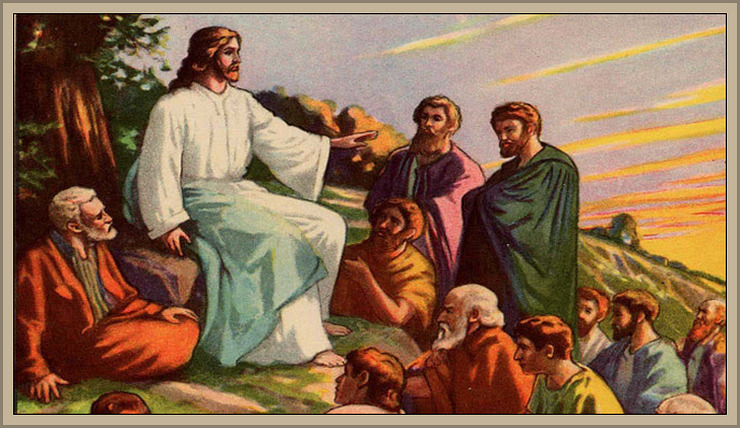
Infinite Supply Image for November Ninth by The School of Christ Click image to open a new tab/window to view the original article at The School of Christ dot org website.
November 9
To Be With Him
“He appointed twelve, that they might be with Him…”
MARK 3:14
The first order of business was not the preaching or the sending forth; it was simply being with Jesus. During those times of being alone and apart with Christ He revealed Himself to them in a deep way. They walked with Him, watched Him, and listened to Him for three and a half years. Just as importantly, they learned to walk with each other. They learned how to serve one another in love. When Jesus finally did send them forth to preach they actually had something worth sharing and worth listening to.
Your primary calling as a disciple is to BE with Jesus, because that is how you LEARN OF HIM. It is not learning about the Christian faith – that is a thing. It is not learning about Bible doctrine – that is a thing. It is not learning about Christian things or religious things or spiritual things. It is not learning about the Bible. It’s not even learning ABOUT Jesus, it is learning OF Jesus FROM Jesus.
Source: The Church in the Wilderness by Chip Brogden
» Like this? Post your comments…
©1997-2013 TheSchoolOfChrist.Org. Permission is granted for non-commercial (free) distribution provided this notice appears. Share this message with your friends!
~~~~~~~~~~~~~~~~~~~~~~~~~~~~~~~~~~~~~~~
The whole verse from the reference above, and the verse just after it, says (in New King James’ Version)…
Then He appointed twelve, that they might be with Him and that He might send them out to preach, and to have power to heal sicknesses and to cast out demons.
As the author notes, the first thing is just to be with Christ. Unfortunately, in our zeal, we may get the cart before the horse. We rush out to preach and heal and cast out demons, and we think that just because we’re doing it in Jesus’ name, we’re okay. But, if we’re not doing it because we know Yeshua and are following His will, we’re walking in ignorance and disobedience. We’re acting presumptuously and of ourselves, in pride, and we risk misleading souls and being responsible for them.
There is a preacher out there (Todd Bentley of “The Lakeland Revival” in Florida) who recorded a message about a vision he had explaining why he didn’t need training in God. He said that God took him to Heaven, cut him open, and filled him with little gift boxes. Then, God supposedly told him that time was too short for him to study and learn before he started preaching. God was pouring a bunch of gifts into him right then. Really? It sounds to me like the man formed a vision to line up with his desire to be up in front of people earning money and fame instead of waiting on God. If he took the time to get to know God better, maybe he wouldn’t have ended up having an affair with a woman on his staff–twice.
Other than just sharing our personal testimony of what God has done for us, we must get to know Christ before we can effectively introduce Him to others. If we want to get to know Him, we find that His word tells us in Deuteronomy 4:29 (NKJV)…
But from there you will seek the Lord your God, and you will find Him if you seek Him with all your heart and with all your soul.
If we want to love God, we should seek to please Him. In order to please Him, we need to obey Him. To obey Him we must hear His voice. To hear His voice, we must become His sheep. To even desire to be His sheep, we need to get to know The Shepherd. Once we know Him–really know Him–we won’t be able to help loving Him.
Share this post on:

Why Not Take All of Me?
The old song by Billie Holiday talks about body parts that are no longer any good unless the one she gave them to is in her life. She ends the verse with saying, “You took the part that once was my heart, so why not take all of me?” The song emphasizes the truth that when you give someone your heart, all the rest of you goes with it.
Now, here’s what Chip Brogden has to say in today’s Infinite Supply newsletter about giving our all to God…

Infinite Supply Image for November Eighth by The School of Christ Click image to open a new tab/window to view the original article at The School of Christ dot org website.
November 8
Our All for His All
“We have left all and followed You.”
MARK 10:28
Here is a golden truth: if He possesses all that YOU have, then you will possess all that HE has. Allow that truth to sink into your heart. Breathe it in and out. Let the Holy Spirit soak it into the pores of your soul and you will not be able to contain His joy and peace emanating from you. You will start giving things up that before you would have never let go. You will gladly relinquish everything.
Source: Lord of All by Chip Brogden
» Like this? Post your comments…
©1997-2013 TheSchoolOfChrist.Org. Permission is granted for non-commercial (free) distribution provided this notice appears. Share this message with your friends!
~~~~~~~~~~~~~~~~~~~~~~~~~~~~~~~~~~~~~~~~~~~~~~~
It’s a short writing but with a big truth. God never asks us to do something He has not done first, so when He asks for our all, it’s because He has already given us His all. He gave us His love, and He gave the greatest love by laying down His life. He gives us what He knows is best for us simply because He loves us. In Matthew 7:9-11 (NKJV), God talks about the gifts He gives His children…
Or what man is there among you who, if his son asks for bread, will give him a stone? Or if he asks for a fish, will he give him a serpent? If you then, being evil, know how to give good gifts to your children, how much more will your Father who is in heaven give good things to those who ask Him!
And Psalm 84:11, in the second half of the verse says…
No good thing will He withhold from those who walk uprightly.
Now, His definition of good may differ from ours, just like ours may differ from our children’s. When their definition of good is candy and ours is spinach, they may not like it, but we give them what’s good. If it’s truly good, and if we walk uprightly before Him, He will provide it for us. If we have given Him our all, then we know He gives His all because that is good for us. So, with that gift on the table, may those who even begin to think they love Yahveh Almighty offer Him more than ever. May we look up to Him today and say, “Why not take all of me?”
Share this post on:

Who Am I?
When you have a genuine relationship with Yeshua HaMashiach (Jesus Christ) as your Lord and Savior, you have something that goes so far beyond religion and behavior that it sustains you. It holds you up when you’re feeling down, and it carries you higher in your moments of joy. It strengthens you when you are weak, and it gives you endurance when you stand to fight the good fight. There is no religious study or sacrifice that compares to being in love with God and know that He is in love with you.
Those times when I read His word and feel as if He is speaking directly to me are priceless. When I pray and somehow know I’m not just talking to air, but that He is right there in the room with me, it makes every sacrifice and good behavior worth it. I do what I do because of who I am in Christ; because of what He made me through the mercy of His blood that was shed on Calvary. It is in those times that I can feel the heart of those who write great lyrics like those written by Rusty Goodman in 1965 for the song Who Am I. (Video with lyrics below.) The chorus says…
Who am I that a King would bleed and die for? And who am I that He would pray not my will thine for? The answer I may never know, Why He ever loved me so, That to an old rugged cross He would go, For who am I.
Today’s Infinite Supply newsletter by Chip Brogden talks about the whom versus the what…

Infinite Supply Image for November Seventh by The School of Christ Click image to open a new tab/window to view the original article and other resources at The School of Christ dot org website.
November 7
Knowing What vs. Knowing Whom
“I know Whom I have believed.”
2 TIMOTHY 1:12
A certain brother was always emphatic about what he believed until someone with equal or greater argument confronted him. This occurred one day when someone pointed out several supposed “errors” in the Bible. This caused the brother to be very alarmed. He went to an elderly sister and informed her of these alleged errors and wanted to know her opinion. She simply stated that the knowledge of God did not depend upon the answering of these questions.
He thought, perhaps not to you, but to me it is important! So he spent the next year investigating what this other person had told him and found it to be untrue. But, had he simply known God He would not have found it necessary to study the whole thing and reason it out. The elderly sister was right, the knowledge of God did not depend upon the answering of those questions. If you know Who, knowing what and why become less significant.
Source: Lord of All by Chip Brogden
» Like this? Post your comments…
©1997-2013 TheSchoolOfChrist.Org. Permission is granted for non-commercial (free) distribution provided this notice appears. Share this message with your friends!
~~~~~~~~~~~~~~~~~~~~~~~~~~~~~~~~~~`
A friend of mine went into a store in Florida that was owned by a Jewish proprietor. She was wearing a necklace with both a Star of David and a cross on it, so the owner asked her about it. She explained a bit about Messianic Judaism, and he responded with a statement that she later shared with me. He said, “As long as it is who you are and not just what you are.”
When we have the “who” down (both Whom we serve and who we are), we have an identity. With it, we’ve got a better chance of hanging in there when things get tough. It’s part of what attracts people to gangs and similar groups. People need identity, and who better to share an identity with than The King of Kings? As a matter of fact, I heard a story once of a young gang member walking by a church once where someone was singing Rusty’s song. The thought that he could share an identity with a king apparently meant something to him, so he rushed into the church and asked if he could meet that King.
Have you met The King? If so, have you made Him Lord of your life? If you haven’t, you are welcome to write to me to learn more about God. If you already serve Him, I’d love to hear something about your walk with Him, and who you are in Him. In the meantime, enjoy this video of Who Am I as performed by the “Altar of Praise Chorale” and backed by some beautiful imagery…
Share this post on:

Choose Your Daddy
One of my favorite songs by ApologetiX is the parody of “Who’s Your Daddy” into “Choose Your Daddy.” J Jackson does a great job of imitating Toby Keith in vocals, and the song teaches a great lesson in a fun way. The video with this song is at the bottom of this post, and the lyrics are in the comment section if you view it at YouTube. Yesterday’s post mentioned not being able to eat from both a tree of life and a tree of death, now we get to choose who we want to lead and guide us to our provisions and destinations. Do we work for riches and believe they will be the answer to all our problems, or do we work as unto the Lord?
The choice comes out in multiple ways in our lives. Do we choose to care what our friends think of us, or do we choose to care what God thinks of us? Do we go for the good, or do we always make sure to go for that which is God? Do we seek miracles, or the Maker of miracles? Religion or relationship? God’s word or the doctrine of men?
As I prepared this writing, it occurred to me that if the love of money is the root of evil, and if we are not to strive to serve money, then prosperity messages that point to money as being the prosperity don’t add up. (Pun intended.) Biblical prosperity must mean something very different from money or God would be gifting us with something that sets us up for failure. Besides, if prosperity were about money, then how could people who live in countries where money doesn’t flow freely ever expect to receive God’s blessings of prosperity? And, if our country faces a market crash, will God’s children cease to be prosperous in His eyes?
Scripture tells us in Proverbs 22:1 that a good name is to be chosen over great riches. The Psalmist wrote in Psalm 119:14 that he rejoiced in the ways of God’s testimony as much as in any riches. Riches are not necessarily bad, but we read in Psalm 62:10 that if riches increase, we should not set our hearts on them. Now, here’s what Chip Brogden of The School of Christ says about choosing which master to serve…

Infinite Supply Image for November Fifth by The School of Christ Click on the image to open a new tab/window to view the article online and leave comments if you like.
November 5
Serving Two Masters?
“No one can serve two masters, for either he will hate the one and love the other, or he will be devoted to the one and despise the other.”
MATTHEW 6:24
The context of this passage is talking about mammon (the love of, and the endless pursuit of, wealth). But the principle applies to everything else. There can only be one master in your life. You can only serve one thing at a time. You are not free to do as you please. Even if you say you serve no one, you are still serving Self. So which will it be? Jesus says if you love Him then you will hate everything else. What does that mean?
It means that you will allow nothing and no one to take the place of the One you love – not for a day, not for an hour, not for a minute. If our love for the Lord is strong then we will learn to hate everything which competes against Him. We will despise anything that seeks to hinder our relationship with Christ.
Source: Embrace the Cross by Chip Brogden
» Like this? Post your comments…
©1997-2013 TheSchoolOfChrist.Org. Permission is granted for non-commercial (free) distribution provided this notice appears. Share this message with your friends!
~~~~~~~~~~~~~~~~~~~~~~~~~~~~~~~~~~~~~~~~~~~~~`
I love the author’s point here that there can only be one master at a time for you to serve. Trying to serve more than one would be like trying to play on competing teams, or serve in competing armies, at the same time. As Chip teaches, we learn to hate everything that competes against Yeshua. Even if that competition shows itself within the church, be it in evident sin or the apostasy we’re warned about coming into to us unawares, we need to watch. If it competes against our Lord and His truth, we must reject it and turn only to Him. Micah 3:11 puts it this way in the New King James’ Version…
Her heads judge for a bribe,
Her priests teach for pay,
And her prophets divine for money.
Yet they lean on the Lord, and say,
“Is not the Lord among us?
No harm can come upon us.”
And while this sounds like it should be talking about a group that doesn’t know God at all, unfortunately, it is talking about priests of the house of Israel. Of course, we know from Torah study that God warned of those days, but it’s still painful to read about these blind people who work miracles for money and then claim it’s the Lord.
The good news after all of this is to put everything in a category. Does it draw you and others closer to God or farther away? If it draws you to God, and if it helps you draw others to God, then choose it over those things that put a wall between you and your loving Savior. Avoid evil of any kind, and choose the Daddy that loves you and laid down His life for you.
Share this post on:

Choosing the Tree of Life
In Deuteronomy 30:19, God says to the children of Israel that He gives them a choice between life and death and between blessing and curse. He follows that choice with the encouragement that they should choose life so that they and their descendants can live.
Obviously, if they choose death, they won’t be alive to bear descendants, but I think there’s even more to this. Remember that among the cursed behavior of these people, they were offering their children to the fires of the false god of Molech. Women actually self-aborted to give their babies to this worthless statue because they thought it would benefit them somehow. So, by choosing God’s blessings instead of continuing to live under the curse of serving false gods, their children received a benefit from God Almighty and from life itself.
I am happy tonight that as of today’s election, we have a majority of conservative senators in power. This means, we have a majority of those who support life for the unborn, life for our military, and life for our allies in Israel. Somehow, more people went to the voting booth and chose life, and I believe God is pleased with the USA–at least for today.
Chip Brodgen’s Infinite Supply newsletter is about life today. It’s about The Tree of Life…
Infinite Supply Image Nov Fourth Click image to open a new tab/window to view the article at The School of Christ website.
November 4
The Cross: The Tree of Life
“To him who overcomes I will give to eat from the tree of life.”
REVELATION 2:7
Like Adam, we can choose to eat from either tree, but we cannot eat from both. Adam sinned when he fell into the flesh and yielded to his Self-life. He rejected the Tree of Life in favor of something that was “good… pleasant… and desirable” (Genesis 3:6). The Cross does not look like a Tree of Life at all. It is neither good, nor pleasant, nor desirable. It looks like death. Perhaps this is why Adam did not eat from it first.
But God’s End is not death, regardless of appearances: God’s End is Life out of death, which is resurrection. To eat of the fruit of the Tree of Life is to glory in the Cross of Jesus Christ and find Life out of death. It is becoming popular to preach and teach about the Cross these days, but how many are eating of its fruit? Can we really see the Cross as the TREE OF LIFE, and are we eating its fruit? We will know a true disciple of the Lord, not by words, but by fruit, and the Cross is the Tree of Life from which this fruit comes.
Source: Embrace the Cross by Chip Brogden
» Like this? Post your comments…
©1997-2013 TheSchoolOfChrist.Org. Permission is granted for non-commercial (free) distribution provided this notice appears. Share this message with your friends!
~~~~~~~~~~~~~~~~~~~~~~~~~~~~~~~~~~~~~~~~~~~~~~~~
So, from the beginning, free will has never meant that we have a right to choose bad behaviors and still end with good results. It has always been simply that we have a choice between life and death, blessing and cursing. I like the point the author makes about not being able to eat from both the Tree of Life and the Tree of Knowledge that brought death. When Adam and Eve chose the tree of death, they were blocked out from the Tree of Life. And, even that was God’s mercy. If they ate from the tree that gave life after choosing from the one that gave death, they would have spent eternity in the state of death. But, once we have overcome through the blood of Yeshua, we will have the chance to eat from the tree that assures us eternal life in that state of overcoming.
Right now, with all the offerings on life’s plate, it may seem hard to know which ones to choose each day. So many of them are in gray areas in our minds because the enemy has strong sales tactics. But, if we can separate what we choose to only two subject headings–life and death–it should be easy to simply choose life.
Share this post on:

Creative In God’s Image
My business cards usually include the line “Writer and Creative Mind.” I have been creative for as long as I can remember, so it’s nothing I’ve worked for or been trained in. I know my creativity is a gift from God, and that I am made in my Father’s creative image. God gives me authority over my gifts, so I can use them for Him or for things which are not pleasing to Him. I can even choose to not use my gifts at all. But, my love for Yahveh drives me to want to create positive and uplifting designs whether that be in writing or in products on my Zazzle page.
Speaking of the latter, I finally plugged in the new night lights I created and ordered last month, and they are my favorite items from Zazzle so far. I’d love to know what my readers think of these two items. Also, do you think customized night lights would make good Christmas gifts for friends and family? If so, tell me which of the 29 I recently created are best, or if you think some other images might work better. The two I ordered are of my Pink and Yellow Fractalized Butterflies with Stars and Yellow Daisies in a Field of Purple.
Now, when thinking of God’s gifts, we often think about the promise of His word that we can do all things through Christ. In addition to that Scripture, we have Yeshua’s claim that we can do nothing without Him. Here’s what Chip Brogden wrote on that subject in today’s Infinite Supply newsletter…

Infinite Supply Image Nov Third Click the image to open a new tab/window and view the article on the School of Christ dot org website.
November 3
Nothing Without Him
“Without Me you can do nothing.”
JOHN 15:5
Jesus would explain to His disciples that spiritual life hinges upon living in active dependence upon Himself. That is the fundamental lesson to learn because it is the fundamental sin of mankind – the independent path. Jesus says without Him we can do nothing. Nothing! But it is human nature to try and do something in ourselves. We call it freedom and liberty; blazing our own trail; making something happen. But the end result is death and destruction.
The fall of man illustrates a fundamental truth: that whenever Self is allowed to rule in the place of Christ, the result is sin, sorrow, separation and death. Apart from Him we really can do nothing.
Source: The Irresistible Kingdom
by Chip Brogden
» Like this? Post your comments…
©1997-2013 TheSchoolOfChrist.Org. Permission is granted for non-commercial (free) distribution provided this notice appears.
~~~~~~~~~~~~~~~~~~~~~~~~~~~~~~~~~~~~~~~~~~~~~~~~~
Again, the author covers an important topic for all Christians. I love that he says we need an active dependence on our Savior. Salvation isn’t a “set it and forget it” lifestyle change. It’s more like a raging yet contained fire if we’re fully committed to walking in the newness of a life with Yeshua as our Lord and Savior. We should always be learning something new from His word or from the words He speaks in our spirit. We should be acquiring understanding from Him instead of leaning on our own. And, we should be walking and creating as He leads even if we can generate a million ideas “on our own.”
I know when I’m trying to do things on my own. It’s usually a time of great chaos on my life. My ideas will come at me so fast that I don’t know whether to jump, duck, go around, or catch them straight on. I’ll have an abundance of thoughts but nowhere to go with them, or I’ll want to go everywhere at once. That’s the downside of having a creative mind, and I’ll admit to still not being sure I have all my creativity in God’s hands. Thankfully, God is merciful, and He gives me a new chance to try again with each new day.
Are you creative? If not, do you wrestle with your gifts, whatever they may be, trying to drive you to acting first and praying later? Ideas of any kind can pop up and threaten to leave if we don’t act on them right away, so I’m certain I’m not the only one who faces this challenge. Tell me about your challenges, and we can pray for each other.
Share this post on:

Before You Vote on Tuesday
The above video should start at about 10:16 in for a segment of Israel Now News called “Ask the Source.” The host, Josh Reinstein, is interviewing a Pastor Larry Huch about celebrations in Israel at the time of the filming. The part I want to refer you to begins at about minute 13 and continues to minute 19 where the pastor talks about the effect a divided Israel will have on Christians. To summarize briefly…
Larry began a program called The Jerusalem Call to make Christians aware of the biblical and international law showing Jerusalem as the capital of Israel. We will lose much if Jerusalem is divided. First, Israel is the only place in the middle east with true freedom of religion. Even at holy sites like “The Western Wall,” he says you can find people of multiple religions from all over the world praying there. We will lose that if Jerusalem is divided. In addition, we will lose access to “The Via Dolorosa” (the road Christ walked to Calvary), “The Church of The Holy Sepulchre,” and more. He says we’ll also lose where Yeshua was crucified and where He resurrected.
I highly recommend watching the entire video, and other videos by Israel Now News for informative news from The Holy Land. If you click to view the video at YouTube, you can subscribe to be notified when new videos are added, but there are 152 episodes available now.
So, I titled this in reference to voting simply to remind Christians to check whether the politicians they vote for are supportive of Israel as an ally. Our current establishment is actually causing those who used to be our enemies to rejoice in our new policies. We are supporting those who are enemies both of us and of Israel, and we can be sure God is not happy with it. He said He does not change, and His word (that stands forever) is that He will bless those who bless her and curse those who curse her. We must choose if we will support candidates who bring us blessing or curse.
Now, to switch gears since I promised Infinite Supply for the full month. Here is today’s post…
November 2
All I Have is Yours
“Bring out the best robe and put it on him.”
LUKE 15:22
To put on the Lord Jesus is to be clothed with the very best robe. This robe makes us look better than we really are. But when we are dressed with the best we begin to act differently. Having put on the Lord Jesus, we are clothed with Him and His character replaces our character. His Life is received in exchange for our life. If we cooperate with the Life we will naturally find our behavior is changed.
But what of the elder son? “Son, you are always with me, and all that I have is yours” (Luke15:31). Hallelujah! There is no partiality with God, however much we may think God is being more fair or more generous to some brother or sister. Not so: the robe, the ring, and the shoes only represent the “all,” the fullness of the Father, and “of His fullness we have all received” (John 1:16). The Father says, “All that I have is yours!” Who can dare ask God for a single thing apart from the Son?
Source: Lord of All by Chip Brogden
©1997-2013 TheSchoolOfChrist.Org. Permission is granted for non-commercial (free) distribution provided this notice appears. Share this message with your friends!
~~~~~~~~~~~~~~~~~~~~~~~~~~~~~~~~~
The above is how the author wrote it, but I have linked the Scripture passages to Bible Gateway for easy reading. If you click on the date at the top, you can view the article at School of Christ where you can also leave comments.
I love the idea that putting on Christ is putting on the best and therefore requires us to act our best. I remember those childhood days where my mom would put my sister and I in dresses of velvet and lace, and then she’d top that off with shiny black patent-leather shoes. We knew better than to jump in mud puddles when we wore those clothes. Usually, we sat down, folded our hands, and tried our best to be “little ladies.” Many times, people would put money in our tiny purses to reward us for being so ladylike.
I’m going to try to remember this when I get up in the morning. As I put on my clothes and say Good Morning to my Lord and Savior, I’m going to imagine putting Him on for the day. I will do my best to avoid any spiritual mud puddles and to act Christ-like all day. Since He must increase, and I must decrease, when I put Him on, modeling my best behavior in Him is what matters the most. And one day, as is promised in God’s holy word, I will be rewarded for treating my garment of Christ with the utmost of care.
P.S. I have decided that I will give my characters their due and spend my NaNo month with them instead of creating new characters. May all of you pushing for your 50,000 word goal be abundantly blessed and just keep writing.
Share this post on:

NaNoWriMo and Glory to God
I have been a subscriber to the Infinite Supply newsletter since 2009, and it has been a source of strength to me more than once. For November, I will share Chip’s posts and add my commentary. He gives reprint permissions as long as I include the copyright (below). I am doing this in case I decide to go forward with writing for National Novel Writers Month (NaNoWriMo) which demands nearly 1700 words per day. It will be more for me since I’m already starting a day late, but I’m not yet certain about my plans. If nothing else, I may at least try to do some work on my original novel every day this month, so that will still need extra time I don’t normally schedule as a daily activity.
From my Infinite Supply Newsletter by Chip Brogden of The School of Christ–November 1st…

Infinite Supply Image Nov First; Click image to open a new tab or window to view post at The School of Christ website.
Today, Chip’s subject is from Matthew 6:13…
The Glory is His
“Yours is the Kingdom, and the Power, and the Glory forever. Amen.”
There is a Remnant of called-out ones who have seen the Glory of the Son and WILL seek the interests of God’s Only Begotten One. In a time when men solicit the glory and honor and power from one another, there is a Holy Nation of priests and kings who will give the Son the glory He deserves, declaring, “YOURS IS THE GLORY, we will render to You, and to You alone, the glory due Your Name.”
Source: The Irresistible Kingdom by Chip Brogden
~~~~~~~~~~~~~~~~~~~~~~~~~~~~~~~~~~~~~~~~~~~~~~~~~~~~~~~~~
©1997-2013 TheSchoolOfChrist.Org. Permission is granted for non-commercial (free) distribution provided this notice appears. Share this message with your friends!~~~~~~~~~~~~~~~~~~~~~~~~~~~~~~~~~~~~~~~~~~~~~~~~~~~~~~~~~
This is a shorter one, but I love how the author always brings out some deeper nugget of truth from even just a short Bible verse. Of course, if you view the longer books and articles, there is even more depth, so I highly recommend a visit to his site, a subscription to his Infinite Supply newsletter, and whatever free downloads and PDF studies he offers.
As for today’s message, making sure God gets the proper glory can sometimes be difficult. Notice that I said proper glory. Some people brag on themselves and append all the bragging with some sort of “Glory to God” statement that makes it appear they are giving God the glory. Some others never make the work of their hands known for fear they will take away from God’s glory. Where we want to be is in balance between the two, and while wrestling with this human flesh, that’s not always easy.
How do we market ourselves and promote the products of the creative gifts God has given us without saying something positive about ourselves? We can’t. But, if we don’t speak up, or employ others to speak up for us, won’t we be hiding our talents under a bushel? And how do we justify self-promotion with the Scripture from Proverbs 27:2 that says to “Let someone else praise you, not your own mouth, a stranger and not your own lips.”? I believe all those questions are answered by what is going on in our hearts.
Does your heart seek to uplift God and give Him the glory because you know He alone deserves it? Are you so enamored with God’s provisions and blessings on your life that you can’t imagine your life without Him? That you know you wouldn’t even breathe in and out without Him? Do you feel awkward if you promote yourself because you know you walk in obedience to God and only function in His gifts because He is leading you? If you answer yes to these things, then you should be fine. Remember, He judges on our hearts. Other men may believe us or not, and even our own hearts may deceive us, but He knows the truth from the depths of our souls.
And so much for shorter writing by starting with reblogging someone else’s work. 🙂 Well, maybe I wrote a little less. Anyway, I’d love to hear what you think if you visit The School of Christ or subscribe to Chip’s newsletter. Also, I’d love your thoughts on whether I should start a new NaNo novel or work on my Cloudy Days on Sunshine Street novel every day for the month of November. God bless you all as you seek to glorify Him and walk in obedience to His Holy Spirit.
Share this post on:

Hallow-What?

Halloween Kitten by Flickr Users Bill & Vicki T aka Great Grandpa & Grandma T, CC License = Attribution
Click image to open a new tab/window to view the original image and to access the user’s full photo stream at Flickr.
This is a day of many mixed emotions for me. I love cute little images like the kitty and pumpkin above, kids dressed up in all variety of adorable outfits, and the smile on a child’s face when they score big candy treasure. I have never been one to like the dark side of the day, like witches, vampires, and zombies, but an abundance of superheroes and princesses roaming the streets is adorable.
Many years ago, I was in a “no TV” phase of my life, so reading and a shortwave radio were my main entertainment. I found a book at the library that is out of print but one of the best books I’ve read on the history of Halloween and other American festival days. It’s called Celebrations: The Complete Book of American Holidays, and it’s co-written by the editors of Hallmark Cards, so it’s unbiased and probably more accurate than many such books. It was through this book that I learned, not only the history of “All Hallows Eve” but the history of many traditions for the day as well. It’s not pretty.
The main thing I learned about the day (and no, I won’t call it a “holiday” since that’s a shortened form of “holy day”) concerns the spiritual elements. In spiritual terms, it compares to “hell night” when kids have one last night of partying before trying to buckle down for nine months of school. In this case, spirits have a wild fling before the religious season that begins with All Saints Day aka All Hallows Day. So, the eve before, called All Hallows Eve or Halloween, is a last chance for evil to run amok and get away with it. Sure.
Anyway, people would perform all sorts of rituals to try and appease the spirits to keep themselves free from harm. The rituals may have been partly based in religion, but they were most certainly pushed because of fear. Some rituals included dressing up as that year’s deceased, a feast to appease the spirits, or a parade to lead evil spirits out of town. Where a virgin girl was demanded to appease the spirits, parents would put candles out in pumpkins or gourds to show they had an available daughter.
As God’s own people, we know we have a Power (Greater is He that is in you than he that is in the world) that will protect and defend us. No rituals are needed except maybe prayer and fasting as Yeshua said to the disciples in Mark 9:14-29. We are told in James 4:7 that all we have to do is resist the devil and he will flee. Note in the Scripture that it does not say “rebuke the devil” and the resist part comes in only AFTER we have submitted ourselves to God.
Still, even with that authority, Yeshua reminds the disciples not to rejoice because of their authority over evil. Instead, they should rejoice because their names are written in Heaven. That speaks of humility before God and gratefulness for the blood of The Lamb over our repented lives. It’s why I have some trouble with songs that rejoice over the enemy and say things like, “I’m marching through the enemy’s camp to take back what he took from me.” I worry about the arrogance in that. I worry about the dark “Christian metal” bands with names like “Demon Slayer” that sound as if they are arrogantly bragging about their authority over evil.
So, should we celebrate this festive day that coincides with Day of the Dead celebrations around the world? Personally, I don’t like it. I don’t even like that my husband wants to give out candy, but I understand both sides. I understand the joy of making a child smile, so for parents that dress them up and nice neighbors who treat them, it can be fun and festive. For those who do want to play dress up though, if they call themselves Christian, I believe they should avoid anything dark. I would even suggest trying to dress kids (or yourselves) up like Bible characters, so when candy-givers ask what you are, you can share God’s word. 🙂
Whatever people believe and do, I encourage you to study the word of God, and I suggest you find out more about whatever festivals and recreations you take part in. Whatever you do… Do all things as unto The Lord (Colossians 3:23), and Abstain from all appearance of evil (1 Thessalonians 5:22). On this holy Sabbath eve and day, I bid you Shabbat Shalom in The Lord, and I leave you with these words from The Amplified Bible…
Lean on, trust in, and be confident in the Lord with all your heart and mind and do not rely on your own insight or understanding (Proverbs 3:5).
Share this post on:

A Simple Prayer for a God-Led Day

Moth by My Sister and Flickr User Candiece N, CC License = Attribution, Noncommercial, No Derivative Works
Click image to open a new tab/window to view the original image and to access the user’s full photo stream at Flickr.
I was all set for what I planned to share tonight, so I went to YouTube to look for the video I wanted to attach. When I got there, I found some videos claiming that the teaching I planned to bring to you was incorrect. Yikes! Now, I’m not saying it is incorrect, but I am saying I will do more research before I present it here as any kind of fact. I am not afraid to admit when I am wrong (though I don’t like it, of course), but I do try to research all I can before I pass information on to others. And, while I know there will always be dissenters about any kinds of doctrine or teaching, especially when it comes to Bible teaching, I am driven to examine both sides before making a decision.
After a couple hours of study, I didn’t come to a conclusion. So, I am going to read more by and about both authors, and I am going to pray, and then I will present my findings here. Whether I come to a conclusion or not, I will share both sides, but I want to give myself some time to examine all possibilities before I just jump into believing one thing or another. Too many these days believe in things right off because they sound good, and unfortunately, that even includes me sometimes. I try to be like the biblical Bereans in Acts 17:10-12 who searched the Scriptures daily to verify the words being taught by Paul and Silas. Now I find that even teachings I hear from what I consider to be a trusted source can be a misconception, so I will keep studying until I can be confident in what I share.
Therefore, in addition to encouraging you, my readers and friends, to do the same–study to show yourself approved to God, let me share something I wrote sometime ago. I typed it as a note in my phone that I can look at first thing in the morning to set my day on a right path. I hope to put it on some Zazzle products soon, so others can get it before themselves on a daily basis too. Enjoy!
GOOD MORNING LORD!!!
HERE I AM.
I KNOW YOU HAVE PLANS…
FOR THIS DAY;
FOR MY LIFE;
FOR ME;
FOR ME IN THIS DAY.MAY I LISTEN TO–AND HEAR–YOUR VOICE.
MAY I SEE, AND KNOW, YOUR WILL.
MAY I FOLLOW YOU, AND
MAY I PRAISE YOU
FOR ALL THAT YOU ARE…
THIS DAY AND FOREVERIN YOUR HOLY, MEMORIAL NAME, YAHVEH,
AMEN AND HALLELUYAH!
Blessings and God’s Shalom to each and every one of you as you seek more of Yeshua and His Word every day.
~Crystal
Share this post on:

Micro vs Macro

Japanese Anemone by Flickr Users Mike and Annabel Beales, CC License = Attribution, No Derivative Works
Click image to open a new tab/window to view the original image and to access the user’s full photo stream at Flickr.
One of my favorite types of photography is that which they call “macro” because it brings an almost unseen world to life. Macro photography gets as close to a subject as possible while still remaining clear. It allows you to see the eyes on a bug or the tiniest veins in the petal of a flower. Many of the photographers I follow on Flickr take macro photos, and if you do a search for just the word macro, you’ll see the tiny, up-close world I’m talking about.
Maybe it’s the peace that comes with focus required to see things that closely, or maybe I just like observation of detail, but I know it’s a stark contrast to what attracts many others. While I linger to see more things more closely, the world seems to want a super fast view of things from a distance. Commercial advertising on television flashes an array of images at you. Sentences are shortened to fewer words (got milk), and words are shortened to fewer letters or abbreviations (lol). And, no, I’m not laughing in that last line, but it’s an acronym I figure most people know. If you don’t, it stands for “laughing out loud.”
So, I got a new Twitter follower tonight that posts things in micro, which makes sense because Twitter is considered a “micro blog.” He writes micro poetry and micro fiction, and it’s actually quite entertaining. You all know that I’m a long-winded writer, so it might not hurt for me to learn how to say a few things in micro, but I’ll work on that later.
Anyway, this whole micro versus macro thing made me think about the still, small voice of God. Is that considered micro because the Bible calls it small? I don’t know what the writer or his scribe actually meant there, but I consider it more macro than micro. It’s not the fact that it’s small that matters, it that requires closer examination. Just like you have to tune out all the noise in order to hear a person whisper, you must tune out the cacophony of spiritual noise to tune into the voice of Yahveh.
I think we all get the idea that during the days of creation, God’s voice rang out like thunder and made a demand for the world to jump into being. I like the power behind that too, but what if He simply and quietly whispered in a still, small voice? What if that’s all He had to do because there wasn’t a bunch of noise for Him to have to speak over then? So, maybe we were created in quiet peacefulness, and maybe that’s why those of us who seek our Creator seek that peace as a blessing.
I think this new drive of people to see and hear things loud and fast coincides with the distance this world has from The God of Creation. Seeing His beginnings takes time, and understanding them takes even more time. Salvation is not a micro event either. The closer we examine Calvary, the more we realize what Yeshua did for us, and the more we fall in love with Him.
Time is our gift from God to learn whatever we need to make an informed decision about our eternity. We should fill our moments with as much of God as we can, bringing ourselves closer and closer to Him in the process. We can write micro fiction and micro poetry, and we can post micro blogs, but let God and His word be magnified and not diminished in our lives. Amen.
Share this post on:

My Latest Flickr Photos


Others’ Posts I’ve Liked


 Crystal Writes A Blog