🎵Aesop’s Fables Month: A Wolf in Sheep’s Clothing
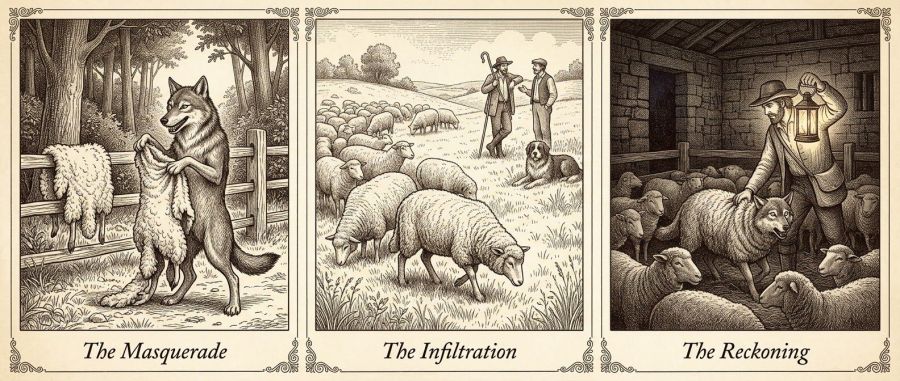
Have you ever been truly fooled by someone? Worse, were you fooled because the liar was a great actor that looked and sounded exactly like someone or something you would naturally trust? Maybe the sheep would not be fooled by a fake shepherd (since YahShua said His sheep know His voice and won’t follow another shepherd), but who’s looking at the sheep right next to us? Aesop put it into a classic fable you’ll likely recognize.
Most of us grew up hearing a version of The Wolf in Sheep’s Clothing that ended in sheer carnage—a helpless flock devoured from the inside out. Yet the oldest classical renderings of Aesop’s fable carry a very different, deeply ironic twist: a story not of predator victory, but of poetic justice, where the deceiver is ensnared by the very costume he crafted to fool others.
The Classic Fable Retold from Aesop’s Point of View
Frustrated by the watchful shepherd, the barking hounds, and the stone walls of the pasture, a hungry wolf realized that direct force would never win him a meal. Cunning would work far better than brute strength.
The Masquerade
Prowling the edges of the farm, the wolf discovered a thick, fluffy sheep’s fleece left drying over a split-rail fence after a sheep had been prepared for the farm table. Slipping the woolly skin over his back, he tucked in his sharp muzzle, concealed his dark paws, and flattened his bushy tail beneath the disguise.
The Infiltration
Ambling into the open meadow, the wolf mimicked the slow, quiet grazing of an ordinary ewe. The disguise worked flawlessly. The sheep paid him no attention, the shepherds conversed leaning against their staves, and the farm dog slept lazily in the grass without a flicker of suspicion. When dusk gathered, the shepherd whistled the flock together, leading every sheep—and the masquerading beast—safely into the stout stone fold, bolting the heavy gate for the night.
The Reckoning
The wolf chuckled in the darkness, waiting for the farm to fall asleep so he could feast. But late that night, the shepherd re-entered the fold holding a dim lantern, needing to supply meat for the coming day’s provisions. Reaching into the quiet pen in the dark, his hand clamped onto the thickest, heaviest wool in the flock. Before the trapped predator could shed his borrowed coat or bare a claw, the butcher’s blade fell. The deceiver met the very fate he had planned for the sheep.
~ ~ ~
The Snare of the Disguise
YahShua (Jesus) told us to watch carefully, and He gave us the timeless warning about deadly enemies masking their true intentions:
“Watch out for false prophets. They come to you in sheep’s clothing, but inwardly they are ferocious wolves.”
— Matthew 7:15
Jude sounded the exact same alarm about those who slip into the assembly wearing innocent disguises:
“For certain men have crept in unnoticed, who long ago were marked out for this condemnation, ungodly men, who turn the grace of our God into lewdness...”
— Jude 1:4
It shouldn’t take us by surprise that everyone who claims to be one of us (A Christian believer) is not so just because they say it. We have multiple warnings to protect ourselves from the prowling enemy looking for any trusting souls to devour. It’s hard, because we don’t want to believe in the possibility of someone who seems so nice actually being a trickster, but it’s their good acting ability that makes them strong deceivers. Pray for open eyes and for discernment like we talked about in yesterday’s post.
“And no wonder, for Satan himself masquerades as an angel of light. It is not surprising, then, if his servants masquerade as servants of righteousness. Their end will correspond to their deeds.”
— 2 Corinthians 11:14–15
Spiritual predators rarely show up with fangs bared and horns blaring. They borrow the gentle language, peaceful posture, and familiar outward appearance of the flock to creep in unawares. Yet Aesop’s ancient ending adds a reassuring truth for those who trust the Shepherd—deceit always carries its own undoing:
“He who digs a pit will fall into it, and whoever rolls a stone will have it roll back on him.”
— Proverbs 26:27
No matter how clever the camouflage appears, the Chief Shepherd knows who belongs to Him. The deceiver’s trap ultimately collapses back upon himself, but the flock is called to remain alert, watchful, and standing firm in the Lord’s strength.
Christian, Dost Thou See Them?
Written by St. Andrew of Crete in the 8th century and translated by John Mason Neale, this solemn, dramatic hymn confronts the subtle, disguised forces of darkness that circle the soul—and summons the Christian to unrelenting spiritual vigilance:
– SZABO MUSIC (Hymn & Singalong) (with lyrics)
Share this post on:

No comments yet.
My Latest Flickr Photos


Others’ Posts I’ve Liked


Start a conversation by adding your comments.