🎵Prompt Response: Cotton Fields
What’s a song lyric that has stuck with you forever?
For some unknown reason, it’s the song Cotton Fields.
What Makes a Great Earworm?
Even though I’ve never lived in Louisiana, or even a mile from Texarkana from any direction, this song frequently pops into my head and out of my mouth. I’ll just be going about some menial household tasks, and the next thing you know, I’m singing, “When I was a little bitty baby…” That’s followed by the rest of the song as I remember it, and then I stop and wonder, “Now why am I singing this?”
I guess earworms don’t need logic (like I’m not sure I ever had a cradle that my mom rocked me in,) but it’s there often anyway—and it’s fun to sing. And I remember my mom singing it a lot, so maybe earworms can be caught. 😊
According to my research with Gemini, a great earworm uses simple, repetitive beats and catchy words. Repetitive melodies make it easy for the tune to stick, and a simple structure cements the rhythm. When these songs become “stuck,” it’s often due to associations with comfort or subconscious memories triggered during low-cognitive tasks, like doing household chores.
So there ya go; I’ve definitely got an earworm with this song, and I think I’ve had it for many years, even before I got married. And I must sing it mostly to myself because hubby didn’t recognize it by the first words. For him and for the rest of my readers, here’s a great version by Creedence Clearwater Revival (CCR)…
The Prickly Reality (Bolls, Bracts & Burrs)
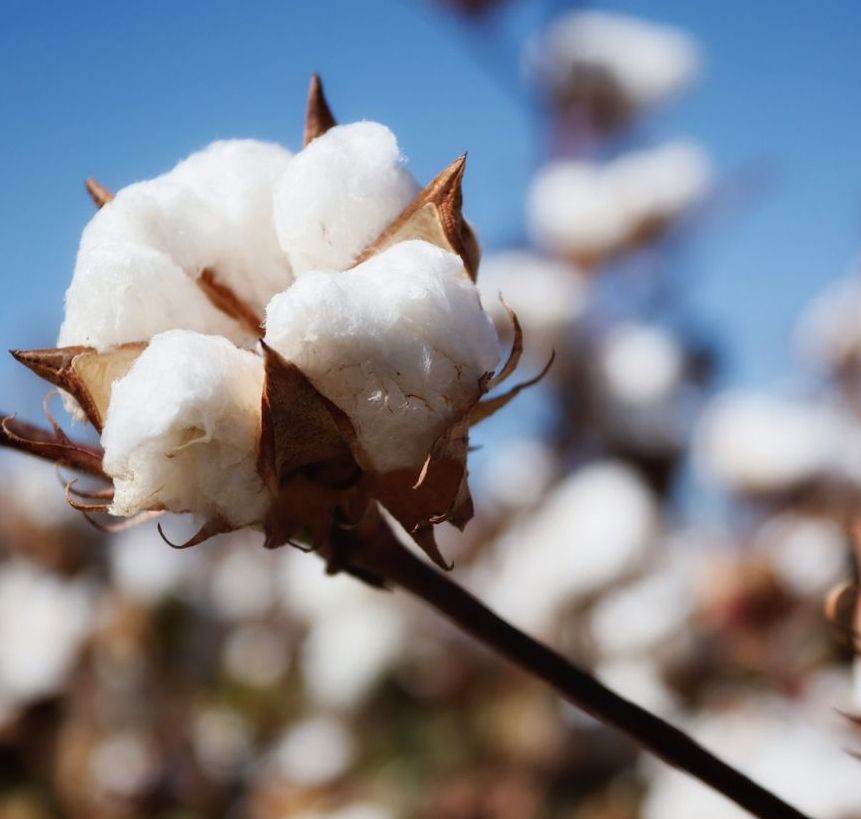
I’ve told you about traveling with my grandparents from Central California to Northern Arizona. That stretch of highway once had a few sections filled with cotton fields on both sides of the road. During one of our road trips, I convinced Grandpa to pull over and let me “pick” a little bit of my own cotton. I don’t recall him warning me, but I do recall learning a lesson about real cotton and those super sharp burrs that hold it onto the stem.
Those parts, the hard brown and pointy parts you see in the picture, are nothing to mess with. They are worse than a splinter, and they can really make your fingers bleed. I recall wrestling a few seeds from their fluffy cotton bolls (and yes, that’s the correct word, though I didn’t know until I listened to the above video and looked it up as I was sure they must be singing it wrong, lol). After a number of finger stabs, I put the whole batch in a baggie where it stayed for the remainder of the trip. And then it stayed in my room for years.
Wait, It’s a Fruit?!
Can you believe that we really do wear fruit (from the loom? Lol) on our bodies? According to my research, cotton is botanically a fruit. There’s a lot of good information at the Biology Insights website if you’re interested. I like the summary about it from Gemini …
It is one of those fun botanical facts that sounds fake until you double-check it! Because the cotton boll grows from a flower and houses the plant’s seeds, it is technically a capsule-type fruit.
Wrapping Up (in 100% Cotton 😁)
I really didn’t expect so much information from such a simple prompt, but it adds some variety to my posts, right? And there’s so much more i could say about cotton, from the textile industry, to organic material, to the various grades used in sheets. But it would take more research since I’m not even sure of the difference between Pima and Egyptian cotton. But I do know that God told the Israelites not to combine materials back in the days of Torah, and I’m certain He had a good reason for it. I’ll leave you with that verse as my sign-off for this post.
Leviticus 19:19 BSB
[19] You are to keep My statutes. You shall not crossbreed two different kinds of livestock; you shall not sow your fields with two kinds of seed; and you shall not wear clothing made of two kinds of material.

https://bible.com/bible/3034/lev.19.19.BSB
Share this post on:

No comments yet.
My Latest Flickr Photos


Others’ Posts I’ve Liked


Start a conversation by adding your comments.