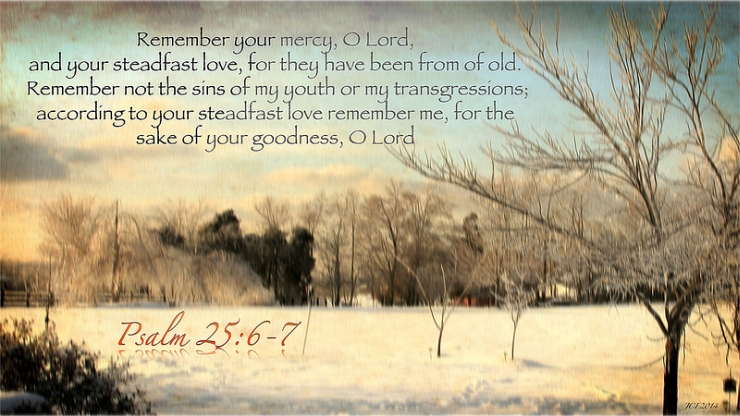
True Worship Begins with Brokenness by Flickr User Beggar to Beggar, CC License = Attribution, No Derivative Works
Click image to open a new tab/window to view the original image and to access the user’s full photo stream at Flickr.
Imagine sitting down to write a short story, and just as you are writing the final scene, the words jump off the paper and shout, “No, the story can’t end this way!” Maybe you would argue and tell the words to get back onto the paper because you are the writer, and you know what you’re doing, but after you got the words back where they belonged, you’d call a friend to make sure you weren’t going crazy. You would need someone to convince you that you haven’t gone off the deep end because you know that it’s the creator that should have control and not the creation. Should it seem that much different with God as our Creator?
In today’s reading from Numbers 28:16 through Numbers 29:11, God is still in a conversation with Moses about all the things the people should do as they continue to live as God desires. This section covers the special feasts and holy days through the year. I’m wondering if God is just giving a primer here to make sure the people know that even in a new land, He is still their God. And they also need to know that their service belongs to God and not to a man, even though they are to respect Moses and other men whom God will call to lead them.
Each feast day is set for a specific day of the Jewish year, and each feast has certain rituals and sacrifices that God wants His people to perform. The sacrifices often use the same offerings as the daily sacrifices, but they are done in addition to the two daily offerings and not in place of them. The festivals God wants the people to recognize are all said to be holy convocations, meaning they are to be done as a community, and for God, as a holy community.
So why does doing all this worship need to begin with brokenness? Because, in order to just be obedient and do as God directs us without questioning either His motives or His methods, we must be humble before Him. It’s even more than not leaning to our own understanding. It’s realizing and trusting that God is not only in control, but He is wise with His control, so we let go of the understanding within ourselves that makes us question Him. We become broken in His presence, so we will need Him to put us back together His own way.
We have a number of repeated Scriptures that remind us who is the clay and who is The Potter, and they all reiterate the need for The Potter to be the one in control. Here are a few of them…
Isaiah 29:16
How you turn things upside down! —
Is the potter not better than the clay,
Does something made say of its maker,
“He didn’t make me”?
Does the product say of its producer,
“He has no discernment”?
Isaiah 45:9
Woe to anyone who argues with his maker,
like potsherds lying on the ground!
Does the clay ask the potter, “What are you doing?”
or, “What’s this you’re making, that has no hands?”
Romans 9:20-21
20 Who are you, a mere human being, to talk back to God? Will what is formed say to him who formed it, “Why did you make me this way?” 21 Or has the potter no right to make from a given lump of clay this pot for honorable use and that one for dishonorable?
We are surrounded by a world of people who think they have all the answers within themselves or within whatever rituals they prescribe to themselves to make life bearable. And those of us who put our trust in Yahveh Almighty know that our answers and rituals often end in failure, but when we trust God through to the end of something, we always find success. Those who resist God usually do so because they refuse to be broken; maybe because they’re afraid to be broken. Brokenness is a scary place to think of going until you have experienced it. When you put your whole being into the Hands of One you can trust with all the pieces, you look forward to the blessing you will find when you humble yourself and let Him make you a new vessel as He sees fit to create.
July 3, 2014
Posted by Crystal A Murray (aka CrystalWriter) |
Bible Study, Nonfiction, Torah Commentary | Bible Commentary, Bible study, brokenness, Complete Jewish Bible, God's way, humility, Numbers, obedience, potter, Scripture, Torah Portions, trust |
Leave a comment
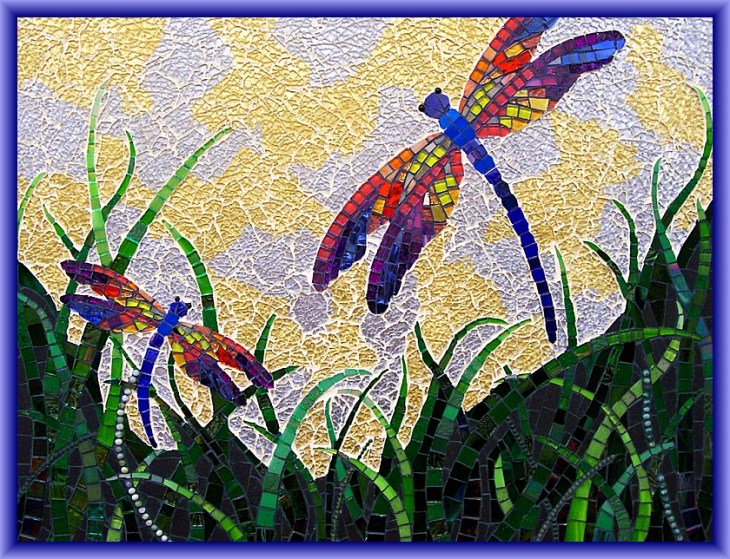
If There Were A Garden by Flickr User Lee Ann Petropoulos, CC License = Attribution, Noncommercial
Click image to open a new tab/window to view the original image and to access the user’s full photo stream at Flickr.
There is something about mosaics that really catches my attention, especially the ones made from broken pieces of glass or ceramics. Maybe it’s the whole idea of something crushed and broken becoming something beautiful that attracts me, and maybe it attracts me because I feel like that represents my life. It gives me hope that anything put into the Potter’s Hands has a hope. Unfortunately, the opposite is also true.
In our reading today from Numbers 20:14 through Numbers 20:21, we will read about a continuing sibling rivalry and the end result of a broken and unrepaired relationship. As the Israelites are traveling, they come to the border of the land of the Edomites. Moses sends a message from Kadesh to the King of Edom that begins with a salutation including “from your brother, Israel.” The request is a simple one asking that Israel would be allowed to pass through the land, and stating that Israel will stay on The King’s Highway and not come off it go through fields or vineyards.
The king returns the answer as a resounding “No” and accompanies it with a threat to attack Israel with the sword. But the people ask again, this time promising the same promises plus the added promise to pay for any water the people or livestock might drink. The hateful King didn’t even take time to answer this time but came out against Israel with many people and much force until they turned Israel away.
It took me two reading to notice the statement about the brother, so I looked up the story of the Edomites and found that Edom was the son of Esau and chose to retain the sibling rivalry as if they were “The Hatfields and The McCoys.” If you’ll recall, Jacob brought gifts to Esau to rebuild their relationship, but apparently, the message didn’t get passed along to future generations. I found a great history of the Edomites at a site called “Got Questions.” I wholeheartedly recommend a reading of their article, “Who Were the Edomites.”
When something is left out of God’s hands, it can very easily in on a similar note as the rivalry between the Edomites and the Israelites and be broken beyond repair. But if we see God as the Potter, and we trust that He knows both how to create and how to re-create, we know He can turn that which is damaged to that which becomes beautiful. God even tells Israel something similar to this in the book of Jeremiah, Chapter 18, verses 1 through 6 (New Living Translation)…
1 The Lord gave another message to Jeremiah. He said, 2 “Go down to the potter’s shop, and I will speak to you there.” 3 So I did as he told me and found the potter working at his wheel. 4 But the jar he was making did not turn out as he had hoped, so he crushed it into a lump of clay again and started over.
5 Then the Lord gave me this message: 6 “O Israel, can I not do to you as this potter has done to his clay? As the clay is in the potter’s hand, so are you in my hand.
The whole chapter is encouraging for Israel, and these words can be encouraging for any child of God. There’s a beautiful scene in the movie “Joshua” where the visitor (Joshua) takes some pieces of broken and crushed glass and makes a whole new object from them. I love when something with God is not broken beyond repair, and I cannot thank God enough for all the repairs He made in me. Many years ago, I wrote a chorus for the Messianic Synagogue I attended. I’ll close with the words to that chorus…
MY POTTER IS YAHVEH by Crystal A Murray
My Potter is Yahveh,
He is my Maker,
He’s my Creator,
I am His clay.
My Redeemer is Yeshua,
And when I am wounded,
I can run through the Lamb’s blood
to my Potter, Yahveh.
June 17, 2014
Posted by Crystal A Murray (aka CrystalWriter) |
Bible Study, Nonfiction, Torah Commentary | Bible Commentary, Bible study, Complete Jewish Bible, Edom, highway, Israel, Numbers, potter, repair, rivalry, Scripture, Torah Portions |
Leave a comment


 Crystal Writes A Blog
True Worship Begins with Brokenness
True Worship Begins with Brokenness by Flickr User Beggar to Beggar, CC License = Attribution, No Derivative Works
Click image to open a new tab/window to view the original image and to access the user’s full photo stream at Flickr.
Imagine sitting down to write a short story, and just as you are writing the final scene, the words jump off the paper and shout, “No, the story can’t end this way!” Maybe you would argue and tell the words to get back onto the paper because you are the writer, and you know what you’re doing, but after you got the words back where they belonged, you’d call a friend to make sure you weren’t going crazy. You would need someone to convince you that you haven’t gone off the deep end because you know that it’s the creator that should have control and not the creation. Should it seem that much different with God as our Creator?
In today’s reading from Numbers 28:16 through Numbers 29:11, God is still in a conversation with Moses about all the things the people should do as they continue to live as God desires. This section covers the special feasts and holy days through the year. I’m wondering if God is just giving a primer here to make sure the people know that even in a new land, He is still their God. And they also need to know that their service belongs to God and not to a man, even though they are to respect Moses and other men whom God will call to lead them.
Each feast day is set for a specific day of the Jewish year, and each feast has certain rituals and sacrifices that God wants His people to perform. The sacrifices often use the same offerings as the daily sacrifices, but they are done in addition to the two daily offerings and not in place of them. The festivals God wants the people to recognize are all said to be holy convocations, meaning they are to be done as a community, and for God, as a holy community.
So why does doing all this worship need to begin with brokenness? Because, in order to just be obedient and do as God directs us without questioning either His motives or His methods, we must be humble before Him. It’s even more than not leaning to our own understanding. It’s realizing and trusting that God is not only in control, but He is wise with His control, so we let go of the understanding within ourselves that makes us question Him. We become broken in His presence, so we will need Him to put us back together His own way.
We have a number of repeated Scriptures that remind us who is the clay and who is The Potter, and they all reiterate the need for The Potter to be the one in control. Here are a few of them…
We are surrounded by a world of people who think they have all the answers within themselves or within whatever rituals they prescribe to themselves to make life bearable. And those of us who put our trust in Yahveh Almighty know that our answers and rituals often end in failure, but when we trust God through to the end of something, we always find success. Those who resist God usually do so because they refuse to be broken; maybe because they’re afraid to be broken. Brokenness is a scary place to think of going until you have experienced it. When you put your whole being into the Hands of One you can trust with all the pieces, you look forward to the blessing you will find when you humble yourself and let Him make you a new vessel as He sees fit to create.
Share this post on:
July 3, 2014 Posted by Crystal A Murray (aka CrystalWriter) | Bible Study, Nonfiction, Torah Commentary | Bible Commentary, Bible study, brokenness, Complete Jewish Bible, God's way, humility, Numbers, obedience, potter, Scripture, Torah Portions, trust | Leave a comment