I Got Shoes

Strong Shoes by Flickr User Corrie ten Boom Museum, CC License = Attribution, Noncommercial, No Derivative Works
Click image to open a new tab/window to view the original image and to access the user’s full photo stream at Flickr.
I recommend a visit to this Flickr page: https://www.flickr.com/photos/corrietenboom/ It is filled with inspirational quotes from Corrie ten Boom.
“I’ve got shoes, they’re made of plywood…” is the beginning of a misheard lyric line from You’re the One that I Want out of the movie Grease. It’s only one of many misheard lines from songs that you kind find in books and online searches. But not all songs about shoes are misheard. There’s an old Johnny Cash song that says “all God’s children got shoes,” and then it says, “Gonna put on my shoes and walk all over God’s Heaven.” It’s a catchy tune, and you’ve probably heard it once or twice. If not, you can listen to it at YouTube, and you might even recognize it.
In today’s reading from Deuteronomy 2:31 through Deuteronomy 3:14, we won’t read about shoes, but we will read about what happens when God tells you where to walk. Moses is talking about when God prepared Israel to overtake Sihon, King of Heshbon. He relates how the king and all his people came out against Israel, but because Israel was acting in obedience to overtake the land as God directed, they defeated him, his sons, and all his people. Moses tells them how they took every city and utterly destroyed every city and its inhabitants, and that no city was too strong or walled high enough because God handed it all over to them.
There were cities that God said to stay away from because He had plans for them, so Israel obeyed and did not attack those places. But then God told them to turn up the road to Bashan and go against Og, the king of Bashan. Again, the king and all his people came out against them, and again Israel defeated them because God gave them victory. Israel defeated all sixty of the king’s cities even though they were highly fortified with walls, gates, and bars. In addition, they took many unprotected cities.
At the end of the battles, Moses tells how he divided the possessions of the cities among the tribes. The territory from Aroer at the edge of the valley to half the hill country of Gilead Moses gave to the sons of Reuben and Gad. The rest of Gilead he gave to the half tribe of Manasseh. The kingdom of Og was called the “kingdom of giants” because when they found Og’s iron bed, it measured about thirteen and a half by six feet. Now that’s one huge guy, and you better know that God is with you before you go after someone like that.
Life is filled with giants and battles that God wants to give us victory over, but we must trust God to arm us, train us, and suit us up for battle before we can fight effectively. We can’t look at our own weaknesses because it will turn our focus away from God and toward our situation. It’s just like when Peter obeyed Jesus and walked on the water; he didn’t start to sink until he took his eyes off of Jesus and put them on the waves instead. The world is God’s to give, so if He says to do battle and overtake the enemy, it’s only because He has already planned our victory and the enemy’s defeat.
The song says, “I got shoes, you got shoes,” and we do. Ephesians 6:14-16 (in the Common English Bible) says it this way…
“So stand with the belt of truth around your waist, justice as your breastplate, and put shoes on your feet so that you are ready to spread the good news of peace. Above all, carry the shield of faith so that you can extinguish the flaming arrows of the evil one.”
We have our feet shod with the preparation of the gospel of peace, and we can walk through (and out of) any valley of defeat on this earth and keep walking until we’re stepping on Heaven’s streets of gold.
Share this post on:

The Right to Arm Bears

Right to Arm Bears by Flickr User David Abse aka Gary Socrates, CC License = Attribution, Noncommercial, No Derivative Works
Click image to open a new tab/window to view the original image and to access the user’s full photo stream at Flickr.
The full title of this image is “Purple Cat is Opposed to the Right to Arm Bears.” I certainly can see his point. I know most hunters would not like the idea of armed bears, or any armed wildlife either. Imagine the days when the only way you could eat meat was to go hunt and kill it yourself. You would not have wanted it to shoot back at you. But if you were to ask the bears and other game, they would all be against hunters being armed simply because most anything that lives will fight to continue doing so. Regardless of who brings the fight and who must defend themselves, we were made to want to live.
The right to protect ourselves from anyone who might harm us or our possessions is not a bad thing, but criminals who don’t want to risk their own lives while committing their crimes, and governments who don’t want to risk people stopping them from stepping over the line, are all in favor of taking away our rights to bear arms. But it takes a strong and armed generation of people (who are willing to fight) to keep the balance. As nice as it would be to think that disarming everyone would automatically generate peace, unless you could be sure that all people would keep Godly morals and follow The Golden Rule, that idea must be reserved for the new Heaven and the new Earth.
In today’s reading from Deuteronomy 2:2 through Deuteronomy 2:30, we will read about those who had the right to bear arms but didn’t do the right thing with it. Following all we’ve been studying so far in the book of Deuteronomy, Moses is still telling the current generation of the children of Israel what events led them to where they are today. In this story I’ve noticed something new, and that is the detail that those who were forced to wander for 40 years to prevent their entrance into The Promised Land are now shown as soldiers only. Verse 14 states that it took 38 years from the time they left Kadesh-Barnea because they had to wait until every man capable of bearing arms was eliminated from the camp.
Now, just because they were trained to fight, they were not supposed to fight in every circumstance. As we read through today’s portion, we see cities where God told them to go through without fighting. When they got near Esau’s land, they were told to treat them well and to pay for all food and water they used while passing through. God reminded them that they did not need to fight because He is their provider and has given them everything they need.
When Israel crossed through the desert of Moab, God also told them not to fight there because He would not give them any of that land. Instead, He had given that territory to the descendants of Lot. The reading also mentions the fact that giants used to live in that land as well, and that makes me wonder if the men were ready to fight them there, but it was almost 40 years beyond when God intended for them to be giant killers.
As Moses continues the story, he talks of all the cities filled with giants (and men that may have been part angel in some theories) and how God went before the armies and displaced the inhabitants so those He chose could take possession. The children of Lot and the children of Esau apparently obeyed and followed God, so they were now living in their own lands of promise. But when God was ready for the sons of Jacob to have their part, and the old soldiers had been completely replaced, He told them to stop going in circles and prepare to take the land He prepared for them.
From what I read in that last part, it appears that Moab was not going to be part of it until Sichon, King of Heshbon, refused to even let the children of Israel pass through his territory. Because this evil king would not even sell food and water to his visitors, God hardened his spirit and made him an enemy that Israel would fight and defeat.
I’ve said before how uncomfortable all the war talk makes me, but at the same time, I know it’s necessary because all men do not live according to God’s righteous ways. Even in simple ways of doing business, there are times I wish God would force people to do the right thing, so I would never have the anxiety that comes from getting ripped off. If God forced people to do things His way, then we could know without any doubt that what people do for us would be done with honesty and fairness. Unfortunately, that won’t happen in this lifetime, but that’s not a reason to give up freedom and push to control all things in this life either.
I can’t guarantee that every tongue will say things I want to hear, but I would never advocate for cutting out the tongues of everyone who says something I find displeasing. I won’t take away pencils because of journalists who use their God-given gifts of writing to tell lies. And there are gun-owners that hurt people, so they should not have guns, but those who want the right to protect themselves from those abusers should not have to pay the same price as the abusers. Let us fight the good fight as God leads us, and trust the rest to the future His promises hold for us.
Share this post on:

No Fear (of Failure)

Bear Just Out of Hibernation; Cade’s Cove Loop, TN. By Crystal A Murray, CC License = Attribution, Noncommercial, Share Alike
There was a lady getting really close to the fence to take pictures instead of standing back and using her zoom lens. When the bear lunged toward the fence, she backed up real quick, and I was glad I was a good distance back already.
Click the picture to open another tab/window to other cute bear images on my Flickr photostream.
When the clothing campaign first came out, and I started seeing things all over the place with the words No Fear, I remember thinking what a foolish campaign it was because it left God out of the equation. When the writer in the 23rd Psalm says he will not fear, he includes “because you are with me” in reference to The Lord his Shepherd. With God, we do not have to fear, but without Him, we have no guarantee of the kind of peace that drives away our fears.
In today’s reading from Deuteronomy 1:39 through Deuteronomy 2:1, Moses speaks to the “little ones” that God promised would cross into The Promised Land after their parents sinned against God. He tells the children what happened when God stopped them in their paths and sent them back out into the desert.
After the spies came back, and the people stirred God’s anger with their fears and complaints about giants in the land, they thought they could just change their plans and get God to change His mind. They said, “Now we will go up and do everything The Lord told us to do,” and it says they considered it an easy matter since they were following commands God had given. But Moses told them not to go and fight because God would not be with them and their enemies would defeat them.
Did they listen to God? No. Did they listen to Moses? No, not to him either. Moses says in the reading that the people took matters into their own hands and went up into the hill country without God’s blessing and presence. When they did, the Amorites came out of the hills and came against them like a swarm of bees. They defeated Israel in Seir and chased them all the way back to Hormah. After that, when they cried out to God, He neither listened to them or paid attention to them, and they were forced to stay in Kadesh longer than planned. Beyond Kadesh, they traveled the road to the Sea of Suf and stayed circling Mount Seir for a long time.
Listening to words of God without them being the current and anointed spoken word for our hearts and our time is like taking verses out of context. If we take just part of three verses (Matt 27:5, Luke 10:37, and John 13:27), we can get the instruction: Judas went and hanged himself. Go and do thou likewise, and what thou doest, do quickly. That twisting of Scriptures out of context is used often by those who are trying to manipulate people who respond to every “the Bible says” statement without searching the Scriptures and trying the spirits. More than likely, there were leaders who did this to the children of Israel, and they were outside of the will of God. God did tell Israel to get ready for battle, and He guaranteed them victory because He would be with them. But, when they chose not to go with Him, and then chose to obey later when He said not to go, they were in double rebellion against Him.
God’s word tells us not to fear in some form or other about 365 times. It’s good that we can have Yahveh to lean on and trust every day of the year, but that doesn’t mean that we have Him on our own terms. Even the No Fear company faced bankruptcy in 2011, so nothing is guaranteed even when a company is big and profitable and expands into the soft drink industry.
God has given us His entire word, and He gives us His Holy Spirit to guide our interpretations, so we can know His encouragement to not fear in the proper context. No fear, especially of failure, is good when we are walking in humble obedience to God’s direction for our lives. In obedience to Him we find His presence, and in His presence, we find the strength to do all things through Him.
Share this post on:

Stops Along the Way

Clouds & Trees at Sunset in Louisville KY, April 2008 By Crystal A Murray, CC License Attribution, Noncommercial, Share Alike
Click image to open a new tab/window to view my original image in its largest size and to access my full photo stream at Flickr.
A long journey without stops along the way is just not as fun as one with brief retreats and planned detours. When my husband and I used to travel with the boys, we tried to make the journey as much fun as the destination. We stopped to see the world’s largest prairie dog and a five-legged cow, we visited the Precious Moments museum, and we rode a miniature train in Tiny Town. If a rest area had trails or play areas, we tried to spend some time enjoying nature or riding on swings. The stops along the way are what made our journeys fun, and the stops along the road of life are what keep our days filled with real living.
In today’s reading from Deuteronomy 1:22 through Deuteronomy 1:38, Moses is continuing his talk to the current generation of Israelites about the history of the generations before them. He speaks as if they are one in the same people since he wants to make sure they will not repeat the same mistakes as their recent ancestors. As he takes them on the journey of deliverance from Egypt, he walks them through the paths walked by their parents and the stops made along the way. He begins with the journey of the spies into The Promised Land.
I noticed as the reading started that Moses says it was the people who suggested they send spies out ahead of them, but when I first wrote on this topic, the reading stated it was God who sent the men out. This makes me a little unsure as to who had the original idea, but since both God and Moses agreed the idea was a good one, they all worked together to bring it to pass. Moses tells of the journey and how the spies returned with fruit from the land and the report that The Lord was sending them to a good land.
Unfortunately for that previous and sinful generation, the good report of the spies, and the evidence they carried to encourage the people, was not enough. The people focused on the report of giants in the land and accused God of hating them by bringing them from Egypt to a place where they would be killed by giants. Moses tells this new generation of the encouragements he shared with their ancestors, reminding them of all the places since Egypt where God had shown Himself as strong and as their Deliverer. He also reminds the people that God said He would go to the land of promise with them and would fight for them, but they chose fear instead.
From here, Moses communicates God’s anger against those who saw His abilities, agreed to stand as soldiers and fight for the land, and then gave up because they only wanted the destination without the journey. Moses tells them that the entire evil generation is banished from entering into the land except for Caleb the son of Jephunneh. He goes on to say that it is because of them (and I’m not sure if he’s still talking of the previous group or is now focused on the current people) that even he will not be able to enter in, so Joshua the son of Nun will lead them in his place.
Not every stop in our travels, or on life’s journey, will be the same. Some places we stop because we have to, like necessary bathroom breaks when we’re traveling. Some places we stop because we catch a glimpse of something we know we may never see again, so we stop and take it in, and maybe we capture the memory in pictures. Some stops are a combination of necessary and nice, like when we’re hungry and we choose to eat at that famous restaurant we’ve seen advertised on all the billboards.
In life, we will have necessary stops, joy stops, and those that are a combination of both. As we travel, if we learn from those who have traveled before us, we can spend more time looking for the stops that will bring joy to the journey, but we will still have some of those necessary stops just because that is part of our temporary life on this earth. When I took the picture above, I was having unresolved issues from neck surgery and looking at another more serious one, plus I was dealing with a lot of stress at work as I tried to transition out of my job for a chiropractor. I didn’t plan to stop on the back steps that April evening, but I walked out at that golden hour when everything seemed to glow in the fading sunlight. I had to grab my point and shoot and grab the picture before the moment disappeared.
Since then, I’ve had many more stops on my journey, some wanted and some not so much. I can look back at that sunset image (including the colorful manipulations I’ve done on it in pink, purple, and peach) and remind myself that God has both my sunrises and sunsets in His capable hands, and He will lead me on every step of this journey as long as I am willing to follow Him. Even in those times where I face difficulties, I do not face them alone. And no matter how many stops I have to make along the way, I can trust that He will walk with me, stop with me, and bring me to the right destination when my journey reaches its end.
Share this post on:

If God Had a Like Button
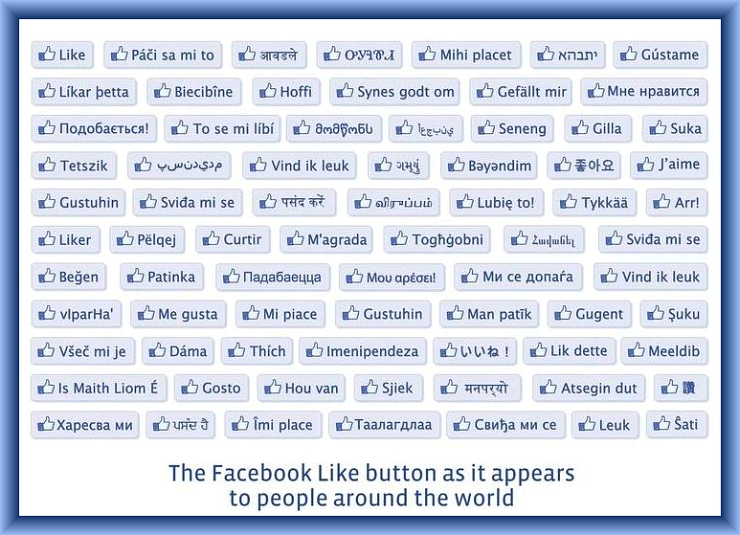
Facebook Like Button As Seen Around the World by Flickr User Patrick Nouhailler, CC License = Attribution, Share Alike
Click image to open a new tab/window to view the original image and to access the user’s full photo stream at Flickr.
I watched a movie some years ago where people paid a machine to give them compliments that would make the payer feel better. The machine would say things like, “Wow, you look really good today,” or “Go for it. You can do anything you set your mind on today.” I remember when I watched it how my heart broke for all the rejected people in the world that might need a machine to tell them they are special. And now we have something similar in our constant quest to have our posts and images liked or favorited, and to have our pages and blogs followed.
In today’s reading from Deuteronomy 1:12 through Deuteronomy 1:21, Moses is still offering his closing speech to the children of Israel and reminding them of all they have been through since leaving Egypt. In this passage, he is reminding them of the times when so many of them thronged him for answers to life’s queries that he determined it was too big a job for just one man. At their request, and at God’s request, Moses selects representatives and leaders from every tribe, clan, and family. And, at this point in their history, those leaders still take charge to hear cases between brothers and to judge fairly.
Moses goes on to remind the leaders not to be intimidated by any person who comes to them for judgment, and he tells them not to show favoritism of great or small men. No matter how a person presents themselves, Moses tells them to not be swayed because the actual decisions in their matters belong to God. He comforts their anxieties about making judgments by reminding them that anything too hard for them to figure out was okay to bring to him.
Moses continues by reminding them of their journey from Horeb through all the fearsome desert on their way to the hill country of the Amorites, and into Kadesh-Barnea. Then, Moses repeats what he said to them about arriving in the country The Lord is graciously giving them. In verse 21 he says, “Look! Adonai your God has placed the land before you. Go up, take possession, as Adonai, the God of your ancestors, has told you. Don’t be afraid, don’t be dismayed.”
In the New Testament, in Romans 8:31, we read, “What, then, are we to say to these things? If God is for us, who can be against us?” In social-media-speak that might say, “What should we say then when not enough people like our pages? If God clicked ‘Like’ then who could dislike us?” Like the leadership over Israel, it’s not about how many people like or follow our righteous judgments and rulings, it’s about whether or not God thinks we have judged righteously about a situation. If we have His approval, then we should stand confident in our decisions regardless of what the rest of the world thinks.
Still, can you imagine if God had a like button? Of all the buttons on the above image, I don’t think there’s one that shows what it might say in Holy Spirit language. 🙂 But imagine one, or imagine millions, of people liking your page or your post. Then, suddenly you get that little notification symbol at the top of your page, or the e-mail about new activity on your blog, and it reads, “Jesus Christ liked your page.” If you like Hebrew, you might get the one that says, “Yeshua HaMashiach is now following your blog.” Whoo Hoo! Wouldn’t that just be the best?
Of course, there are some that would freak out and hide everything if they even thought The Lord was reading their pages and posts, let alone hanging around long enough to click “like.” Me, I think God does read all our posts and pages, and I hope there are more than a few where He would click “like” if He had a button. How about you?
Share this post on:

Learn Some Deuteronomy
We’ve now traveled all the way from Genesis 1:1 through Numbers 36:13. we’ve learned about God’s creation of all things, the fall of Adam and Eve in the garden, an earth gone wild, and an earth destroyed by water leaving only Noah and his family. From there, we’ve met Abraham as the father of righteousness, Isaac as Abraham’s son of promise, and Jacob who became Israel. And from these leaders and patriarchs, we have seen Israel become a people in bondage, Moses become their reluctant deliverer, the leadership of Egypt destroyed for their sin, Israel delivered from their bondage in Egypt, Israel forced to wander because of their unbelief, and God use Moses to lead multiple generations of Israel from victory to victory. Now we begin a new book in their lives; the book of Deuteronomy which means “a copy of the words” in Hebrew.
Before we get into the reading, here’s a cool video (with lyrics) from my favorite Christian parody band, ApologetiX, called Learn Some Deuteronomy, which is a parody of Pour Some Sugar on Me by Def Leppard…
Now, in today’s reading from Deuteronomy 1:1 through Deuteronomy 1:11, we begin a new week and a new portion of Torah. Today, we start Parashah 44, Hebrew D’varim meaning “words” in English. We begin with the words that Moses spoke to all Israel from the far side of the Jordan River, on the first day of the eleventh month of the fortieth year. The reading says that Moses took it upon himself to expound the Torah of everything God had told him to speak to them. In other words, he wanted to leave them with a summation of what he felt was important about their time together–the words from The Creator to His children.
Moses begins with reminding Israel that God was the One who spoke to them in Horeb and told them they had stayed long enough on that mountain and that it was time to move on. God told them to turn and take their journey up to the hill country of the Amorites and all their neighbors in the Arabah. God then directed them to the lowland, the south (the Negev), the coast, the land of the Canaanites, and then to Lebanon as far as “The Great River,” the Euphrates.
Moses continued to speak to the people who were now at the entrance to their promise, telling them that God said (in verse 8, Amplified Bible), “Behold, I have set the land before you; go in and take possession of the land which the Lord swore to your fathers, to Abraham, to Isaac, and to Jacob, to give to them and to their descendants after them.” He went on to bless them with the reminder that God had multiplied them, and that their numbers had grown, so they were now like the stars of Heaven for multitude. He added (verse 11 AMP), “May the Lord, the God of your fathers, make you a thousand times as many as you are and bless you as He has promised you!”
I don’t know about you, but I can hear the love as Moses speaks to this people he’s been leading for so long. He is like a proud parent who has watched his children grow, bear children of their own, make mistakes, repent, mature, and finally get to that place where he could close his eyes and entrust them fully to the hands of God. All Moses wants for this nation now is for them to continue to grow and be blessed from now through eternity.
What Moses wants for these people, and the fact that Moses spoke face to face with God, tells us that Moses bore the heart of God toward these people. God also wanted nothing more than to bless them, make them grow, and bless them some more from then through eternity. That He made them blind for a time, so He could build another flock of the Gentiles, does not mean that God has changed His desires for His children. He still wants them blessed for eternity, and this is why the two flocks will become one when He grafts Israel back into their own root. He is using those of us not born into the family of Abraham, Isaac, and Jacob/Israel to continue to multiply Israel. We have a bigger family than we can ever imagine.
And now, I will share one more ApologetiX video with you since it is another one about Deuteronomy. This one is called Ronomy, and it is a parody of Del Shannon’s Runaway. It doesn’t have lyrics, and they’re short, so I’ll start with those…
As they walked along they numbered two million strong
With all of their wives and all their young
And as Israel walked out of Egypt some things went wrong in the desert
That’s why they took so long
In the book where it began, Israel found itself in Egypt’s land
Bid adieu in Exodus, straight through Leviticus and Numbers
They wa-wa-wa-wa-wandered
While, while, while, while, while they went astray
And they wound up their desert stay in Deuteronomy
A-ron-ron-ron-ron-ronomy
Share this post on:

My Latest Flickr Photos


Others’ Posts I’ve Liked


Mine Eyes Have Seen the Glory
Morning Glory by Flickr User Terry Dunn, CC License = Attribution, Noncommercial, No Derivative Works
Click image to open a new tab/window to view the original image and to access the user’s full photo stream at Flickr.
Can I tell you how many times I have gone to church services or patriotic gatherings and watched hubby cringe and grimace when they play The Battle Hymn of the Republic? Well, that’s pretty much every time. Hubby has a southern heart, and he is amazed at how many people, both southern and Christian, do not realize the history behind the song. If you click on the title, you can read the Wikipedia page showing that the song was written to proclaim victory for the Union Armies over the Confederate Armies. The lyric writer, Julia Ward Howe, was a Union sympathizer, and she believed God was on their side and would have His wrath against the south, so even when we sing it as unto The Lord taking victory over the enemy of our souls, he hears the original meaning behind the lyrics. And he should be happy that I am spreading the word about the truth behind the lyrics. 🙂
In today’s reading from Deuteronomy 3:15 through Deuteronomy 3:22, we finish another week and another portion of Torah, and we have Moses bringing things up to their present time. Moses finishes describing which lands go to which tribes, and then he tells of the last order he passed along from God. He reminds Israel that they can leave the women and children and livestock, but they are to march into The Promised Land armed and ready to fight for what God is giving them. After they win, they will come back to reclaim their families and cattle, and they will settle into their various possessions.
The portion concludes with Moses reminding the people of the words of encouragement he spoke to Joshua. From verses 21 and 22, we read…
God wanted Moses to remind the people, and to remind Joshua, not to forget what they have seen. If they can keep their minds on those victories of the past, then knowing God is going with them into their future should be enough to help them keep up the good fight of faith. If they keep up the good fight, they can be sure they will win because God is fighting right there on their side.
I think we all have days that sometimes extend into longer periods of time where we begin to wonder if God is really fighting on our side with us. We lose battles, and we see friends lose battles, and it makes us think that maybe loss is the will of God for us. But while God may allow us to lose some battles in this lifetime, He will not allow us to lose the most important war, the war for our souls and the souls of others. It is not His will that any person should be lost, so whatever path we walk, it should be one that moves us forward in the great battle for the gathering of human souls to their Maker and Creator.
Whether we have seen it in our own lives, or read it in God’s word, we have seen the glory of God’s salvation. The change that comes over a person when he commits his life to Yahveh is indescribably wonderful. I think about the crazy man at the tombs, and how he was filled with so many demons that he would rip off his clothes and cut his body with sharp stones. We find at his deliverance that he was filled with a legion of demons. And yet, when Yeshua walked toward him, a thousand demons might have held his tongue so it was impossible for him to ask for salvation, but they could not stop him from running to meet his Savior who gave him the victory he needed. When the disciples caught up with Jesus, they found the man clothed and in his right mind. How amazing is that?
We are told in 2 Corinthians 3:18 that God will continually change us from one degree of glory to the next. If we simply continue to walk with Him and never forget the glories we have already seen, we can keep the faith to keep up the good fight.
(By the way, if you like to read stories about God working in human lives and bringing victories both big and small, I’d like to recommend the books written by my friend and sister in Christ, Deborah Aubrey Peyron. Her books, The Miraculous Interventions(TM) Series, are collections of stories from her own life, and from the lives of others, showing where God intervenes in the human life and world. She thought God only intended for her to write them down to remind her of His presence, so she could keep up the good fight, but when people started asking her when her book was due, she got the message. She has just released her third book in the series, and she will continue to write in the series as long as God sends her people with stories to be told.)
Share this post on:
July 25, 2014 Posted by Crystal A Murray (aka CrystalWriter) | Bible Study, Nonfiction, Torah Commentary | Bible Commentary, Bible study, Complete Jewish Bible, Deuteronomy, Israel, Joshua, Mine Eyes Have Seen the Glory, Morning Glory, Moses, Scripture, Torah Portions, victory | Leave a comment